
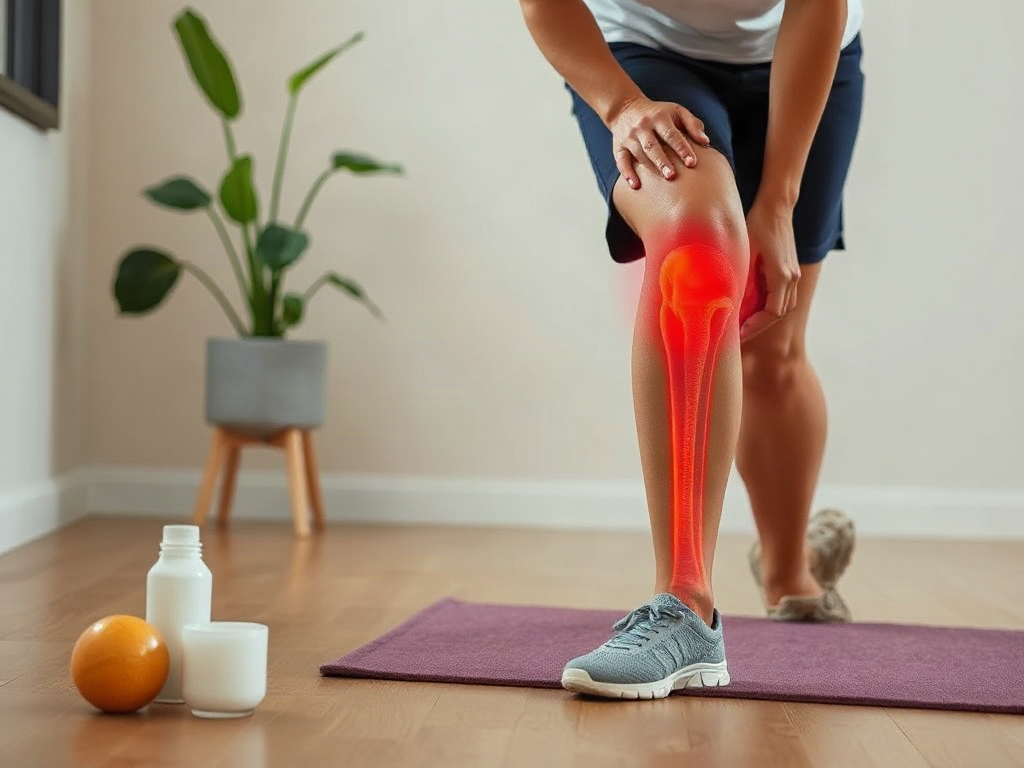
LCL pain: causes, symptoms, and recovery guidance centers on recognizing injury to the ligament on the outer knee, protecting it from sideways stress, and restoring movement gradually. It commonly follows a blow to the inside of the knee, a twisting event, or an awkward landing that forces the knee outward. Outer-knee tenderness, swelling, bruising, instability, and pain during walking or pivoting can occur, but severe swelling, inability to bear weight, numbness, or a visibly unstable knee warrants prompt medical assessment. Early care usually limits aggravating activity, uses cold therapy briefly, and maintains comfortable motion; strengthening and return to sport should progress only when walking and basic movements are controlled.
How LCL Injuries Happen and What the Symptoms Mean
The lateral collateral ligament, or LCL, runs along the outside of the knee and helps resist forces that push the lower leg away from the body. LCL pain usually follows a mechanism that stretches or tears this ligament, such as a direct blow to the inside of the knee, a forceful change of direction, or a landing with the knee pushed outward. The location matters: discomfort is typically felt along the outer joint line or slightly above and below it rather than behind the kneecap.
A mild sprain may produce localized tenderness and pain when the knee is stressed sideways, while a more substantial injury can cause bruising, swelling, a feeling that the knee may give way, or difficulty walking. LCL symptoms can overlap with injuries to the meniscus, anterior cruciate ligament, biceps femoris tendon, or nearby muscles. Pain alone cannot establish which structure is injured, particularly after a high-energy collision.
Consider a recreational soccer player who is hit on the inside of the planted knee. Outer-knee soreness that appears immediately and worsens during cutting is more consistent with lateral ligament stress than with ordinary post-exercise muscle soreness. By contrast, gradual pain without a clear incident may reflect tendon irritation, joint degeneration, or referred discomfort rather than an isolated LCL sprain.
A common mistake is testing the knee repeatedly to see whether it still feels unstable. Each forceful pivot or sideways stress can irritate healing tissue and make symptoms harder to interpret. Record what caused the pain, whether swelling appeared, whether walking is limited, and which movements reproduce symptoms. That information is more useful than repeatedly provoking the knee.
For related context, compare these symptoms with LCL pain: causes, symptoms, and recovery guidance when deciding whether the discomfort is staying localized or changing as activity continues.
Warning Signs That Need Medical Assessment
Medical assessment is especially important when LCL pain follows a major collision, fall, or twisting injury and the knee feels unstable. The LCL may be injured together with other ligaments, the meniscus, or structures near the outer knee. A clinician can compare both knees, assess ligament stability, examine circulation and sensation, and decide whether imaging is appropriate.
Seek prompt care for an inability to bear weight, marked deformity, rapidly increasing swelling, severe bruising, locking, repeated giving way, or pain that is not settling with rest. Numbness or tingling along the outer lower leg or top of the foot deserves particular attention because the common peroneal nerve passes near the outer knee. New weakness lifting the foot is not a symptom to manage by simply returning to exercise.
Not every sore knee requires emergency treatment. Someone with mild tenderness, a stable walking pattern, and steadily improving symptoms may be evaluated through a routine appointment, especially if pain persists beyond the first several days. The tradeoff is that waiting can be reasonable for a minor strain but unhelpful when instability or nerve symptoms are present. When the mechanism was forceful or the diagnosis is uncertain, earlier examination reduces guesswork.
Assessment also helps distinguish an isolated LCL problem from a more complex injury. A person may report pain on the outside of the knee but actually have a meniscal injury causing catching, an ACL injury causing pivot instability, or a fibular-head problem causing focal tenderness. Assuming every outer-knee symptom is a simple sprain can delay appropriate rehabilitation.
Before an appointment, note the injury date, the direction of force, swelling timing, ability to walk, and any clicking, locking, or numbness. Do not take medication that is unsafe with your medical history; a pharmacist or clinician can help with product-specific questions. Diagnostic certainty should come from an examination rather than from a home stability test.
Early Recovery: Protecting the Knee Without Stiffening It
Early recovery usually means reducing the forces that provoke the ligament while preserving comfortable movement. Stop cutting, running, jumping, deep side lunges, and contact activity if they increase outer-knee pain or create a sense of giving way. Short, easy walks may be acceptable when the gait is controlled, but limping is a sign that the current load is too high.
Cold therapy may temporarily reduce discomfort, and elevation can be useful when swelling is present. A compression sleeve may feel supportive, but it does not stabilize a significant ligament injury or replace examination. Crutches may be appropriate when weight bearing is painful, though their use and timing are best matched to the injury severity by a healthcare professional.
Comfortable knee motion is generally preferable to keeping the joint rigid for prolonged periods. Gentle bending and straightening within a tolerable range can limit stiffness, but forcing the knee into pain is counterproductive. Early exercises might include thigh-muscle tightening or controlled straight-leg lifting if these can be performed without increased pain, lag, or instability. The useful test is the response later that day and the following morning, not just how the exercise feels during the first few repetitions.
A practical early-stage checklist includes:
- Walk only as normally as symptoms allow.
- Avoid sideways loading, pivoting, and contact.
- Use brief cold applications for comfort rather than prolonged exposure.
- Maintain gentle, pain-limited motion.
- Arrange assessment if instability, severe swelling, or nerve symptoms appear.
The main failure mode is confusing pain relief with tissue readiness. Ice, rest, or an anti-inflammatory medicine may make a knee feel quieter without restoring ligament control. If swelling rises, walking becomes less confident, or pain remains worse the next morning, reduce the load and seek clinical advice rather than advancing because the joint felt better temporarily.

Rehabilitation, Return to Activity, and Common Mistakes
Rehabilitation should progress from ordinary movement to controlled strength, balance, and sport-specific demand. The sequence is more useful than a fixed calendar because recovery varies with the grade of injury, associated damage, age, conditioning, and the activity being resumed. A person returning to desk-based walking has different requirements from a basketball player who must decelerate and change direction.
Once walking is comfortable and swelling is settling, a clinician or physical therapist may introduce progressive strengthening for the quadriceps, hamstrings, hips, and calf. These muscles help control the knee, but exercises should not be selected solely because they are labeled “knee strengthening.” A loaded side step, for example, may be reasonable later but can irritate an acutely sensitive LCL if introduced while sideways force still causes pain.
Progression should be based on function: a stable walking pattern, nearly comfortable range of motion, controlled single-leg balance, and strength that is adequate for the next task. Begin with straight-line activity before adding faster movement, uneven surfaces, sharp turns, or contact. A runner might test brisk walking, then easy jogging, then gradual speed changes; a field-sport athlete needs additional cutting and reactive drills before competition.
Do not use a pain-free jog as the only clearance test. Some ligament problems become apparent during deceleration or an unexpected change of direction rather than steady forward motion. Conversely, mild soreness after a new exercise does not automatically mean reinjury, provided it settles promptly and function is not deteriorating. The pattern across 24 hours is more informative than a single sensation.
Common mistakes include stretching aggressively into lateral knee pain, returning to sport because bruising has faded, and relying on a brace as proof that the ligament is ready. Bracing can be prescribed in selected injuries, but fit, duration, and activity demands matter. A brace may reduce apprehension while leaving strength and coordination deficits unchanged.
Use a simple progression rule: change one variable at a time, such as duration, speed, terrain, or cutting demand. If swelling, instability, or next-day pain increases, return to the last well-tolerated level and discuss the response with a professional. The goal is not merely less pain; it is dependable control under the movements that caused the original problem.
For broader joint-care planning, the internal resource LCL pain: causes, symptoms, and recovery guidance can sit alongside individualized rehabilitation advice, not replace it.
Frequently Asked Questions
Where is LCL pain usually felt?
It is usually felt along the outside of the knee, often near the joint line or along the ligament toward the fibular head. Pain in that area can also come from the meniscus, tendons, or other ligaments.
Can you walk with an LCL sprain?
Mild sprains may allow walking, although soreness or a limp is common. Inability to bear weight, marked instability, or worsening symptoms should prompt medical assessment.
Should you stretch an injured LCL?
Gentle movement may help prevent stiffness, but forceful stretching or positions that create outer-knee pain can add stress. Mobility should remain comfortable and progress gradually.
How long does LCL recovery take?
Recovery depends on whether the ligament is mildly stretched, partly torn, or completely disrupted and whether other structures are injured. Functional progress and clinical assessment are more reliable than a fixed timetable.
When can you return to sports after LCL pain?
Return when walking, strength, balance, and sport-specific movements are controlled without instability or a concerning next-day reaction. Contact and cutting sports usually require more testing than straight-line activity.
Conclusion
Outer-knee symptoms after a blow, twist, or awkward landing deserve more than a quick return to activity based on pain reduction alone. First identify whether the knee is stable, whether weight bearing is possible, and whether swelling, locking, or nerve symptoms suggest a more complex injury. Protect the ligament from sideways stress while maintaining comfortable motion, then build strength and balance before testing speed, pivoting, or contact. Track the knee’s response over the following day; rising swelling, renewed instability, or declining walking ability means the progression is too fast. When the mechanism was forceful, the diagnosis is uncertain, or improvement stalls, an in-person assessment is the safest next step.