
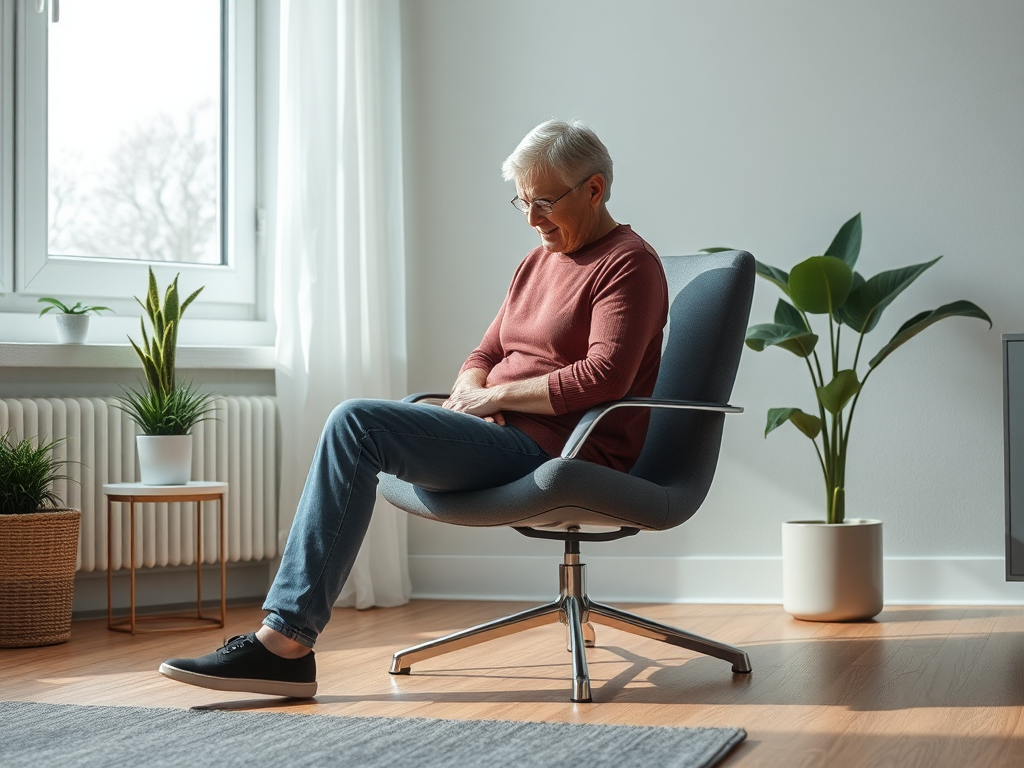
Osteoarthritis pain feels worse after sitting because prolonged inactivity allows the joint and surrounding tissues to stiffen, while the first movements place load on an already sensitive area. Reduced muscle activity, sustained pressure from a chair, and temporary changes in joint lubrication can make standing especially uncomfortable. Gentle movement before rising, followed by a few minutes of easy walking or range-of-motion exercises, may reduce the painful transition without forcing the joint. Pain that remains severe, rapidly worsens, causes marked swelling, or occurs with fever or inability to bear weight deserves medical assessment, because those features are not typical “start-up” stiffness alone.
Why Sitting Produces Start-Up Stiffness
Osteoarthritis discomfort after sitting is often a “start-up” pattern: symptoms become more noticeable when a person first stands or walks after a quiet period. Osteoarthritis changes the cartilage, bone, joint lining, and nearby tissues, so an affected joint may tolerate a position for a while but react when movement resumes. The knee, hip, ankle, and lower back are especially likely to show this pattern because they must immediately accept body weight.
Stillness does not usually damage the joint during an ordinary sitting period. The problem is the transition. Muscles around the joint become less active, the joint remains in one position, and nearby connective tissues may feel less pliable. The first few steps then combine stretching, bending, and loading. Someone with knee osteoarthritis might sit through a television program, stand, and feel a sharp ache or tightness that eases after walking across the room.
That temporary improvement with movement does not mean the joint is “wearing in” or that more activity is always better. Gentle motion may reduce stiffness, while sudden deep bending, stairs, or a brisk walk can exceed the joint’s current tolerance. The useful distinction is between comfortable movement that gradually loosens the area and forceful movement that provokes a flare.
People often assume that worse pain after sitting proves the arthritis has rapidly progressed. A single difficult transition cannot establish that. Sleep quality, recent activity, weather-related comfort changes, footwear, body position, and a previous strain can all alter symptoms. Tracking whether discomfort settles within several minutes, remains throughout the day, or is accompanied by swelling gives more useful information than judging the condition from one painful stand.
For a clearer explanation of related patterns, readers can review why osteoarthritis pain feels worse after sitting alongside notes about which movements trigger symptoms.
How Chair Pressure and Muscle Inactivity Add Pain
Sitting position can amplify osteoarthritis symptoms even though the underlying condition is in the joint. A low sofa may keep the knees or hips deeply bent, making the eventual rise more demanding. A hard chair can place pressure beneath the thighs or against the back of the pelvis. Crossing the legs, leaning to one side, or keeping one foot tucked under the chair may also leave one area carrying more pressure than the other.
Muscle inactivity matters because muscles help control load as a person changes position. When the quadriceps, hip muscles, or calf muscles have been still, they may not immediately provide smooth support. The joint then feels the transition more abruptly. This is one reason a person may hurt after a long car ride but feel better after a brief, easy walk around the vehicle. The contrast is not proof that sitting is harmful; it shows that the body responds differently to static and moving loads.
Chair choice involves tradeoffs. A firm, supportive seat may make standing easier, but an excessively hard surface can create pressure discomfort. A soft, low couch may feel comfortable initially while making the rise difficult. A practical arrangement is a seat high enough that the hips are not far below the knees, with stable arm support if pushing up is safe and comfortable. The goal is easier repositioning, not a special chair that promises to correct arthritis.
Consider a person who works at a desk and notices knee pain after lunch. The cause may be the uninterrupted sitting rather than the desk itself. Setting a quiet reminder to change position, straighten the knee, move the ankles, or walk briefly can reduce the length of each static interval. These small changes should not be used to push through escalating pain. If symptoms are worse after every workday despite regular position changes, the person may need an assessment of the joint, workstation, activity level, or treatment plan.
A common mistake is waiting until the joint hurts significantly before moving. Another is repeatedly standing quickly from a low seat to “test” it. Preparing the body with gradual motion is usually more sensible than alternating complete inactivity with abrupt effort.
What to Do Before and After Standing
The most useful response is a short, low-force transition routine that matches the affected joint. Before rising, shift toward the edge of the seat, place both feet securely, and take a moment to straighten and bend the ankles or gently move the knees. If the hips are involved, small weight shifts and relaxed posture changes may be more suitable than repeated deep bends. The purpose is to signal movement, not to stretch aggressively.
Once standing, pause with support nearby and let the legs settle. Walk slowly for a minute or two on a level surface before attempting stairs, carrying objects, or moving quickly. For knee symptoms, a few easy steps may be enough; for hip symptoms, avoiding a sudden pivot can matter more than walking farther. A warm shower or another comfortable heat source may make stiffness feel less intrusive for some people, while cold may feel better after activity-related swelling. Neither should be applied in a way that burns or irritates the skin.
A useful routine has three stages:
- Prepare: change position, place the feet, and use gentle ankle or knee movement.
- Rise: stand slowly with stable support and avoid twisting under load.
- Reintroduce load: take easy steps, then increase activity only if symptoms remain steady.
The routine should be judged by its response over time. A good sign is that the first steps feel less abrupt and stiffness settles sooner. A warning sign is pain that keeps building, new swelling, limping that persists, or discomfort that lasts well beyond the usual transition. Those signals mean the activity or technique may need adjustment rather than repetition at a higher intensity.
Medication decisions require individual context. Over-the-counter pain relievers and topical products are not interchangeable, and kidney disease, stomach problems, blood thinners, pregnancy, allergies, or other medicines can change what is appropriate. A pharmacist or clinician can help identify safer options. Pain relief should support reasonable movement, not conceal symptoms while the joint is repeatedly overloaded.
Readers comparing daily movement approaches may also find why osteoarthritis pain feels worse after sitting useful when deciding whether the main issue is chair setup, inactivity, or a broader flare.

When Post-Sitting Pain Needs Medical Attention
Brief stiffness after sitting is common with osteoarthritis, but the pattern should remain recognizable and manageable. Medical advice is appropriate when pain is new, persistent, steadily worsening, or substantially limiting ordinary activities. A clinician may need to distinguish osteoarthritis from bursitis, tendon problems, nerve irritation, inflammatory arthritis, injury, or another cause that does not follow a simple start-up pattern.
Prompt attention is particularly important for a hot, very swollen, or intensely painful joint; fever or feeling acutely unwell; a joint that suddenly gives way or locks; inability to bear weight; or symptoms after a significant fall. Calf swelling, chest symptoms, or sudden shortness of breath require urgent care rather than home experimentation. These findings are not explained safely by assuming that sitting merely caused stiffness.
Timing helps describe the problem. Note how long you sat, which joint was affected, how long the first pain lasted, whether swelling appeared, and what activity preceded it. Also record whether symptoms occur after sleep, improve with gentle movement, or return after a specific chair or driving position. A short record can help a healthcare professional see whether the issue is mechanical, activity-related, or changing in a way that deserves examination.
Another misconception is that severe pain should be ignored if it improves after several steps. Improvement is useful information, but it does not cancel repeated severe episodes. Conversely, mild stiffness that settles quickly does not automatically require imaging or a major intervention. Decisions should reflect function, persistence, examination findings, and the person’s broader health rather than a single symptom label.
Assessment becomes especially valuable when home adjustments have been tried consistently but standing remains difficult. Physical therapy may address strength, range of motion, balance, and movement technique. Weight management, if relevant to the individual, can be discussed without treating body size as the sole explanation. The priority is a sustainable plan that preserves useful activity while reducing avoidable spikes in joint load.
Frequently Asked Questions
Why does standing hurt more than sitting with osteoarthritis?
Standing suddenly adds body-weight load to a joint that has been still. Stiff muscles and a deeply bent position can make the first movement feel sharper than the sitting period itself.
How long should osteoarthritis stiffness last after sitting?
It varies, but brief stiffness that eases with gentle movement is a common pattern. Persistent or progressively longer stiffness should be discussed with a healthcare professional.
Can walking reduce pain after sitting?
Easy walking may reduce start-up stiffness for some people by gradually restoring movement and muscle control. Stop or reduce the pace if pain escalates, swelling appears, or limping develops.
Is a low couch bad for osteoarthritis?
A low couch is not automatically harmful, but it can make rising harder by keeping the hips and knees deeply bent. A firmer, higher seat may make transitions easier for some people.
When should post-sitting pain be checked?
Seek medical advice for severe or worsening pain, marked swelling, warmth, fever, locking, giving way, inability to bear weight, or symptoms that do not follow your usual pattern.
Conclusion
Post-sitting discomfort usually reflects the combination of a static position, reduced muscle activity, and the sudden load of standing—not proof that the joint has been damaged by every period of rest. Improve the transition first: use a stable seat, shift position before rising, move gently, and walk slowly before taking stairs or carrying weight. Watch the response rather than forcing a routine; less abrupt pain and quicker settling suggest that the approach is suitable, while swelling, escalating pain, or persistent limping suggests a need to stop and reassess. Keep notes if the pattern changes. Medical evaluation is the safer next step when symptoms become severe, unusual, or function-limiting.