
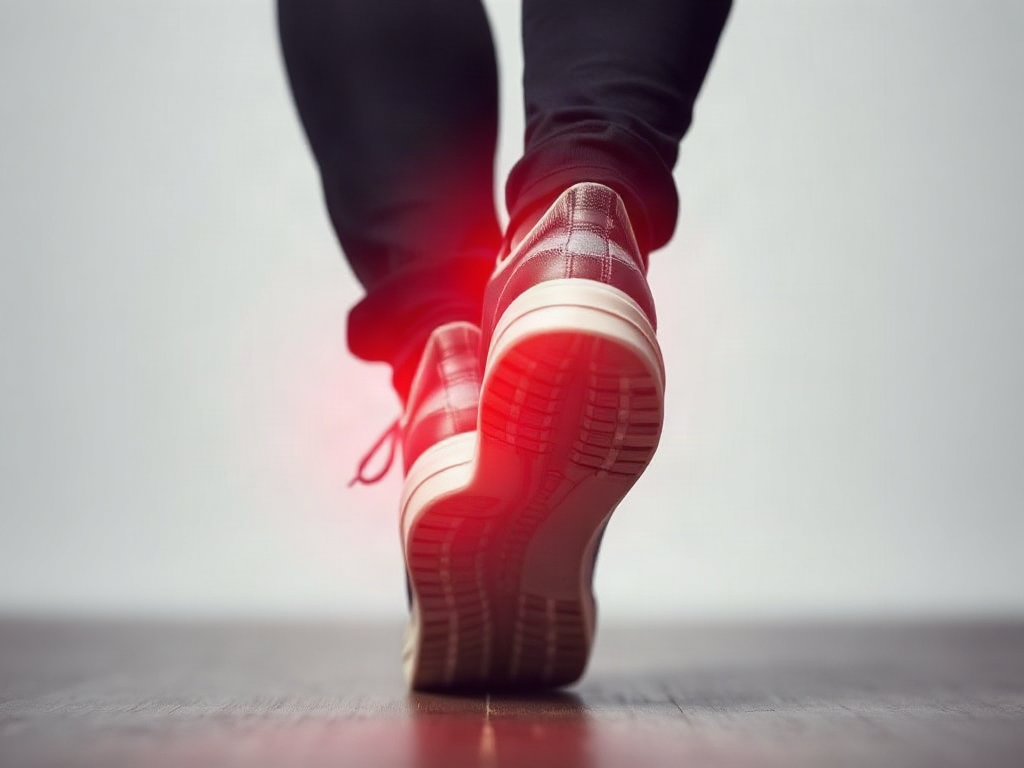
Footwear can reduce everyday joint pain for some people by improving fit, cushioning repeated impact, supporting stable movement, and avoiding pressure that changes how the feet, knees, hips, or back absorb load. The most useful shoe is not necessarily the softest or most supportive; it should hold the heel securely, leave adequate toe room, bend where the forefoot bends, and feel comfortable during the activity for which it will be worn. Worn-out soles, unstable cushioning, high heels, and abrupt changes to corrective footwear may worsen symptoms. Persistent swelling, sudden severe pain, numbness, or an inability to bear weight warrants professional assessment rather than another shoe purchase.
How Do Shoes Change Joint Loading?
Shoes influence how force moves through the body each time the foot contacts the ground. Their heel height, sole stiffness, width, cushioning, and shape can alter pressure beneath the foot and subtly change stride length or limb alignment. Those changes may affect discomfort in the feet, ankles, knees, hips, and lower back, particularly during repeated walking or long periods of standing.
Cushioning can soften the sensation of impact, but comfort is not determined by softness alone. A very soft midsole may compress unevenly or allow excessive side-to-side movement. A firmer, broader platform may feel less plush yet provide better stability for someone who feels unsteady. The practical target is controlled comfort: enough shock attenuation for the surface and activity without making the foot feel as though it is sinking or rolling.
Heel height deserves similar scrutiny. A raised heel shifts body weight forward and can change loading at the forefoot and knee. This does not mean every shoe must be completely flat; a sudden switch from a routinely elevated heel to a minimal shoe can strain tissues that are accustomed to a different position. Frequent wear of noticeably high heels, however, is unlikely to be the most joint-friendly option for long walks or extended standing.
Consider someone whose knees ache after commuting, walking through a large workplace, and shopping in thin, flexible casual shoes. A walking shoe with a broader base and moderate cushioning may make those tasks more tolerable because it reduces concentrated pressure and feels steadier. If the same person has inflammatory arthritis, a meniscal injury, or pain referred from the back, the shoe may improve comfort without addressing the underlying condition.
A common mistake is assuming that pain proves a specific mechanical defect that a shoe must correct. Joint symptoms can arise from injury, inflammation, muscle weakness, workload changes, or medical conditions as well as footwear. Shoes are best treated as one adjustable part of daily load management, not as a diagnosis or a guaranteed treatment.
Which Matters Most: Fit, Cushioning, or Stability?
Fit should usually be evaluated before specialized cushioning or support features. A shoe that pinches the toes, slips at the heel, or presses against a tender joint can create new irritation regardless of its technical design. Feet may also become wider or swell as the day progresses, so a size that feels adequate during a brief morning fitting may be restrictive by evening.
The front of the shoe should let the toes lie naturally rather than forcing them inward. The heel should remain reasonably secure without rubbing, while the upper should not press painfully across bunions, prominent joints, or swollen areas. Shoe size is only a starting point because width, toe-box shape, upper material, and internal seams vary among models. Trying both shoes matters because the two feet are not always identical.
Cushioning is most relevant when repeated impact or hard floors aggravate symptoms. Moderate cushioning often suits routine walking and standing, while a thinner, firmer sole may provide more ground feedback. Neither option is universally better. A person working on concrete may value shock attenuation; someone with poor balance may prioritize a stable base and secure upper over maximum softness.
Stability features can be useful when the foot visibly rolls, the shoe collapses to one side, or movement feels uncontrolled. More structure is not automatically more therapeutic, though. Aggressive arch contours or rigid motion-control elements can feel uncomfortable and may shift pressure elsewhere. If an insert or shoe produces new pain in the arch, outer foot, knee, or hip, discomfort should not be dismissed as something that must be endured to “break in” support.
A practical fitting check focuses on several details:
- Toe space: Toes can move without striking the front or being squeezed together.
- Heel security: The heel does not repeatedly lift or rub during normal walking.
- Flex point: The shoe bends near the ball of the foot rather than folding through the middle.
- Platform: The sole feels stable during turns and uneven steps.
- Immediate comfort: No seam, edge, or arch feature creates a sharp pressure point.
The most frequent failure is buying according to a label such as “orthopedic,” “maximum cushion,” or “motion control” without assessing the individual fit. Marketing categories cannot account for foot shape, balance, sensitivity, activity, or the location of symptoms. Comfort during realistic movement is a stronger first filter than a feature list.
How Should You Choose Shoes for Daily Activities?
Match the shoe to the task that produces the symptoms. A shoe suitable for desk work may not be adequate for several hours on a warehouse floor, and a highly cushioned running shoe may feel awkward during side-to-side movement. Start by identifying where the discomfort occurs, how long it takes to appear, and which surfaces or activities make it worse.
For routine walking, look for a secure upper, sufficient forefoot room, a stable heel area, and a sole that flexes at the front. People who stand for long periods may prefer cushioning that remains supportive under sustained load rather than an extremely soft foam that bottoms out. On uneven outdoor surfaces, grip and lateral stability become more important. Indoors, a supportive house shoe may be preferable to bare feet when hard flooring consistently triggers foot or knee discomfort.
Work requirements create constraints that comfort advice cannot override. Slip-resistant soles, protective toes, dress standards, or occupational safety rules may limit available choices. In that situation, compare approved models by width, internal volume, heel security, sole stiffness, and removable insole space. An aftermarket insert should not be added if it makes the shoe too tight or lifts the heel out of its stable position.
Someone with painful toe joints may favor a roomy toe box and a somewhat stiffer or gently rockered forefoot because that construction can reduce how much the toes bend during a step. By contrast, a person who needs ground feedback for balance may dislike a thick rocker sole. The better choice follows the specific movement problem rather than the idea that one design protects every joint.
Use a simple selection process:
- Bring the socks and any prescribed orthoses normally used for the activity.
- Try both shoes when the feet are representative of their usual daily size.
- Walk, turn, and use an incline or stairs if the store safely allows it.
- Reject immediate pinching, instability, heel slip, or forced changes in stride.
- Confirm the return policy before testing the shoes in normal life.
Replacing all footwear at once is another avoidable mistake. A new heel-to-toe shape, arch contour, or rocker can load tissues differently. Introduce unfamiliar designs during shorter, lower-demand periods and compare them with a known comfortable pair. Gradual exposure is especially sensible for minimalist shoes, highly structured models, or custom orthoses. New discomfort that grows with wear is a reason to reassess, not proof that correction is occurring.

How Can You Test Results and Recognize the Limits?
A useful footwear trial measures function as well as pain. Note whether you can complete a usual walk, finish a work shift, or stand during meal preparation with less discomfort and without new symptoms elsewhere. A shoe is not succeeding if it eases the knee while causing blisters, numb toes, arch pain, or instability.
Change one variable at a time when possible. Wearing new shoes, adding inserts, increasing walking distance, and changing exercise simultaneously makes the result difficult to interpret. Begin with a familiar route or routine, then observe symptom location, onset, and recovery. Consistent improvement across several comparable days is more informative than one unusually good or bad outing.
Inspect the footwear itself. A sole that is worn more heavily on one edge, a compressed midsole, a tilted heel, torn lining, or reduced tread may change stability and pressure. There is no reliable replacement date that applies to every shoe because body weight, gait, surface, construction, and use differ. Visible distortion, loss of traction, new instability, and a clear decline in comfort are more useful signals than age alone.
Some symptoms need more than an equipment adjustment. Sudden severe pain, marked swelling, redness or warmth, a recent injury, inability to bear weight, progressive weakness, or numbness should prompt appropriate medical assessment. Recurring pain that limits normal activity also deserves evaluation. A clinician may consider the joint itself, gait, strength, nerve symptoms, inflammatory causes, or referred pain rather than focusing only on the foot.
Professional shoe fitting can help with sizing and model selection, while a podiatrist, physical therapist, or other qualified clinician may assess persistent movement-related symptoms. Custom orthoses are not automatically necessary, and expensive shoes do not guarantee relief. Some people do well with a properly fitted standard model; others have deformity, substantial asymmetry, diabetes-related foot risk, or complex symptoms that warrant individualized advice.
The central misconception is that footwear must either cure the problem or be useless. Its realistic role often lies between those extremes: reducing an aggravating pressure, making walking more tolerable, or supporting activity while other contributors are addressed. If a careful trial produces no functional benefit, repeatedly purchasing more elaborate shoes is less useful than reconsidering the cause of the pain.
Conclusion
Footwear is most useful when treated as a practical load-management tool rather than a cure. Prioritize adequate toe room, secure heel fit, stable movement, and cushioning that suits the surface and activity. Test prospective shoes by walking and turning, then introduce unfamiliar designs gradually instead of changing shoes, inserts, and activity levels together.
Judge the result by what happens during ordinary tasks: symptom onset should be later or milder, daily function should be easier, and no new pressure points or balance problems should appear. Inspect older pairs for uneven wear or collapsed soles, but do not assume price or a specialized label predicts comfort. If a careful footwear change fails, or pain is severe, swollen, neurologic, injury-related, or progressively limiting, shift the priority from shopping to professional assessment.
Frequently Asked Questions
Are soft shoes always better for painful joints?
No. Soft cushioning may reduce impact sensation, but excessive compression can feel unstable. Aim for immediate comfort, a secure upper, and a broad, controlled platform rather than maximum softness.
Can worn shoes make joint discomfort worse?
They may contribute when the sole becomes uneven, cushioning collapses, traction declines, or the heel tilts. Compare the pair with a newer shoe on a flat surface and inspect it for distortion.
Should painful knees be treated with motion-control shoes?
Not automatically. Motion-control designs suit some movement patterns but may be unnecessary or uncomfortable for others. Fit, stability, symptoms, and walking comfort should guide the choice.
Do shoe inserts reduce everyday joint pain?
Inserts may redistribute pressure or change support, but results vary. They should fit without crowding the toes or lifting the heel, and new pain is a reason to stop and reassess.
When should joint pain be evaluated by a clinician?
Seek assessment for severe or persistent pain, significant swelling, warmth or redness, numbness, weakness, recent injury, inability to bear weight, or symptoms that increasingly restrict normal activity.