
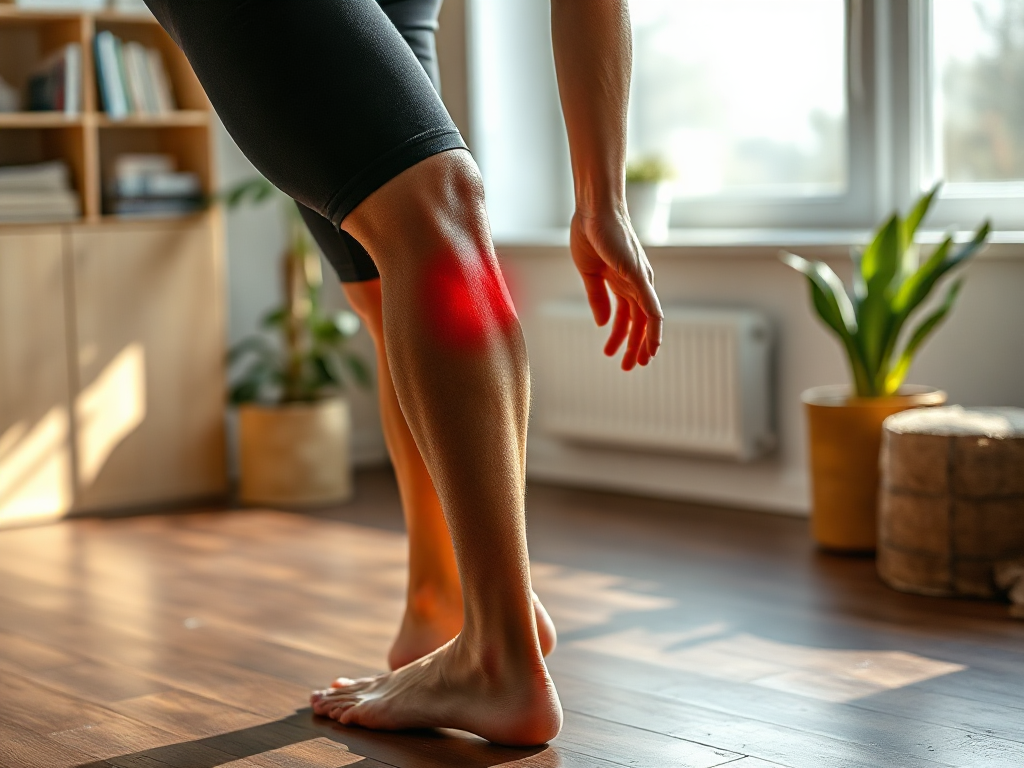
Protecting a painful joint can cause weakness because avoiding normal loading reduces muscle activity, movement range, balance practice, and confidence, while stiffness can make the joint harder to use when activity resumes. A guarded knee, hip, shoulder, or hand may therefore become surrounded by less conditioned muscles and altered movement patterns. Short-term rest may be sensible after an injury or during a severe flare, but prolonged immobilization is different from relative rest. Gentle, tolerable motion, gradual strengthening, and a review of the underlying pain trigger can help interrupt the cycle. Increasing pain, marked swelling, instability, fever, deformity, or sudden loss of function warrants prompt medical assessment.
How Protection Changes Muscle And Joint Function
A painful joint often triggers automatic guarding. You shorten your stride, keep a knee slightly bent, avoid lifting with one arm, or shift weight to the opposite side. That response can reduce discomfort in the moment, but it also changes the amount and type of work performed by nearby muscles. Less use may lead to reduced strength and endurance, while the joint itself may become stiffer and less familiar with ordinary loads.
The effect is not limited to muscle size. Strength includes the nervous system’s ability to recruit muscles quickly and coordinate them with balance and joint position. Someone who avoids standing on a sore leg may lose confidence in that leg, even if the original injury is improving. A person with shoulder pain who keeps the arm close to the body may find reaching overhead awkward because the motion has become unfamiliar, not necessarily because the shoulder has permanently worsened.
Weakness can also spread through compensation. If a painful ankle changes the way you walk, the other leg, hip, or lower back may absorb more work. With hand pain, relying on the opposite hand can reduce use of the affected grip while increasing strain during repetitive tasks elsewhere. These adaptations are not automatically harmful, but they become a problem when they persist after the joint can tolerate more activity.
A common mistake is treating every sensation as evidence of damage. Mild effort, stiffness after inactivity, or brief discomfort during a controlled movement may not mean the joint is being injured. The more useful question is whether symptoms settle after the activity and whether function is gradually improving. Severe, escalating, or unusual symptoms should not be pushed through. Readers comparing options in Why protecting a painful joint can cause weakness should distinguish protective pacing from complete avoidance.
When Rest Helps And When It Starts Working Against You
Rest has a legitimate role when pain follows a new injury, when swelling is substantial, or when a movement clearly aggravates symptoms. Temporarily reducing the provoking task can prevent repeated irritation and create room for evaluation. The concern is not a brief period of protection; it is protection that continues without reassessment.
Relative rest is usually more useful than total inactivity when the joint is medically safe to move. Relative rest means removing the specific load that causes a sharp increase in symptoms while retaining comfortable activities. For example, someone with a sore knee might pause deep squats and long downhill walks but continue short, easy walks on level ground if those do not worsen symptoms. A painful shoulder may need a break from overhead storage work while still tolerating gentle elbow, wrist, and shoulder-range movements.
The tradeoff becomes clearer when comparing two approaches. Complete avoidance may produce a quieter joint for a few days, but stiffness and deconditioning can make ordinary activity feel surprisingly difficult. A gradual approach may create some temporary awareness of the area, yet it preserves movement options and gives the person information about tolerance. Neither approach is appropriate for every diagnosis, and a fracture, dislocation, major tendon injury, or surgical recovery may require specific restrictions.
Use a simple symptom check rather than guessing. Before activity, note pain, swelling, range, and confidence. During movement, look for smooth control rather than forcing a particular distance or weight. Later that day and the next morning, check whether symptoms return to their usual level. If each session causes a clear flare that lasts, reduce duration, resistance, or range and consider professional guidance. If function is stable or slowly improving, the load may be reasonable.
A Safer Progression From Guarding To Movement
Restoring capacity works best when movement is reintroduced in small, repeatable stages. The first target is not maximum strength; it is comfortable control. Begin with movements that use the joint through an easy range and do not produce sharp pain, giving way, or a rapidly increasing ache. The exact exercise depends on the joint and the reason for pain, so a physical therapist or clinician can help when the diagnosis is uncertain.
A practical progression often moves through four priorities:
- Restore tolerable motion: Use slow, supported movement rather than forcing the end of the range.
- Rebuild low-load activation: Gentle contractions or supported tasks can reintroduce muscle recruitment.
- Add functional resistance: Progress to sit-to-stand practice, light carrying, step-ups, or other relevant tasks when control is reliable.
- Increase duration before intensity when needed: A few extra minutes of walking may be a better next step than a sudden jump in weight.
For instance, a person protecting a painful knee might start with short, level walks and controlled sit-to-stands from a higher chair. If the knee remains steady afterward, the chair height or walking time can change gradually. Someone protecting a hand may begin with light objects close to the body, then progress to brief carrying tasks before attempting prolonged gripping. The useful measure is not whether the joint feels perfect immediately; it is whether function, control, and recovery are trending in the right direction.
Equipment can support this process but should not replace it. A brace, cane, splint, or supportive surface may reduce a specific load and make movement safer, but excessive reliance can maintain avoidance or cause new strain if fit and timing are poor. A cane used on the wrong side or at the wrong height may shift work to the wrist, shoulder, or opposite leg. The goal is appropriate assistance while capacity returns, followed by reassessment of whether the aid is still needed.
Track one or two meaningful tasks each week: walking to the mailbox, reaching a shelf, opening a container, or rising from a chair. Improvement in a real task is more informative than chasing an arbitrary exercise number. If pain is consistently rising, strength is not returning, or movement quality deteriorates, stop progressing and obtain advice.
Warning Signs And Reasons To Seek Assessment
Weakness after protecting a joint is often related to reduced use, but it should not automatically be dismissed as simple deconditioning. The original pain may reflect a condition that needs diagnosis, and true weakness can sometimes indicate nerve involvement, a significant tendon problem, or an unstable joint. A clinician can separate pain-limited effort from loss of muscle or nerve function.

Prompt assessment is particularly sensible after a fall, twist, direct blow, or sudden pop when swelling, bruising, deformity, or inability to bear weight follows. Seek urgent care for a joint that appears deformed, becomes hot and markedly swollen with fever, or loses function suddenly. New numbness, progressive weakness, a foot or hand that cannot be lifted normally, or severe pain out of proportion to the event also deserves timely attention.
Even without an emergency sign, arrange an evaluation when symptoms are not improving, normal activities remain restricted, or the joint repeatedly gives way. Recurrent buckling can increase fall risk and may lead to more guarding. Persistent night pain, unexplained swelling, or pain affecting several joints also changes the decision from self-directed progression to medical review.
Bring useful observations to an appointment: when the pain began, what movement started it, what you stopped doing, whether swelling changes during the day, and which tasks now feel weak. A short record can reveal whether the issue is declining tolerance, mechanical instability, or a broader problem. Avoid testing the joint with a maximal lift or aggressive stretch simply to prove weakness. The safer priority is accurate assessment followed by a graded plan.
Frequently Asked Questions
Can resting a painful joint make it weaker?
Yes. Extended inactivity can reduce muscle conditioning, movement confidence, coordination, and tolerance for normal loads. Short-term rest may still be appropriate after certain injuries.
Is all discomfort during exercise a sign to stop?
No. Mild, controlled discomfort may occur during rehabilitation, but sharp pain, giving way, increasing swelling, or a lasting flare means the activity needs modification or assessment.
What is better than completely avoiding movement?
Relative rest is often a better option when safe: pause the aggravating task while maintaining comfortable range-of-motion work and light daily activity.
How can someone tell whether strength is returning?
Look for smoother control, better balance, improved tolerance for a familiar task, and recovery without a prolonged symptom increase. Do not rely only on how the joint feels at one moment.
When should weakness around a painful joint be checked?
Seek assessment for sudden or progressive weakness, numbness, instability, deformity, major swelling, fever, inability to bear weight, or symptoms that fail to improve with sensible activity changes.
Conclusion
Protecting a painful joint can be useful for a short period, but prolonged guarding may reduce muscle activation, mobility, balance, and confidence. The practical aim is not to ignore pain or force exercise; it is to remove the aggravating load while preserving safe movement and gradually rebuilding capacity. Start with controlled motion and manageable daily tasks, watch how symptoms respond later that day and the next morning, and progress duration or resistance one change at a time. Braces and walking aids can help with a specific limitation, but their fit and ongoing need should be reviewed. Sudden weakness, instability, deformity, fever, substantial swelling, numbness, or persistent functional loss should move the decision from self-management to professional assessment.