Cold packs are usually the better first choice for a newly swollen joint because cooling may limit discomfort and temporarily reduce local blood flow, while a warm shower is more useful for stiffness once heat, redness, and active swelling have settled. Use a wrapped cold pack for about 10 to 20 minutes, then let the skin return to normal before repeating; never place ice directly on the skin. Choose gentle warmth for tightness rather than visible swelling, and stop either method if numbness, burning, worsening pain, or increased swelling develops. Sudden severe swelling, fever, marked redness, deformity, inability to bear weight, or swelling without a clear explanation warrants prompt medical assessment.
What Swelling and Stiffness Tell You
A swollen joint and a stiff joint do not necessarily call for the same form of comfort care. Swelling often reflects fluid accumulation and irritation in or around the joint, whereas stiffness may be driven by reduced movement, muscle guarding, or tissues that feel tight after rest. The visible appearance, timing, and sensation provide more useful clues than a fixed rule that one temperature is always best.
A knee that becomes puffy after a twist, a finger that enlarges after a knock, or an ankle that swells after unusual activity generally needs protection from further irritation. Cooling may reduce the sensation of throbbing and temporarily narrow local blood vessels. That effect does not diagnose the injury or repair damaged tissue, but it can make short periods of rest more tolerable. Elevating the limb and avoiding aggravating loads may matter as much as the pack itself.
Warmth works differently. A warm shower can make movement feel easier by increasing comfort and reducing the perception of tightness. It may be a reasonable option for a joint that feels stiff on waking but is not hot, red, or visibly enlarging. Heat applied to an actively inflamed area may instead increase the feeling of fullness or pulsing. A common mistake is to judge the method by immediate comfort alone: warmth can feel soothing for a few minutes while the joint later appears more swollen.
Consider what changed first. Swelling after impact, overuse, or a sudden flare points toward cooling and load reduction. Stiffness that improves after several gentle movements, without heat or obvious swelling, may respond better to warm water. Neither approach should be used to push through severe pain, conceal a significant injury, or postpone evaluation of unexplained symptoms. For broader self-care context, see Cold packs versus warm showers for a swollen joint.
When a Cold Pack Makes More Sense
A cold pack is generally the more suitable trial when swelling is recent, the joint feels hot, or activity has clearly made symptoms worse. Cooling can temporarily reduce pain signals and may lessen the sensation of pressure around irritated tissues. It is a comfort measure rather than a treatment for the underlying cause, so improvement should be judged by easier rest and calmer symptoms—not by assuming the problem has been resolved.
Use a flexible cold pack, a bag of frozen vegetables, or a cool damp cloth wrapped in a thin towel. Place it over the swollen region without tightly compressing the area. A session of roughly 10 to 20 minutes is commonly sufficient, followed by a break long enough for the skin to warm normally. Longer exposure is not automatically more effective and raises the risk of skin injury, excessive numbness, or irritation. Direct contact with frozen material is especially risky.
Position also matters. For an ankle or knee, resting the limb in a supported elevated position may reduce dependent pooling while the pack is applied. For a finger or wrist, keep the hand comfortably supported rather than gripping the pack tightly. If a brace, wrap, or bandage is already present, check that it is not causing color change, tingling, or increasing pressure. Cooling should not be used over broken skin unless a clinician has specifically advised it.
Cold is not a good choice for every person or every body area. People with reduced sensation, circulation problems, or a history of an unusual reaction to cold may not recognize tissue damage promptly. Stop when the skin becomes very pale, blotchy, painful, or intensely numb. If the joint repeatedly swells after modest activity, a pack may manage symptoms without addressing instability, infection, crystal inflammation, or another medical cause. That pattern deserves assessment rather than increasingly frequent icing.
A practical example is a mildly swollen ankle after stepping awkwardly. Cooling, elevation, and reduced walking may be sensible during the first hours, provided there is no deformity or inability to use the foot. If the ankle becomes more painful despite rest, swelling spreads rapidly, or weight-bearing is not possible, the question is no longer cold versus warm; the injury needs professional evaluation.
When a Warm Shower May Be Useful
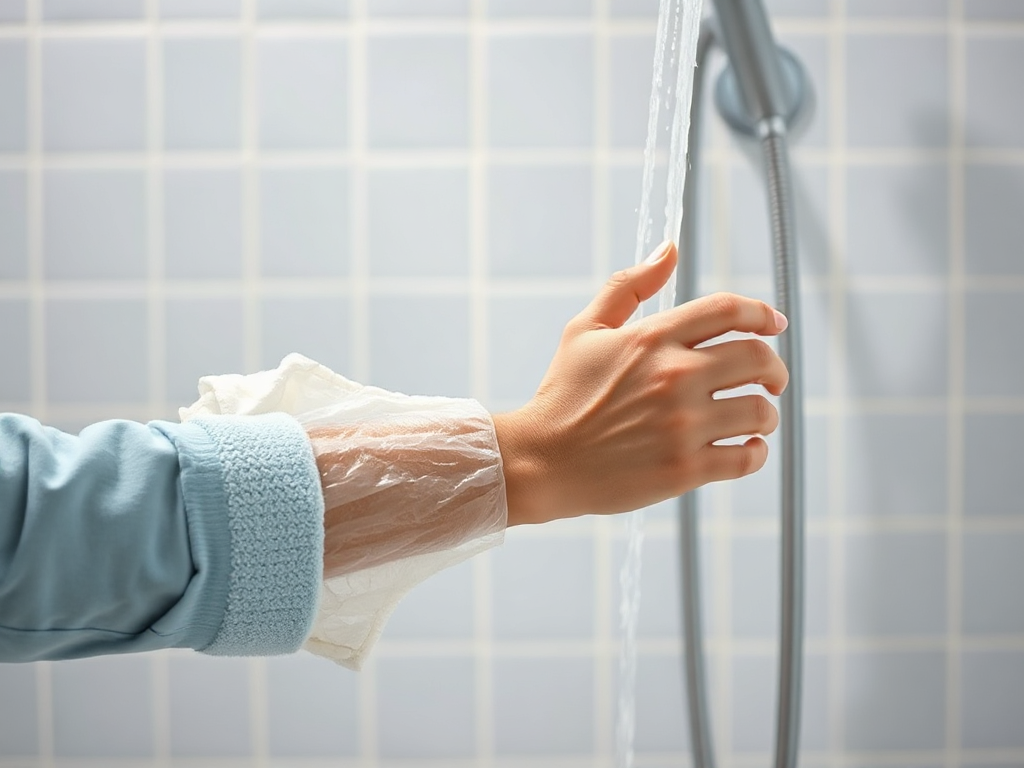
A warm shower is more appropriate for stiffness than for fresh, expanding swelling. Warm water can relax surrounding muscles, soften the feeling of guarded movement, and make gentle range-of-motion work more comfortable. The benefit is usually temporary and functional: a person may find it easier to bend a stiff knee or open a tight hand after showering. Warmth should not be treated as proof that inflammation is absent or that movement is safe at full intensity.
Keep the water comfortably warm rather than hot, and avoid directing forceful spray at a tender joint. Five to 10 minutes may be enough to make movement feel less restricted. Afterward, try slow, pain-limited motions rather than immediately lifting, gripping, running, or returning to the activity that caused symptoms. A stiff shoulder, for example, might tolerate gentle arm movements under warm water, while a visibly swollen shoulder that feels hot may be better served by rest and a brief wrapped cold pack.
Heat can be misleading when the joint is already inflamed. A hot shower may increase surface warmth and make redness harder to interpret. Some people also stay under hot water longer than intended, which can leave them light-headed or encourage them to test a painful joint too aggressively. The relevant question is not whether heat feels pleasant; it is whether swelling, tenderness, and function are better later that day. If the joint looks fuller or throbs after the shower, discontinue heat and reassess.
Warmth may suit chronic or recurring stiffness when symptoms are stable, but recurring swelling still requires a cause-focused plan. Osteoarthritis, tendon irritation near a joint, inflammatory arthritis, infection, and injury can produce overlapping complaints. A warm shower may ease one symptom without distinguishing among them. Pairing warmth with gentle movement is often more sensible than pairing it with forceful stretching, deep massage, or prolonged pressure over a painful area.
For instance, a finger that feels stiff after sleep but is not red or enlarging may loosen with warm water and several easy bends. If the finger is increasingly swollen, hot, difficult to move, or accompanied by fever or a wound, warmth is not an adequate response. The same distinction applies when comparing cold packs with warm showers for a swollen joint: symptom behavior after the trial matters more than habit.
A Safe Decision Process and Warning Signs
Choose the temperature by matching it to the dominant feature at that moment. Visible swelling, heat, pulsing, or a recent aggravating event favors a short cold-pack trial. Tightness, reduced motion after rest, and no increase in size or warmth make gentle shower heat more reasonable. When both swelling and stiffness are present, address the swelling first with protection, elevation, and cooling; consider warmth later only if the joint is no longer hot or enlarging.

A simple check can keep the decision grounded:
- Before: note the joint’s size, color, warmth, tenderness, and ability to move or bear weight.
- During: use a barrier for cold, keep warmth comfortable, and avoid forcing motion.
- After: check the skin and compare swelling and function after the joint has returned to its usual temperature.
- Stop: discontinue the method if numbness, burning, worsening pain, color change, dizziness, or increased swelling appears.
Do not alternate hot and cold automatically. Switching methods may feel appealing, but it can make it difficult to tell which treatment is aggravating symptoms. Test one approach under controlled conditions, record the response, and avoid repeating it simply because the first session gave brief relief. Medication, compression, exercise, and other measures may have their own precautions, so temperature therapy should not be used as a substitute for an individualized plan.
Seek prompt medical care for severe or rapidly increasing swelling, major redness or heat, fever, drainage, a deformity, new numbness, a cold or discolored limb, or inability to bear weight or use the joint. Swelling after a substantial injury, repeated unexplained episodes, or symptoms in someone taking medication that affects bleeding also deserve timely advice. A painful swollen joint with no clear injury may reflect a condition that needs examination rather than home temperature treatment.
For a minor, improving problem, the best sign is gradual functional progress: less fullness, steadier movement, and no rebound after ordinary tasks. Failure looks different—swelling returns quickly, pain escalates, motion becomes more limited, or the joint grows warmer and redder. Those findings should shift priority from comfort measures to clinical evaluation. More targeted context is available through Cold packs versus warm showers for a swollen joint.
Frequently Asked Questions
Should I use a cold pack or warm shower first for a newly swollen joint?
A wrapped cold pack is usually the better first trial when swelling is recent, visible, hot, or linked to an aggravating event. Rest and elevation may also help.
How long should a cold pack stay on a swollen joint?
Try about 10 to 20 minutes with a cloth barrier, then allow the skin to return to normal. Stop sooner if burning, marked numbness, or unusual color develops.
Can a warm shower make swelling worse?
It can increase the sensation of heat or fullness in an actively inflamed joint. If swelling or throbbing increases afterward, avoid heat and seek advice if symptoms persist.
Is it safe to alternate cold packs and warm showers?
Alternating is not necessary for most minor symptoms and can obscure which method is helping. Try one comfortable method, assess the later response, and avoid extremes.
When should a swollen joint be checked by a clinician?
Get prompt assessment for severe pain, rapid swelling, fever, marked redness or heat, deformity, numbness, inability to bear weight, or swelling without an evident injury.
Conclusion
For a swollen joint, temperature is a symptom-management choice, not a diagnosis. Recent puffiness, heat, or a flare after activity generally makes a brief wrapped cold-pack session more sensible, while a warm shower fits stable stiffness without visible or increasing swelling. Use modest exposure, protect the skin, avoid forcing movement, and judge the result after the immediate sensation has passed. Track whether size, warmth, tenderness, and function are moving in the right direction. Worsening swelling, escalating pain, fever, deformity, color or sensation changes, or unexplained symptoms should move the priority from home comfort to medical assessment. When the pattern keeps returning, identifying the underlying cause matters more than choosing between hot and cold.