
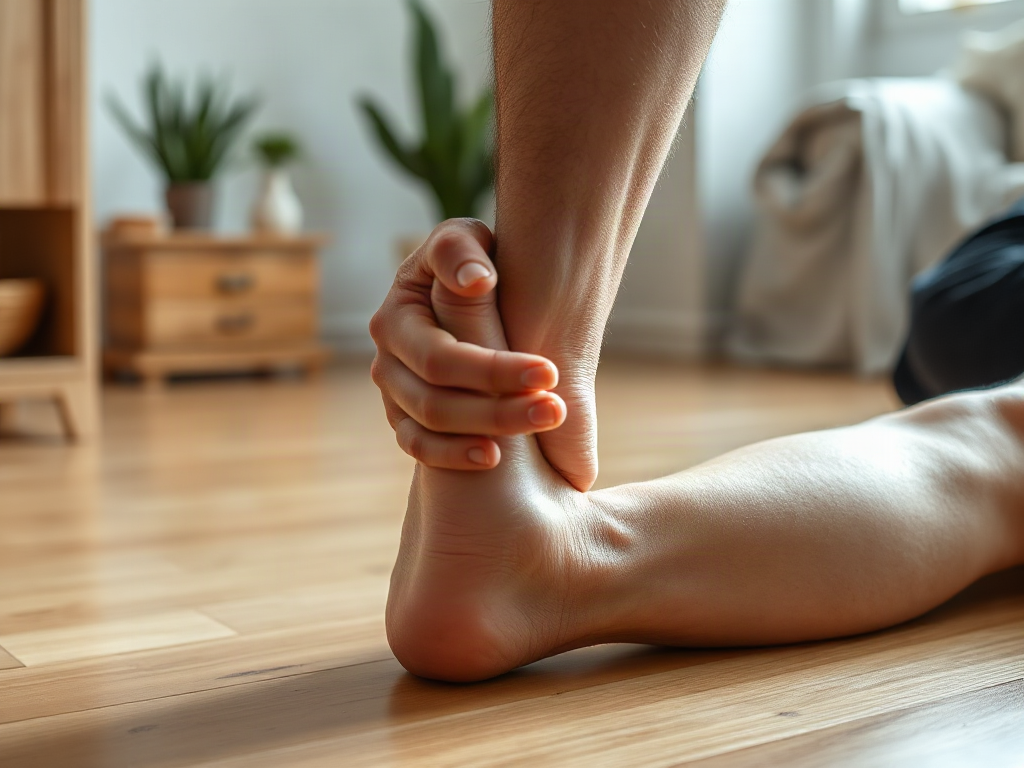
Protect a painful joint without complete immobilization by reducing aggravating loads, using temporary support, and maintaining gentle, pain-limited movement. Short periods of relative rest can calm irritation, while controlled range-of-motion exercises help limit stiffness and weakness caused by prolonged inactivity. Adjust stairs, lifting, gripping, or walking rather than stopping every movement, and increase activity only when discomfort settles during and after use. A brace, cane, or compression may be useful for specific tasks, but excessive tightness or continuous wear can restrict normal movement. Seek medical evaluation for major swelling, deformity, numbness, fever, inability to bear weight, or pain that is worsening or not improving.
Use Relative Rest Instead Of Complete Shutdown
Relative rest means removing the activity that provokes a painful joint while preserving comfortable movement elsewhere. A sore knee may need a break from running and repeated stairs, but gentle walking on level ground could remain reasonable. A painful wrist may tolerate relaxed finger motion even when forceful gripping, typing, or lifting a pan increases symptoms. The useful question is not whether every movement hurts; it is which load exceeds the joint’s current tolerance.
Complete immobilization can feel protective because it immediately reduces motion, yet prolonged inactivity may contribute to stiffness, reduced muscle support, and apprehension about moving. Those effects can make an eventual return to ordinary tasks harder. Relative rest takes a narrower approach: reduce force, repetition, speed, or range rather than treating the entire limb as unusable. A person with an irritated ankle, for example, might shorten walks and avoid uneven trails instead of remaining in bed.
Use symptoms during the activity and later that day as feedback. Mild, stable discomfort may be acceptable during a carefully chosen movement, but sharp pain, increasing swelling, limping, or a clear flare that lasts into the following day suggests the load was too high. Reduce one variable at a time—distance, weight, duration, or frequency—so you can identify what changed. Trying to push through because the joint is not visibly swollen is a common mistake; pain can still signal excessive mechanical demand.
how to protect a painful joint without complete immobilization is therefore an activity-management problem as much as a resting problem. Keep necessary daily movement, replace aggravating tasks with easier versions, and avoid testing the joint repeatedly just to see whether it still hurts.
Choose Support That Reduces Load Without Restricting Motion
A brace, compression sleeve, taping method, cane, or other support can make a specific activity more manageable by reducing unwanted motion or sharing load. The appropriate choice depends on the joint and task. A cane used on the side opposite a painful leg can reduce demand during walking, while a wrist support may limit bending during a short period of computer work. Neither device should be assumed to treat the underlying cause.
Support works best when it solves a defined problem. If the knee feels unstable on stairs, a handrail and carefully adjusted walking aid may provide more useful protection than a rigid brace worn all day. If a thumb hurts during opening jars, changing the jar-opening method or using a larger-grip tool may reduce strain more effectively than tightly wrapping the hand. A device that causes numbness, color change, skin irritation, increased pain, or altered walking needs to be loosened, removed, or reassessed.
Rigid immobilization has a place after certain injuries or procedures, but it is not automatically safer for an unexplained ache. Restricting a joint too much can reduce normal muscle use and conceal worsening symptoms. Conversely, a very flexible sleeve may provide warmth or awareness without offering meaningful stability. Match the support to the activity, use it for the period when protection is needed, and preserve comfortable motion when the device is removed.
Fit matters more than appearance. A brace should not create pressure points, force the joint into an unnatural position, or make the person compensate through the back, shoulder, or opposite leg. Try it during a low-risk version of the intended task before relying on it outdoors or for a long shift. A physical therapist, clinician, or appropriately trained professional can help with fit and technique when instability, an injury, or repeated symptoms is involved.
Build A Pain-Limited Movement Routine
Gentle movement protects function by keeping the joint accustomed to ordinary range without repeatedly provoking the painful tissue. The starting point should be a motion that feels controlled, not a forceful stretch designed to eliminate stiffness immediately. For a sore knee, this might mean slow heel slides or comfortable bends while seated. For a painful shoulder, small pendulum movements may be more suitable than repeated overhead reaches. The correct exercise depends on the joint, injury history, and medical context.
Begin with a small number of slow repetitions and pause if pain becomes sharper, coordination deteriorates, or the joint feels less stable. Movement should not require holding the breath or bracing the entire body. Short sessions spaced through the day are often easier to tolerate than one long session. The aim is to maintain usable motion and confidence while the aggravating load is reduced, not to prove that the joint can withstand its previous workload.
Progress by changing only one feature at a time. You might first increase the range slightly, then add repetitions, and later reintroduce light resistance. A person returning to walking could move from several brief level walks to a longer route before adding hills. Someone with hand pain could practice a light, open-handed task before returning to sustained gripping. If symptoms rise during the routine or remain noticeably worse the next morning, return to the last comfortable level rather than abandoning movement entirely.
A frequent misconception is that pain-free movement must mean no sensation at all. Mild awareness or temporary stiffness can occur, but escalating pain is a different signal. Another mistake is using exercises copied from a different joint problem. General movement advice cannot account for a fracture, tendon injury, infection, nerve involvement, or recent surgery. Stop self-directed exercise and obtain guidance when the diagnosis is uncertain or symptoms are substantial.
Adjust Daily Tasks And Monitor Progress
Joint protection becomes practical when it changes the way a task is performed. Keep loads close to the body, use two hands for awkward objects, divide heavy chores into shorter periods, and avoid combining force with twisting. A person with a painful knee may sit to dress and use a rail on stairs; someone with elbow pain may carry a light bag with the forearm supported rather than holding it away from the body. These changes lower demand without eliminating independence.
Workstation adjustments can matter for upper-limb symptoms. Keep frequently used items within easy reach, alternate hands only when the task remains controlled, and take brief movement breaks instead of maintaining one fixed position for hours. For foot or ankle pain, supportive footwear and a level route may be more useful than simply walking less. Protection should fit the real constraint—child care, commuting, employment, or household responsibilities—because advice that cannot be used will not protect the joint consistently.
Track three practical measures: what activity was performed, how the joint responded during it, and how it felt later or the next morning. Improvement may appear first as less swelling after a task, a steadier gait, easier dressing, or a longer comfortable interval rather than complete absence of pain. Failure looks like progressively shorter tolerance, repeated night waking, new weakness, or symptoms spreading beyond the original area.
- Keep: comfortable range-of-motion work and necessary low-load activity.
- Modify: speed, weight, distance, grip, stairs, slopes, or repetition.
- Pause and reassess: activities that cause sharp pain, instability, or a lasting flare.
Do not use a “good day” to compensate for several quiet days by suddenly doubling activity. That boom-and-bust pattern can produce another flare and makes it difficult to identify a safe baseline. Gradual, repeatable exposure is usually more informative than occasional strenuous testing.

Know When Protection Is Not Enough
Self-protection is reasonable for a mild, stable problem when function is largely preserved and symptoms are trending toward improvement. It is not a substitute for assessment when the joint may be seriously injured or affected by a condition requiring treatment. Immediate medical attention is appropriate for a visible deformity, suspected fracture, inability to bear weight or use the limb, sudden severe swelling, a hot red joint with fever, new numbness, or a limb that becomes unusually pale or cold.
Arrange clinical evaluation for pain after a significant fall or twist, repeated giving way, persistent locking, progressive weakness, or symptoms that do not improve with sensible load reduction. People taking blood thinners, living with immune suppression, or recovering from surgery should use a lower threshold for seeking advice. The same symptom can have different implications depending on medical history, age, medications, and the force of the original event.
Protective strategies can also fail by masking a problem. A brace may allow a person to keep working while an injury worsens, and pain medication may make excessive activity feel easier temporarily. Comfort is useful information, but it does not prove that tissue capacity has returned. Increase activity only when function, movement quality, and next-day response support the change.
When professional care is needed, bring a concise activity record: when symptoms began, what movement triggers them, whether swelling or instability occurs, and what support or rest changed. That information can help distinguish a load-management issue from a problem needing examination or targeted rehabilitation. Protecting a painful joint without complete immobilization should preserve function while leaving room to identify warning signs.
For condition-specific advice, consult guidance from a licensed clinician or physical therapist, particularly after trauma, surgery, or a sudden loss of function. Reputable hospital systems, government health services, and professional rehabilitation organizations can provide general movement and safety information, but they cannot replace an examination when warning signs are present.
Frequently Asked Questions
Should a painful joint be kept completely still?
Usually not for a mild, stable problem. Reduce the movements and loads that worsen symptoms while preserving gentle, comfortable motion unless a clinician has specifically prescribed immobilization.
Can a brace make a painful joint worse?
It can if it is too tight, poorly fitted, worn continuously without a clear reason, or used to push through worsening symptoms. Remove it for numbness, color change, skin injury, or increased pain and seek advice about fit.
How much movement is safe?
Choose slow, controlled movement that does not produce sharp pain, instability, or a notable flare later that day or the next morning. Progress gradually rather than using one symptom-free period to resume full activity.
Is walking helpful for a painful knee or ankle?
Short, level walks may be reasonable when weight bearing is comfortable and the gait remains steady. Shorten the route, use a rail or appropriate aid, and avoid walking through increasing pain or limping.
When should joint pain be checked by a professional?
Seek prompt care for deformity, major swelling, fever with a hot red joint, new numbness, inability to use the limb, or inability to bear weight. Arrange evaluation for persistent, worsening, unstable, or injury-related symptoms.
Conclusion
Protecting a painful joint does not usually mean placing it in total shutdown. The more useful approach is to identify the specific load that provokes symptoms, reduce that load, preserve controlled movement, and use support only when it solves a clear task-related problem. Watch the delayed response as closely as the immediate sensation: swelling, limping, weakness, or next-day worsening means the activity needs adjustment. Avoid tight devices, forceful stretching, sudden returns to full workload, and exercises chosen without regard to the affected joint or injury history. If function is declining, the joint is unstable, or red-flag symptoms appear, arrange professional assessment rather than relying on protection alone. A gradual return based on repeatable tolerance offers a safer path than either pushing through pain or remaining immobilized indefinitely.
Additional Resources
Authoritative Sources
- Simple tips to protect your joints
health.harvard.eduKeep moving. Avoid holding one position for too long. · Minimize the stress on your joints. Avoid positions or movements that put extra stress on ...