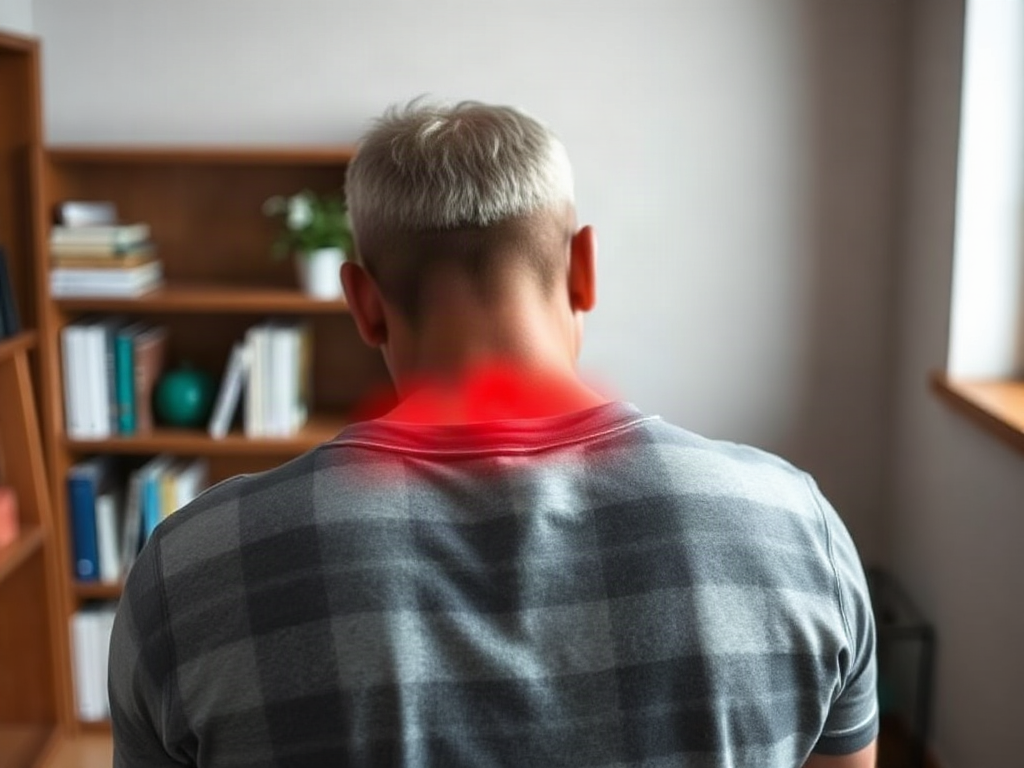
Trapezius pain relief usually combines reducing the activity that overloads the muscle, gentle mobility, gradual strengthening, and attention to warning signs. Common triggers include prolonged screen posture, carrying weight on one side, sudden lifting, repetitive overhead work, and stress-related shoulder bracing. Begin with comfortable neck and shoulder movement, then add light trapezius and upper-back exercises when sharp pain has settled; forcing a stretch or training through worsening symptoms can prolong irritation. Pain that follows significant injury, travels into the arm, causes weakness or numbness, or occurs with chest symptoms needs prompt medical assessment rather than home exercise alone.
Why the Trapezius Becomes Painful
The trapezius is a broad, triangular muscle extending from the base of the skull and neck across the upper back and toward the shoulder blade. Its upper, middle, and lower fibers help position the head, neck, shoulder blade, and arm. Because it remains active during sitting, reaching, carrying, and arm movement, discomfort may develop without one obvious injury.
A common pattern is sustained low-level loading rather than a single dramatic strain. A laptop positioned too low can keep the head angled forward, while a phone held between the ear and shoulder can force one side of the muscle to work continuously. Carrying a heavy bag on one shoulder, repeated overhead tasks, or sleeping with the neck rotated may add a short-term overload. Stress can also produce unconscious shoulder elevation, increasing muscle tension without improving support.
Workload matters more than posture perfection. The same desk position may be tolerable for a short period but irritating after several uninterrupted hours. Likewise, a rowing or lifting exercise may be reasonable when technique and recovery are adequate but aggravating when volume rises suddenly. Reducing exposure to the provoking task is usually more useful than searching for one ideal stretch.
For a few days, note which actions increase symptoms: turning the head, lifting the arm, carrying weight, prolonged sitting, or pressing directly on the muscle. That information can guide a change in workstation height, bag use, training volume, or sleep position. An internal resource such as Trapezius pain relief: causes, exercises, and precautions can complement—not replace—an assessment when symptoms persist.
How Symptoms Help Identify the Likely Driver
Symptom behavior offers clues, although it cannot establish a diagnosis by itself. Local tenderness and aching that fluctuate with shoulder use are more consistent with a muscular or mechanical source than pain that is constant, rapidly worsening, or unrelated to movement. A tight band near the upper shoulder may reflect protective muscle activity, but pressing harder into it does not prove that the muscle is the sole cause.
Neck-related irritation may send discomfort toward the shoulder blade or arm and can be accompanied by tingling, numbness, or weakness. Shoulder joint problems may become more noticeable when reaching overhead or behind the back. Pain after a fall, collision, or forceful pull deserves more caution than soreness after an unfamiliar workout. Fever, unexplained illness, severe night pain, or pain with breathing also changes the decision from self-care to medical review.
Consider a desk worker whose symptoms appear late in the afternoon and improve after walking. Frequent movement breaks and screen adjustments may be more relevant than aggressive massage. By contrast, someone who develops pain and arm weakness while lifting should stop the provoking exercise and seek evaluation. Treating both situations as ordinary “knots” can delay appropriate care.
Use improvement and deterioration as feedback. Mild looseness after gentle movement is encouraging; increasing pain during the exercise, a larger area of symptoms afterward, or new neurological symptoms suggests the approach is too demanding or poorly matched. Avoid assuming that a painful spot always needs more pressure. The upper trapezius may be reacting to restricted movement, workload elsewhere, or irritation from the neck rather than simply being short.
Exercises for Mobility and Strength
Exercises for trapezius discomfort should begin with controlled, comfortable motion and progress only when symptoms remain stable. A useful starting sequence is slow neck rotation, gentle chin tucks, shoulder-blade setting, and relaxed shoulder rolls. Move within an easy range rather than pulling forcefully into a stretch. Five to ten controlled repetitions can be enough initially, especially after prolonged sitting.
A doorway chest stretch may be useful when rounded shoulder positioning contributes to upper-back effort, but it should feel like a mild stretch across the chest rather than a pinch in the shoulder. For shoulder-blade control, stand tall and draw the blades gently down and back without shrugging or arching the lower back. Hold briefly, then relax. The goal is coordination, not maximum contraction.
When daily movement is comfortable, light strengthening can include wall slides, supported rows with a resistance band, and prone or standing lower-trapezius raises performed with very small loads. Keep the neck relaxed and stop before the shoulders creep toward the ears. A person returning to exercise after a flare may choose two sets of a few controlled repetitions rather than immediately resuming a previous weight or workout volume.
Strength work and stretching serve different purposes. Stretching may temporarily reduce the feeling of tightness, while strengthening can improve tolerance for carrying, reaching, or desk work over time. Neither is automatically appropriate during an acute flare. A common mistake is repeatedly stretching a painful area because it feels tight, then adding heavy shrugs or rows before the tissue tolerates them. Increase either resistance or volume—not both at once—and judge the response later that day and the following morning.
Precautions, Red Flags, and When to Get Help
Stop an exercise if it produces sharp pain, steadily increasing symptoms, new tingling, numbness, loss of strength, dizziness, or pain that spreads farther down the arm. Mild effort or a gentle stretch sensation may be acceptable, but pain should not become progressively more intense as the set continues. Do not use exercise to test whether you can “push through” a suspected injury.
Urgent medical attention is appropriate for trapezius-area pain accompanied by chest pressure, shortness of breath, sweating, faintness, or unusual nausea. Prompt assessment is also warranted after significant trauma, when the neck is severely restricted, or when arm weakness or sensory changes develop. These features can involve structures beyond the muscle and should not be managed solely with home massage or stretching.

Arrange a routine evaluation if symptoms are not clearly improving after a reasonable period of modified activity, repeatedly return, interfere with sleep, or limit work and normal arm use. A clinician or physical therapist can examine the neck, shoulder, neurological function, and movement pattern rather than guessing from the tender area alone. Medication decisions also require attention to medical history, other medicines, stomach or kidney problems, and individual risks.
Heat may feel comfortable for stiffness, while a cold pack may be soothing after a recent minor overload; neither addresses the underlying workload by itself. Avoid prolonged direct pressure with massage tools over the front or side of the neck. The safer priority is gentle movement, removal of the aggravating demand, and professional assessment when the symptom pattern does not fit uncomplicated muscle soreness.
A Practical Recovery Plan
A sensible plan changes the load first, then restores movement, then rebuilds capacity. For the first day or two of a flare, keep ordinary activity within a comfortable range and avoid the specific lift, carry, or position that clearly worsens symptoms. Complete brief movement breaks instead of remaining completely still. Total rest can make returning to desk work or exercise feel harder, while continuing the provoking activity can keep irritation active.
Next, adjust the environment. Raise a screen so the head is not constantly angled downward, support the forearms when possible, alternate carrying sides, and place frequently used items within easy reach. During training, reduce load, range, or repetitions and use a slower tempo. A change that removes the trigger is often more valuable than adding several corrective exercises.
Use this simple progression:
- Check: identify the movement, position, or workload that reliably increases symptoms.
- Modify: reduce that demand while maintaining comfortable daily movement.
- Mobilize: perform gentle neck, shoulder, and upper-back movements without forcing range.
- Strengthen: add light shoulder-blade control work once basic movement is tolerated.
- Reassess: continue only if symptoms are stable or improving during the next day.
Progress should be based on function rather than the absence of every sensation. Being able to turn the head, work, sleep, and lift light objects with less irritation matters more than finding a perfectly pain-free stretch. If symptoms return each time resistance increases, the jump may be too large, recovery may be insufficient, or the original source may not be muscular. For persistent problems, a targeted assessment is more efficient than cycling through increasingly intense self-treatment.
Readers comparing exercise options may also find Trapezius pain relief: causes, exercises, and precautions useful as a reference point, but the correct progression depends on the symptom pattern and medical context.
For additional background, consult patient information from recognized health systems, physical therapy organizations, or government health services covering neck pain, shoulder function, and exercise safety. These sources can help distinguish routine self-care questions from symptoms that need clinical evaluation; they should not be used to self-diagnose neurological or chest-related symptoms.
Frequently Asked Questions
What is the fastest way to ease trapezius discomfort?
Reduce the activity that provokes it, use comfortable heat or cold if helpful, and perform gentle neck and shoulder movement. Avoid forceful stretching or heavy strengthening during a flare.
Should I stretch a tight upper trapezius?
A gentle stretch may temporarily ease tension if it does not cause sharp pain, tingling, or worsening afterward. Tightness can also reflect overload or neck irritation, so stretching is not always the main solution.
Can poor desk posture cause trapezius pain?
Prolonged, unsupported positions can increase muscle workload, especially when combined with limited movement. Frequent breaks, screen adjustments, and forearm support are usually more practical than trying to hold one rigid posture all day.
When should trapezius pain be checked by a clinician?
Seek assessment for persistent or recurring symptoms, pain after significant injury, arm weakness, numbness, tingling, severe restriction, or symptoms that interfere with sleep and normal activities.
Are shoulder shrugs good for trapezius pain?
They may be useful later for a person who tolerates strengthening, but they can aggravate an active flare by adding more upper-trapezius loading. Begin with lighter shoulder-blade control work and progress gradually.
Conclusion
Effective trapezius pain relief is less about finding one powerful stretch and more about matching the response to the likely driver. Reduce the task that overloads the muscle, keep comfortable movement available, and introduce mobility and strengthening in stages. Desk setup, carrying habits, training volume, and sleep position can all influence recovery, so inspect the daily pattern rather than treating only the tender spot. Sharp or spreading pain, neurological changes, significant trauma, or chest and breathing symptoms require medical attention. If ordinary movement is gradually becoming easier, continue a measured progression; if symptoms repeatedly return or fail to settle, arrange an evaluation before increasing exercise intensity.