
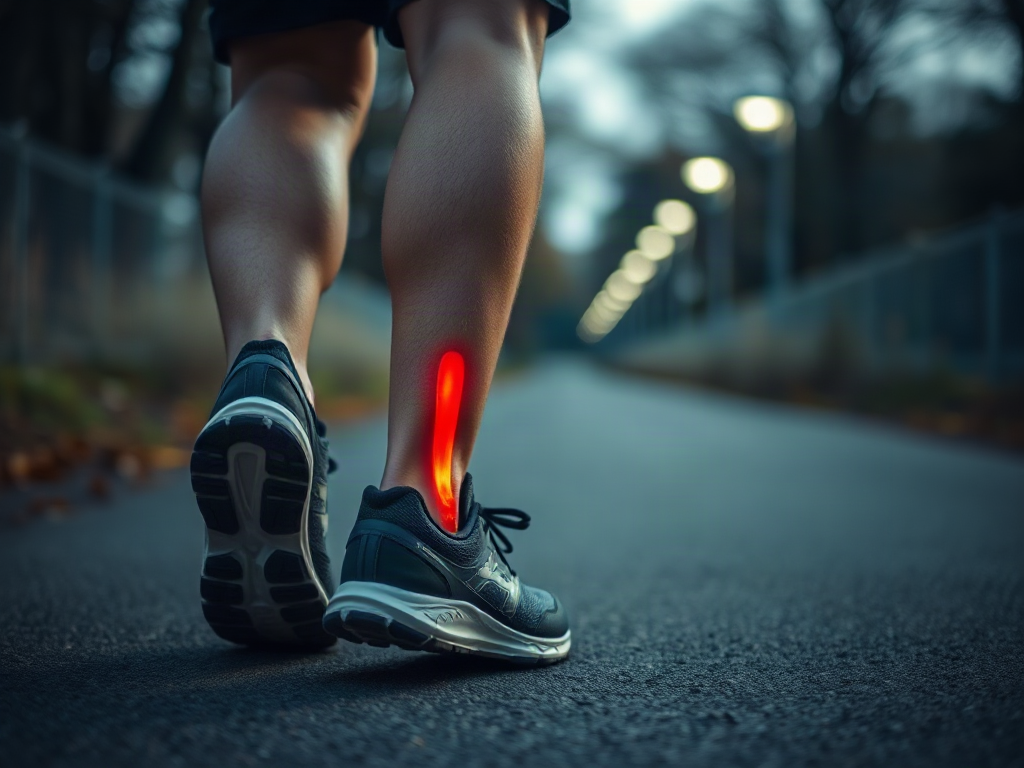
Shin pain while running: causes and relief depend on whether the discomfort is spread along the inner shin or concentrated in one tender spot. Rapid mileage increases, hills, hard surfaces, worn shoes, and weak calf or foot control can overload the tissues around the tibia, while pinpoint tenderness may signal a bone stress injury that needs evaluation. Reduce or pause painful running, use low-impact exercise only if it remains comfortable, and gradually rebuild distance after normal walking and easy hopping are symptom-free. Persistent pain, swelling, pain at rest, or worsening tenderness should be assessed by a clinician rather than masked with pain medication.
Why Shin Pain Starts During Runs
Shin discomfort usually reflects a mismatch between the load placed on the lower leg and the amount of recovery available between sessions. Each foot strike sends force through the foot, ankle, calf, and tibia. Running farther, faster, or more often increases that repeated demand, even when an individual workout feels manageable. The problem may appear after a training change rather than during the first few runs because irritated muscles, tendons, and bone respond to accumulated stress.
A common pattern is a runner adding mileage while also introducing hills, speed intervals, or a harder route. Uphill running demands more from the calf; downhill sections increase braking forces; a rigid surface may make the same pace feel less forgiving. Shoes that have lost cushioning or do not suit the runner’s foot mechanics can add another variable, although footwear is rarely the sole explanation. Replacing shoes without changing an excessive training jump may provide little lasting relief.
The location and timing of symptoms offer useful clues. Aching along a broader area of the inner lower leg that develops during or after exercise is often associated with exercise-related overload, sometimes called medial tibial stress syndrome. Pain that is sharply localized, progressively worse, or present while walking deserves more caution. The running-related shin pain assessment should focus on both the symptom pattern and the recent training history.
A mistake is treating every case as a flexibility problem. Stretching a tight calf may feel pleasant, but it does not correct a sudden increase in impact exposure. Another mistake is testing the painful leg repeatedly during a run to see whether it has improved. That habit can turn a manageable overload problem into a longer interruption. First identify what changed, then reduce the provoking load enough for symptoms to settle.
Recognizing Common Causes And More Serious Injuries
Training errors are among the most practical causes to investigate. Relevant changes include a sharp mileage increase, adding consecutive running days, switching from a treadmill to outdoor pavement, beginning hill repeats, or returning to running after time away. Calf weakness, limited ankle motion, poor control of the foot as it contacts the ground, and inadequate recovery may increase the work required from the lower leg. These factors do not prove a diagnosis, but they help explain why symptoms appeared when they did.
Diffuse tenderness spread over several inches of the inner shin is different from a very small, highly sensitive area. A broad ache that settles with rest may fit an overload pattern, while pinpoint pain over the bone, pain that lingers at rest or at night, swelling, or pain with ordinary walking raises concern for a bone stress injury. Compartment syndrome is less common but important when running produces tightness, cramping, numbness, weakness, or pain that predictably escalates and eases only after stopping.
Do not use the ability to finish a run as proof that the injury is minor. Adrenaline and a warm-up can temporarily change how symptoms feel. Conversely, mild soreness after an unfamiliar workout does not automatically mean a stress fracture. The sensible distinction is based on progression, location, function, and recovery: symptoms that are becoming more focal, appearing earlier, or interfering with walking should move the decision toward professional assessment.
Seek prompt medical evaluation for severe or rapidly increasing pain, visible swelling, numbness, weakness, a change in skin color or temperature, inability to bear weight, or pain after a direct injury. Arrange an assessment when symptoms do not improve after reducing impact, repeatedly return during easy running, or remain present at rest. A clinician may examine the entire chain from hip to foot and decide whether imaging or evaluation for another condition is appropriate.
What To Do When Running Triggers Shin Pain
The first useful adjustment is to remove the activity that reproduces the pain, not necessarily all movement. If normal walking is comfortable, cycling, swimming, or an elliptical workout may preserve aerobic fitness, provided those activities do not provoke symptoms during the session or afterward. If walking hurts, even low-impact exercise may be premature. This approach trades short-term training continuity for a lower chance of converting an irritation into a more persistent injury.
For the first several days, use symptom behavior to guide the response. Rest from running, keep daily movement comfortable, and consider a cold pack wrapped in cloth for short periods if it feels soothing. Elevating the leg may help after a demanding day if swelling is present. Pain relievers can reduce discomfort but may also make it easier to overload the area; medication should not be used to push through a painful run, and people with medical conditions or other medications should ask a healthcare professional about safe use.
Once ordinary walking is comfortable, examine the factors that preceded the flare. Record recent distance, pace, hills, surfaces, shoe age, strength work, and rest days. A runner who added four variables at once cannot easily identify the trigger. The next training phase should change one major factor at a time. For example, keep the route flat while restoring frequency, rather than reintroducing hills and intervals alongside longer runs.
- Stop or modify running when pain changes your stride or increases as the session continues.
- Choose cross-training only when it remains comfortable during exercise and later that day.
- Check for focal tenderness, pain during walking, swelling, or symptoms at rest.
- Arrange clinical assessment if improvement is absent, incomplete, or repeatedly short-lived.
Calf raises, controlled ankle work, and gradual foot and hip strengthening may be useful after the painful phase, but exercises should match current capacity. A single aggressive stretching session or a large strength workout can add load rather than solve it. The relief options for runners with shin discomfort work best when they accompany a measured reduction in impact, not when they are used to conceal symptoms.

Returning To Running Without Repeating The Problem
Return only after walking is comfortable and daily symptoms are stable. A cautious first test might be a short run-walk on a flat, predictable surface, followed by a rest day or easy cross-training day. The important measure is not only how the leg feels during the session but also how it responds later that day and the next morning. Increasing pain, renewed limping, or greater tenderness means the workload was too high.
Progression should be gradual enough that the lower leg can adapt before speed and terrain are added. Restore easy duration first, then frequency, then hills or faster work. Runners who previously developed symptoms during a long weekend run may benefit from shortening that run and distributing manageable volume across the week. The best plan depends on training age, injury history, surface, and the severity of the original symptoms; a generic percentage increase is not a guarantee of safety.
Footwear deserves a practical review rather than a search for a perfect shoe. Shoes should feel comfortable, fit securely, and be appropriate for the runner’s usual surface. Replace footwear when the midsole is visibly compressed, the upper no longer holds the foot well, or the shoe’s behavior has changed noticeably. Changing to a drastically different shoe while increasing mileage can create a second load change, so transition cautiously.
Before each run, a brief warm-up can include walking and easy ankle and calf movements. It should prepare the body, not exhaust the calf. Stop using a return-to-run schedule if pain becomes focal, appears earlier each time, affects gait, or fails to settle by the next day. A sports medicine clinician or physical therapist can help distinguish recurring load intolerance from a bone stress injury and can assess strength, ankle mobility, running mechanics, and training structure.
For additional guidance, consult patient information from recognized sports-medicine, orthopedic, or public-health organizations, especially material addressing bone stress injuries, medial tibial stress syndrome, and safe return to activity. These sources can complement—but not replace—an examination when pain is focal, persistent, or present during ordinary walking.
Frequently Asked Questions
Should I keep running with shin pain?
Do not continue if pain changes your stride, worsens during the run, or remains worse afterward. Use comfortable low-impact exercise only if it does not reproduce symptoms.
How can I tell shin splints from a stress fracture?
Shin splints often cause broader tenderness along the inner shin, while a stress fracture may cause focal bone tenderness, pain with walking, swelling, or pain at rest. Symptoms cannot be diagnosed reliably at home, so concerning patterns need clinical assessment.
Do new running shoes fix shin pain?
New shoes may help when the old pair is worn or uncomfortable, but they will not offset a sudden mileage increase, excessive hills, or insufficient recovery. Change training load as well as checking footwear.
What exercise can I do while my shin heals?
Swimming, cycling, or an elliptical may be reasonable if walking is comfortable and the activity causes no pain during or after exercise. Stop if symptoms increase or your gait changes.
When should I see a doctor for shin pain?
Seek care for focal tenderness, swelling, pain at rest or at night, numbness, weakness, inability to bear weight, or symptoms that fail to improve after reducing running.
Conclusion
Shin pain while running is a signal to examine impact load, recent training changes, recovery, footwear, and lower-leg capacity rather than simply pushing through or stretching harder. Broad soreness that follows a mileage or hill increase may settle with a temporary reduction in running and carefully chosen cross-training. Pinpoint tenderness, walking pain, swelling, rest pain, or progressive symptoms require greater caution because they may indicate a bone stress injury or another condition. Resume running only when daily movement is comfortable, begin with an easy flat run-walk, and judge success by the response later that day and the next morning. If symptoms recur despite a sensible load reduction, an in-person evaluation is the most efficient next step.