
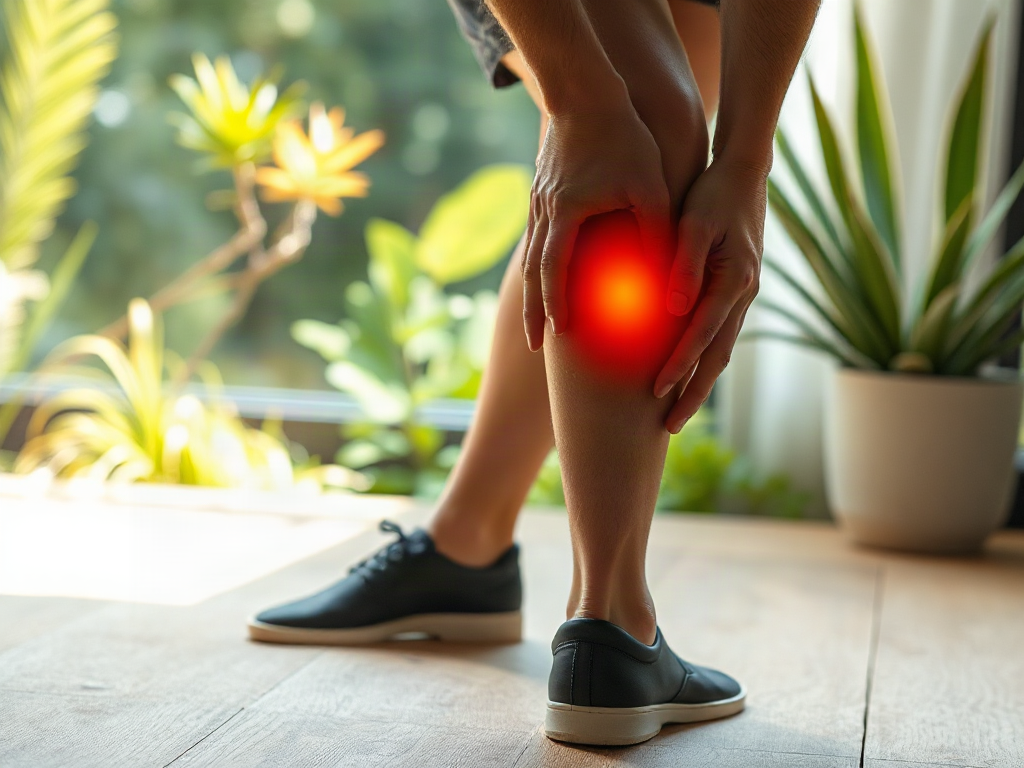
Calf muscle pain: causes, warning signs, and relief depend on whether the discomfort follows exertion, a sudden stretch, prolonged immobility, or an unexplained change in one leg. A mild strain often causes localized tenderness and pain with pushing off, while cramping may improve with gentle movement, hydration, and gradual return to activity. One-sided swelling, warmth, redness, sudden shortness of breath, chest pain, inability to bear weight, or a cold or pale foot requires urgent medical assessment rather than massage or exercise. For uncomplicated soreness, reduce aggravating activity, use comfortable movement, and seek evaluation if symptoms worsen or fail to improve.
How Calf Symptoms Point Toward Different Causes
The location, timing, and behavior of the discomfort provide more useful clues than the word “calf” alone. The calf contains the gastrocnemius and soleus muscles, along with tendons, nerves, blood vessels, and connective tissue. A sharp sensation after sprinting or stepping awkwardly is different from a gradually increasing ache after a long journey.
A muscle strain commonly begins during an identifiable movement, such as jumping, running uphill, or pushing off quickly. The area may feel tender when pressed, and walking fast or standing on tiptoe can reproduce the pain. A minor strain usually feels localized, whereas diffuse tightness after unfamiliar activity may reflect delayed soreness or fatigue. Achilles tendon irritation tends to sit lower, closer to the heel, and may be more noticeable during repeated push-off.
Cramping is usually abrupt and involuntary. It can occur during exercise, at night, or after prolonged standing. Fatigue, heat, altered training load, dehydration, and some medications may contribute, but a recurring cramp should not automatically be blamed on low electrolytes. Taking supplements without identifying the trigger may add risk without solving the problem.
Nerve-related symptoms may include burning, tingling, numbness, or pain that travels from the back or buttock into the lower leg. Joint problems in the knee or ankle can also change walking mechanics and overload the calf. A useful comparison is whether the symptom changes mainly with muscle loading or with spinal position, prolonged sitting, or nerve tension. That distinction can guide the next step more effectively than repeatedly stretching the sore area.
A practical self-check is to note what happened immediately before symptoms started, whether one or both legs are affected, whether swelling is present, and which movements reproduce the sensation. Do not use this checklist as a diagnosis. It helps separate a likely activity-related problem from a pattern that deserves professional assessment. For related context, see Calf muscle pain: causes, warning signs, and relief.
Warning Signs That Need Prompt Medical Care
New swelling, warmth, redness, or tenderness in one calf can signal a blood clot and should not be treated as an ordinary pulled muscle. The concern is greater after recent surgery, a long period of immobility, prolonged travel, pregnancy or the postpartum period, or a personal history of clotting problems. A clot may occur without dramatic pain, so the absence of severe soreness does not make one-sided swelling harmless.
Sudden breathlessness, chest pain, coughing blood, faintness, or a rapid heartbeat alongside calf symptoms is an emergency. Contact emergency services rather than driving yourself. Massage, forceful stretching, and strenuous exercise are poor choices while a clot is a possibility because they delay appropriate assessment and may worsen the situation.
Other urgent patterns include a visibly deformed muscle, a snap followed by weakness, inability to bear weight, rapidly expanding bruising, severe pain after trauma, or a foot that becomes cold, pale, blue, or unusually numb. Severe pain that seems out of proportion to the apparent injury, especially with a tense or firm lower leg, also warrants immediate care.
Not every warning sign means the most serious explanation is present. The point is that the downside of waiting can be substantial, while an assessment can clarify whether home care is reasonable. For example, a runner with mild tenderness after a hill session may need load reduction; a person with new unilateral swelling after a long flight needs a different pathway entirely.
- Seek emergency help: breathing difficulty, chest pain, fainting, or a cold, pale, or blue foot.
- Arrange prompt medical evaluation: one-sided swelling, warmth, redness, unexplained calf pain, or major weakness.
- Monitor cautiously: mild, localized soreness with a clear activity trigger and no swelling or systemic symptoms.
Do not let a recent workout overrule these signs. A familiar exercise can coincide with an unrelated vascular or neurological problem, and self-treatment is safest only after those risks have been considered.
Practical Relief During the First Few Days
For a likely mild strain or activity-related soreness, relief begins with reducing the specific load that provokes symptoms rather than immobilizing the entire leg. Short, comfortable walks may be preferable to complete bed rest if walking does not sharply increase pain. Avoid sprinting, hills, jumping, and repeated calf raises until ordinary movement is easier.
Cold or heat can be selected according to the symptom and personal response. A wrapped cold pack may make a fresh, irritated injury feel more comfortable, while gentle warmth can feel better for stiffness or cramping. Neither method repairs a torn muscle, and skin should be protected from direct extreme temperatures. Use comfort as the measure, not a rigid schedule.
Gentle ankle movement can limit stiffness: slowly point and flex the foot within a comfortable range, stopping before sharp pain. Light stretching may be appropriate once the acute irritability settles, but forcing the calf because it feels tight can aggravate a small strain. Massage is not a substitute for assessment when swelling, warmth, unexplained pain, or clot risk is present.
Hydration is sensible after sweating, but “drink more water” is not a universal cure for calf symptoms. Someone exercising in heat may need fluids and a normal meal containing sodium and other nutrients; someone with kidney, heart, or medication-related restrictions should ask a clinician before deliberately increasing fluid or electrolyte intake. Foods such as yogurt, beans, leafy greens, fruit, and potatoes can contribute useful nutrients, but diet should not be presented as treatment for a clot or muscle tear.
A simple first-day plan is to identify the aggravating activity, choose comfortable movement, protect the skin during temperature therapy, and record whether swelling or function changes. Improvement means walking becomes easier and the painful area is less reactive. Increasing pain, bruising, weakness, or swelling means the home-care approach is failing and should be reconsidered.
Returning to Walking, Work, and Exercise
Return should be based on function rather than a calendar. Before resuming running or sport, a person should generally be able to walk normally, climb stairs, perform controlled heel raises, and move the ankle without a sharp increase in symptoms. These tests do not prove full healing, but they expose weaknesses that a short, flat walk may not reveal.

Progress load in small stages. A desk worker with mild soreness might begin with ordinary walking and brief standing breaks, then test easy cycling if pedaling is comfortable. A recreational runner should avoid jumping directly from rest to intervals; a flat walk-jog session is a more conservative test. If pain is clearly worse later that day or the next morning, the previous level was too demanding.
Strength work matters because the calf absorbs force during walking, running, and landing. Start with supported double-leg heel raises, using a slow range that does not cause sharp pain. Progressing to more repetitions, a deeper range, single-leg work, or faster movements should occur one variable at a time. A person with significant weakness, persistent limping, or a suspected tear may need individualized rehabilitation instead of a generic exercise plan.
Stretching alone is a common mistake. It may temporarily reduce a feeling of tightness, but it does not restore force tolerance or correct a sudden increase in training volume. Footwear, running surface, hill work, speed sessions, and recovery between workouts can all affect calf loading. For example, adding hills and new shoes in the same week makes it difficult to identify which change triggered symptoms.
Use a practical traffic-light approach: comfortable daily movement is green; mild, stable awareness that settles quickly is a reason to stay at the same level; sharp pain, altered gait, swelling, or next-day deterioration is a stop signal. This approach is more useful than chasing a pain-free sensation during one exercise while ignoring a worsening response afterward.
When Persistent Symptoms Need Evaluation
Symptoms that do not steadily improve, repeatedly return, or interfere with normal walking deserve clinical review. A clinician may examine strength, ankle and knee motion, circulation, sensation, and the pattern of tenderness. Depending on the findings, evaluation may involve a physical therapist, sports medicine professional, or urgent-care service rather than immediate imaging.
Persistent symptoms can reflect an incompletely healed strain, tendon irritation, nerve involvement, a stress injury, medication effect, or a vascular problem. The treatment tradeoff depends on the cause: loading is often useful during muscle rehabilitation, but inappropriate when a fracture or serious vascular concern has not been excluded. More stretching is therefore not automatically the next answer.
Prepare for an appointment by recording when the symptoms began, the triggering activity, changes in walking ability, swelling, bruising, numbness, recent travel or immobilization, and medications. Mention whether symptoms occur at rest or only with exertion. These details help distinguish a mechanical pattern from a problem requiring different testing.
Evaluation is especially sensible when pain is unexplained, occurs at rest or at night, affects only one leg with swelling, follows meaningful trauma, or persists despite reducing the provoking activity. People with circulation disorders, diabetes, clotting history, recent surgery, or significant medication changes should use a lower threshold for professional advice.
For readers comparing symptoms with other lower-leg complaints, calf muscle pain: causes, warning signs, and relief should be treated as a decision aid, not a diagnosis. The most reliable next step is the one that matches the risk pattern: cautious movement for uncomplicated soreness, rehabilitation for confirmed muscle problems, and prompt medical care for red flags.
For dependable next-step information, consult government health services, recognized hospital systems, or a licensed clinician. Official medical resources are particularly useful for reviewing blood-clot warning signs, emergency symptoms, and safe activity after injury.
Frequently Asked Questions
Should I stretch a painful calf?
Only use gentle, comfortable movement when the problem appears mild and activity-related. Avoid forceful stretching if pain is sharp, swelling is present, or a tear or blood clot is possible.
How can I tell a cramp from a strain?
A cramp is usually sudden and involuntary, while a strain often follows a specific movement and leaves localized tenderness or pain with loading. Recurrent or unclear symptoms deserve assessment.
Can dehydration cause calf discomfort?
Fluid loss and heavy sweating may contribute to cramping, but dehydration does not explain every calf symptom. Persistent pain, swelling, or one-sided warmth needs a medical explanation rather than extra fluids alone.
When should calf pain be treated as an emergency?
Seek emergency help for calf symptoms with sudden shortness of breath, chest pain, fainting, coughing blood, or a cold, pale, or blue foot. One-sided swelling and warmth require prompt evaluation.
When can I return to running?
Return when normal walking, stairs, ankle movement, and controlled heel raises are comfortable, then increase activity gradually. Pain that worsens later that day or the next morning means the load was too high.
Conclusion
Calf discomfort should be judged by its pattern, not by the assumption that every case is a tight muscle. A clear exercise trigger with localized tenderness may respond to reduced loading, comfortable movement, and gradual strengthening. Unexplained one-sided swelling, warmth, redness, major weakness, color change, or breathing symptoms changes the priority to medical assessment. Avoid using aggressive massage or stretching to force a quick answer when warning signs are present. Track walking ability, swelling, and next-day response as activity resumes, and arrange evaluation when improvement stalls or symptoms repeatedly return. Matching the response to the likely risk protects recovery while preventing a serious vascular, neurological, or structural problem from being overlooked.