
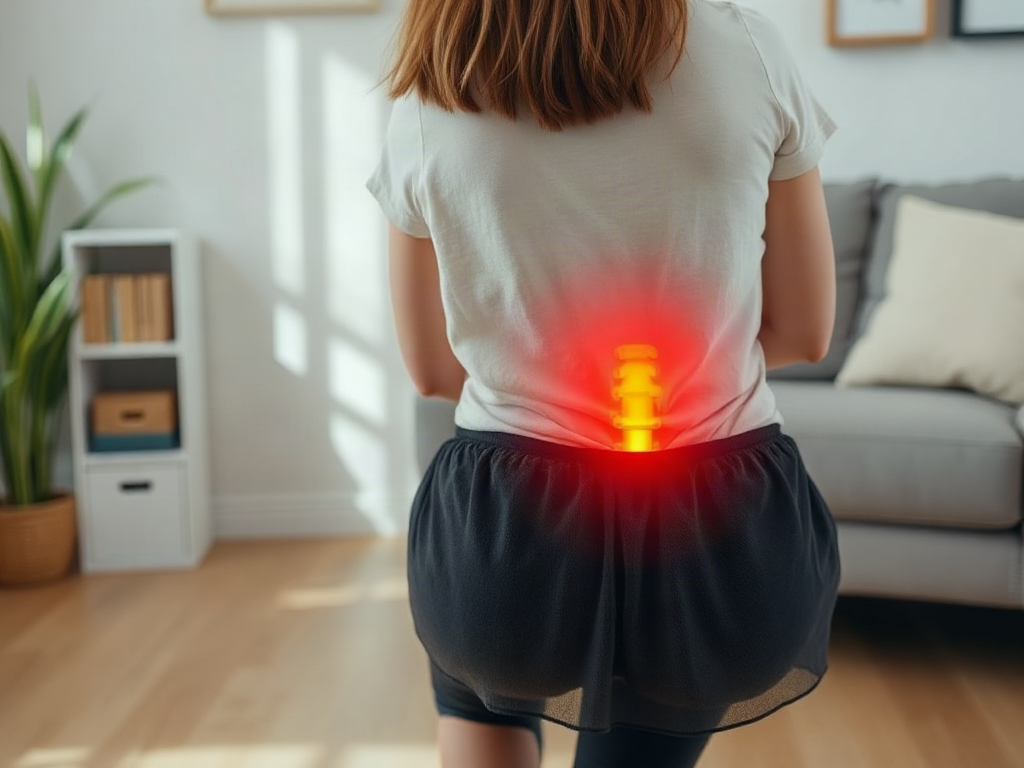
Tailbone pain while sitting commonly comes from direct impact, prolonged pressure, slouched posture, childbirth-related strain, or irritation in nearby pelvic and lower-back tissues. Relief usually begins by reducing pressure with a coccyx cushion, sitting slightly forward with feet supported, changing position often, and using brief heat or cold according to comfort. Gentle walking may be preferable to prolonged rest, while forceful stretching or repeated pressure on the sore area can worsen symptoms. Pain after a fall, pain that persists or escalates, fever, numbness, bowel or bladder changes, or unexplained weight loss warrants prompt medical assessment rather than home treatment alone.
Why Sitting Triggers Tailbone Pain
The coccyx, commonly called the tailbone, sits at the bottom of the spine and provides attachment points for pelvic-floor muscles and ligaments. Sitting changes the angle and load through this small structure. A firm chair, a backward-slumped posture, or a long uninterrupted period at a desk can concentrate pressure directly over the coccyx instead of distributing it through the buttocks and thighs.
Tailbone pain is often worse when rising from a chair, leaning backward, driving, or sitting on a hard surface. The pattern matters: pain located precisely at the cleft above the buttocks suggests coccyx irritation, while pain spreading into the leg, producing tingling, or changing with spinal movement may point toward the lower back or a nerve rather than the tailbone itself.
Pressure reduction is usually more useful than trying to “stretch out” the painful spot. A wedge-shaped coccyx cushion with a cutout at the rear can reduce direct contact, but a cushion that is excessively soft or too thick may tilt the pelvis and create new hip or back strain. Try the cushion for a short work period first, then judge whether getting up and sitting down feels easier.
A common mistake is treating every sitting-related ache as a tailbone injury. The source may instead be a bruised buttock, irritated sacroiliac region, anal or pelvic condition, or lumbar spine problem. That distinction affects what helps: unloading the coccyx may calm local irritation, whereas aggressive pressure or repeated stretching may aggravate a different source.
For readers comparing approaches, complete bed rest is rarely the most practical long-term solution. Short movement breaks preserve normal activity without forcing the painful area to tolerate prolonged compression. The related discussion at Tailbone pain while sitting: causes and practical relief can be useful when symptoms overlap with broader lower-back or pelvic discomfort.
Common Causes and Clues That Separate Them
A fall directly onto the buttocks is a frequent trigger, especially on stairs, ice, or a hard floor. The coccyx may be bruised, strained, or, less commonly, fractured. Pain that begins immediately after the event and is sharply localized deserves more caution than mild soreness that gradually appears after a long period of desk work.
Repetitive pressure can cause symptoms without a memorable injury. Long car rides, cycling, rowing, horseback riding, and extended computer sessions all keep the pelvis in a relatively fixed position. A slouched posture increases backward rotation of the pelvis and can press the coccyx against the seat. A person who recently switched to a firm office chair may notice symptoms within days even though no single incident caused them.
Pregnancy and childbirth can also affect the coccyx because pelvic ligaments become more flexible and the tailbone moves during delivery. Symptoms may improve gradually, but severe or persistent postpartum pain should not be dismissed as unavoidable. Pelvic-floor muscle tension can contribute to pain during sitting and bowel movements, making an evaluation by a clinician familiar with pelvic health more appropriate than repeated self-massage.
Other possibilities include pilonidal disease, which may cause a tender lump, redness, drainage, or warmth in the upper buttock crease; infection; inflammatory conditions; and referred pain from the lumbar spine or sacroiliac joint. A sore skin lesion requires different care from pressure-related coccyx pain. Do not place a cushion over a draining or visibly inflamed area without medical advice.
Useful observations include when the pain began, whether there was a fall, which surfaces worsen it, whether bowel movements are painful, and whether symptoms travel down a leg. Those details are more informative than pain intensity alone. Assuming that a tender point always identifies the injured structure is another common failure mode; nearby tissues can produce very similar sensations.
Practical Relief at Home and at Work
The first practical change is to interrupt sustained pressure. Stand, walk briefly, or change position every 20 to 30 minutes when possible. The exact interval is less important than avoiding long, unbroken sitting. At a workstation, place both feet on the floor, keep the screen high enough to avoid collapsing backward, and sit with the trunk slightly forward rather than reclining onto the tailbone.
A coccyx cushion can help when a person must sit, but it should not become a reason to remain seated longer. A rear cutout or channel may unload the painful area; a simple ring cushion is not ideal for everyone because its edge can concentrate pressure around the sore region. Test the cushion on a chair and in a car, since a design that works at a desk may position the pelvis awkwardly during driving.
Heat may relax surrounding muscle and make movement more comfortable, while a wrapped cold pack may be useful after a recent impact or activity flare. Use either for a limited period with a cloth barrier and stop if the skin becomes numb or irritated. Over-the-counter pain medicines may be appropriate for some adults, but stomach ulcers, kidney disease, blood-thinning medication, pregnancy, allergies, and other conditions can change what is safe; a pharmacist or clinician can help select an option.
Gentle walking is generally a better starting point than deep forward bends, forceful hamstring stretches, or exercises that repeatedly roll the pelvis onto the floor. If movement causes escalating pain, leg symptoms, or pain that lingers well after the activity, reduce the range and seek advice. A pelvic-health or musculoskeletal physiotherapist may assess posture, hip movement, pelvic-floor tension, and lumbar contributions rather than focusing only on the tender spot.
For a practical workday trial, use this sequence: adjust the chair, position the cushion, sit for a short interval, stand and walk, then record whether symptoms settle within minutes. Improvement during standing but rapid return on sitting suggests pressure remains a major driver. No change despite unloading, or worsening pain despite reduced sitting, makes self-care less convincing and supports professional assessment.
Do not repeatedly press, roll, or massage directly over the coccyx to “break up” the pain. That approach can irritate already sensitive tissue. Gentle treatment of nearby muscles may be reasonable when guided by a professional, but direct force is not a universal solution.
When Tailbone Pain Needs Medical Attention
Medical assessment is particularly appropriate after a significant fall, when pain is severe, or when symptoms interfere with sleep, walking, bowel movements, or basic daily tasks. A clinician can examine the coccyx, lower back, skin, hips, and neurologic function and decide whether imaging or another investigation is warranted. Imaging is not automatically needed for every episode, but persistent symptoms should not be managed indefinitely by trial and error.

Seek urgent care for new loss of bladder or bowel control, numbness around the groin or buttocks, marked leg weakness, fever with worsening local pain, or rapidly increasing swelling and redness. These features do not fit a simple pressure-related flare and may signal a neurologic, infectious, or other condition requiring prompt attention.
Arrange a routine appointment when pain lasts beyond several weeks, repeatedly returns, or fails to improve after sensible pressure reduction. Unexplained weight loss, a history of cancer, immune suppression, or pain that is prominent at night also lowers the threshold for evaluation. These warning signs do not establish a diagnosis, but they make prolonged self-treatment a poor tradeoff.
People sometimes delay care because they expect a tailbone bruise to heal on a fixed schedule. Recovery varies with the original cause, ongoing sitting demands, tissue sensitivity, and whether another region is involved. Conversely, seeking scans immediately for mild symptoms without red flags may add cost without changing early management. The useful middle path is to try a measured unloading plan while setting a clear point for reassessment.
Before an appointment, note the onset, injury or activity change, sitting surfaces, pain location, bowel or bladder symptoms, skin changes, and measures already tried. That record helps distinguish a local coccyx problem from referred spinal or pelvic pain and makes the consultation more efficient.
A Gradual Return to Comfortable Sitting
Return to sitting in stages rather than testing tolerance with a long meeting or road trip. Begin with brief periods on a supportive chair, alternate with standing or walking, and increase duration only when symptoms remain stable during the activity and afterward. A flare later the same day means the increase was too large, not necessarily that all sitting must stop.
Driving deserves special planning because seat angle, vibration, and limited ability to shift position can combine to irritate the coccyx. Adjust the seat so the hips are not lower than the knees, use a suitable cushion if it does not interfere with safe pedal control, and take breaks on longer journeys. Never sacrifice control of the vehicle for a cushion or posture change.
Work adaptations may include alternating sitting and standing, using a headset instead of leaning toward a phone, and placing frequently used items within easy reach so repeated twisting is reduced. At home, a firm but padded surface may be easier than a deep sofa that lets the pelvis roll backward. The best setup is the one that lowers symptoms without creating hip, knee, or back discomfort.
Track two signals: whether sitting becomes more tolerable and whether daily function expands. Pain that gradually settles with shorter sitting periods, walking, and better support is encouraging. Pain that spreads, becomes constant, develops neurologic features, or fails to respond after a reasonable trial needs reassessment. For more context on applying these adjustments, use this tailbone-sitting relief resource alongside advice from a qualified clinician when symptoms persist.
The goal is not perfect posture or zero sensation immediately. It is a manageable pattern in which pressure is distributed, movement remains available, and the underlying cause is not being overlooked. Tailbone pain while sitting: causes and practical relief should be approached as a decision about pressure, movement, and medical review—not as a reason to force one product or exercise.
Readers can consult patient information from recognized medical organizations, health systems, or government health services for additional background on coccyx pain, warning signs, and medication safety. Choose sources that identify their clinical review process and distinguish general self-care from advice requiring an examination.
Frequently Asked Questions
Why does my tailbone hurt only when I sit?
Sitting places direct pressure on the coccyx and may expose irritation from posture, a prior impact, prolonged desk work, cycling, or nearby pelvic tissues. Pain that appears with standing, walking, or leg movement may have a different source.
What is the best cushion for tailbone pain?
A wedge-shaped cushion with a rear cutout often reduces direct coccyx contact, but comfort and pelvic position vary. Test it briefly and avoid any cushion that causes hip, back, or leg symptoms.
Should I use heat or ice for a sore tailbone?
Cold may feel better after a recent impact, while heat may relax surrounding muscle. Use a cloth barrier, short applications, and whichever option reduces discomfort without irritating the skin.
How long should tailbone pain last?
Duration depends on whether the cause is pressure, bruising, childbirth, pelvic-floor tension, or another condition. Symptoms that persist, recur, or interfere with normal activity deserve clinical review.
When should I worry about tailbone pain?
Seek prompt care for bowel or bladder changes, groin numbness, leg weakness, fever, drainage, marked redness, severe pain after a fall, or unexplained weight loss. Persistent pain without these signs still merits a routine assessment.
Conclusion
Tailbone discomfort while sitting is often driven by concentrated pressure, a recent impact, posture, prolonged immobility, or strain in nearby pelvic structures. Prioritize unloading the area, changing position regularly, using a suitable rear-cutout cushion, and maintaining gentle movement rather than forcing stretches or remaining in bed. Watch how symptoms respond over several days: easier standing and longer comfortable intervals suggest the setup is helping, while spreading pain, neurologic symptoms, skin changes, or no meaningful improvement point toward evaluation. A fall, fever, bowel or bladder change, groin numbness, or leg weakness should be treated as a reason for prompt medical care. Practical adjustments are useful, but they should support—not replace—finding the cause when pain persists.