
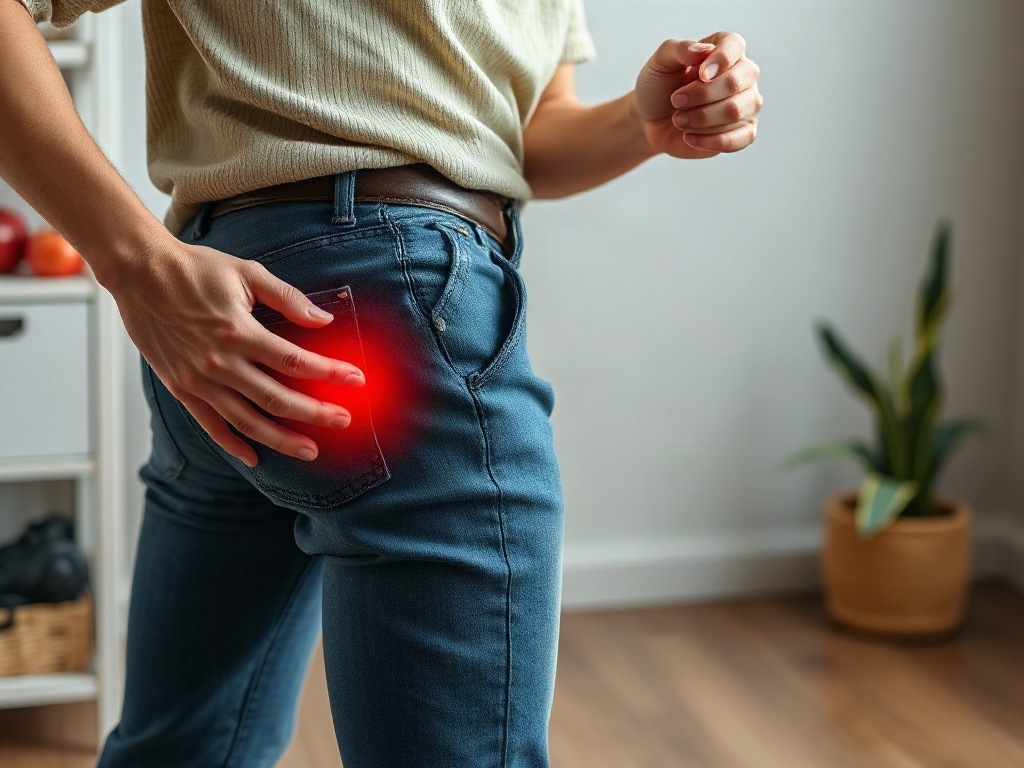
Hip and knee aches: causes and relief strategies depend on whether discomfort comes from overuse, osteoarthritis, bursitis, tendon irritation, an injury, or pain referred from the lower back. Relief commonly combines temporary activity changes, ice or heat chosen for the symptom, gentle range-of-motion work, and gradual strengthening of the hips, thighs, and core. Weight-bearing pain, stiffness after rest, swelling, catching, or pain that travels below the knee can help distinguish patterns, but they do not establish a diagnosis. Seek prompt medical care for a deformed joint, inability to bear weight, fever with a hot swollen joint, sudden calf swelling, or severe pain after trauma.
What Commonly Causes Hip And Knee Aches
Hip and knee discomfort often develops from a combination of tissue irritation, altered movement, and gradual changes inside the joint rather than from one dramatic event. Osteoarthritis may produce aching, reduced motion, and stiffness after sitting. Repetitive walking, running, squatting, or lifting can irritate tendons around the hip or knee. Bursitis may cause tenderness on the outer hip, while a meniscus or ligament injury is more likely after twisting, pivoting, or a direct impact.
The location of the ache can be misleading. Hip-joint problems may be felt in the groin, front of the thigh, buttock, or even the knee. Conversely, lower-back nerve irritation can send symptoms through the buttock and leg without a primary knee disorder. Foot and ankle mechanics, a sudden increase in training, prolonged standing, and weakness in the muscles controlling the pelvis can also shift load toward the knee.
Consider a person who begins climbing stairs for exercise after months of inactivity. A rapid increase in load may aggravate the kneecap area even though the joint was comfortable during ordinary walking. Someone else may develop outer-hip soreness after sleeping on one side or increasing hill walking. These patterns call for different adjustments; treating every ache as “wear and tear” can lead to unnecessary rest or poorly chosen exercises.
Hip and knee aches: causes and relief strategies should therefore begin with the activity change, pain location, stiffness pattern, and any swelling or instability. An ache that settles as the body warms up may behave differently from pain that escalates with each step. Persistent or recurring symptoms deserve an assessment rather than repeated cycles of ignoring the problem and restarting the same aggravating activity.
How Symptoms Help Guide Your Next Step
Symptom timing and behavior provide useful clues, although they cannot replace an examination. Pain that is worse after prolonged sitting and eases with gentle movement may occur with joint stiffness. Pain on the outside of the hip when lying on that side points toward irritated tissues around the hip rather than automatically indicating a problem deep inside the joint. Knee pain during stairs or repeated squats may reflect how the kneecap and surrounding muscles handle load.
Swelling, locking, giving way, numbness, and a restricted range of motion carry more decision value than a simple pain score. A knee that repeatedly buckles creates a fall risk and should not be tested with increasingly difficult balance drills. Burning or electric pain, especially when accompanied by back symptoms, may suggest nerve involvement. Morning stiffness that lasts a long time, several swollen joints, or symptoms affecting both sides may warrant medical evaluation for an inflammatory condition.
A practical self-check is to compare ordinary walking, stairs, sitting-to-standing, and gentle movement. Note which action triggers symptoms, whether discomfort appears during the activity or later, and whether the joint becomes swollen or warmer afterward. A short record for several days can reveal that a supposedly harmless task, such as low chairs or repeated hills, is the consistent trigger.
- More compatible with a load problem: symptoms follow a new activity and settle with reduced intensity.
- More concerning: inability to bear weight, progressive weakness, marked swelling, fever, or pain after significant trauma.
- Worth professional review: symptoms that persist, recur, disturb sleep, or limit work and ordinary movement.
A common mistake is using improvement after one good day as proof that the issue has resolved. Irritated tissue may feel better before it tolerates normal demand. Increase activity in small increments and judge success by steadier function over several days, not by a single pain-free morning.
Relief Measures That Match The Problem
Short-term relief works best when it reduces aggravating load without creating complete inactivity. Relative rest may mean replacing hills with level walking, shortening a workout, taking standing breaks, or using a higher chair rather than remaining in bed. Ice can be useful after a flare or activity-related swelling, while heat may make stiff muscles and joints feel easier to move before activity. Neither method corrects an underlying injury, and skin should be protected from very hot or cold packs.
Gentle movement is often preferable to forceful stretching. Comfortable hip and knee range-of-motion exercises can reduce the guarded feeling that follows sitting, but sharp pain, catching, or a growing limp is a reason to stop rather than push through. Supportive footwear may improve comfort during walking, especially when worn shoes are compressed or unevenly worn; it should not be presented as a cure for a joint disorder.
Medication decisions require attention to age, kidney disease, stomach ulcers, heart conditions, pregnancy, allergies, and interactions with other medicines. Over-the-counter anti-inflammatory medicines are not suitable for everyone, and topical products have different precautions from oral medicines. A pharmacist or clinician can help review the safest option. Supplements marketed for cartilage or inflammation should not substitute for an evaluation, and evidence for many products is mixed.
Imagine that a long shopping trip produces an evening knee ache but normal walking remains comfortable. A sensible first change is shorter trips with planned sitting, followed by gradual return to the previous duration. If the same pain appears at rest, causes swelling, or worsens despite lower demand, adding more self-care products is less useful than arranging an assessment. The goal is not to eliminate every sensation immediately; it is to restore tolerable movement while avoiding a worsening pattern.
For more context on interpreting symptoms before choosing a remedy, use Hip and knee aches: causes and relief strategies as a reference point rather than applying one treatment to every location.
Building Strength Without Irritating The Joints
Strength work can improve how the hip and knee share load, but the starting dose matters more than selecting an impressive exercise. The quadriceps, gluteal muscles, hamstrings, and trunk all contribute to controlled standing, stair climbing, and walking. Weakness is not always the sole cause of pain, yet reduced capacity can make an ordinary task feel excessive when activity rises suddenly.

Begin with a movement that is easy to control, such as supported sit-to-stands from a higher chair, shallow wall squats, a bridge, or a side-lying leg lift. Use a slow pace and a small range at first. Mild muscle effort is expected; escalating joint pain, pronounced swelling, or symptoms that remain worse into the next day suggests that the dose was too high. Reducing repetitions or range is usually more productive than abandoning movement altogether.
A person with front-of-knee discomfort may tolerate a high chair and shallow sit-to-stands but react to deep squats. Someone with outer-hip soreness may need to avoid repeated side-lying pressure and begin with supported standing work. These examples show why a generic exercise list can fail: the same movement can be manageable for one pattern and provocative for another.
Progress by changing one variable at a time—repetitions, resistance, range, or frequency. Keep a stable baseline for several sessions before adding difficulty. Balance training, such as supported single-leg standing near a counter, may be useful when steadiness is limited, but it is inappropriate if the joint repeatedly gives way without supervision. A physical therapist can adapt technique and identify whether the hip, knee, ankle, or back is contributing to the movement problem.
Do not assume that soreness means the exercise is working or that pain must be endured to build strength. A successful program leaves ordinary function stable or gradually easier. If stairs, sleep, or walking distance consistently deteriorate after sessions, the plan needs modification and possibly a clinical review.
When Home Care Is Not Enough
Arrange medical evaluation when an ache persists despite sensible activity modification, repeatedly returns, or limits routine tasks. Assessment becomes more urgent after a fall, twisting injury, sudden loss of motion, or inability to put weight through the leg. A hot, swollen joint with fever needs prompt attention, as does severe pain with a visibly changed joint. New numbness or weakness, sudden calf swelling, chest symptoms, or unexplained weight loss also should not be managed solely at home.
Professional evaluation does not automatically mean imaging, injections, or surgery. A clinician may first review the history, observe walking, test motion and strength, and examine the hip, knee, back, and nearby tissues. Imaging may be considered when the findings suggest a structural problem or when symptoms do not follow an improving course. The useful question is not “Which scan proves the cause?” but “What information would change the treatment decision?”
Before an appointment, record when symptoms began, the exact location, activity triggers, swelling, sleep disruption, medications, prior injuries, and what has helped or failed. Bring the names of medicines and supplements, including products used occasionally. This detail can prevent a knee-focused visit from overlooking referred hip or back pain.
Follow-up is particularly worthwhile when the initial plan is not producing measurable progress. Define progress concretely: walking to the mailbox, climbing stairs, sleeping on either side, or standing from a chair with less difficulty. If those abilities are not improving over a reasonable period, continuing the same routine indefinitely is a poor tradeoff. Adjusting the diagnosis, exercise dose, or treatment strategy may be more valuable than adding another comfort measure.
Frequently Asked Questions
Can a hip problem cause knee aching?
Yes. Pain from the hip may be felt in the groin, thigh, or knee. Limited hip motion can also change walking mechanics and increase knee loading.
Is heat or ice better for aching joints?
Ice may feel more useful after activity-related irritation or swelling, while heat may ease stiffness before movement. Use whichever improves comfort without irritating the skin, and do not treat either as a cure.
Should I keep walking with hip and knee aches?
Often, gentle walking is reasonable if it does not cause a worsening limp, swelling, or escalating pain. Reduce distance or choose level ground, then increase gradually as function stabilizes.
What exercises are usually a reasonable starting point?
Supported sit-to-stands, bridges, gentle range-of-motion work, and controlled hip strengthening may be suitable for some people. Stop if symptoms sharply increase or remain worse the next day.
When should aching be checked by a clinician?
Seek care for inability to bear weight, major injury, a hot swollen joint with fever, repeated giving way, new weakness or numbness, or persistent symptoms that restrict normal activities.
Conclusion
Managing hip and knee aches begins with noticing the pattern rather than assuming every ache represents arthritis. Track location, triggers, swelling, stiffness, and changes in walking; then reduce the specific load that provokes symptoms while preserving comfortable movement. Heat or ice may provide temporary comfort, and a gradual strengthening program can rebuild tolerance when the exercises match the person’s limitations. Medication and supplements deserve safety checks, particularly when other health conditions or prescriptions are involved. Seek prompt care for trauma, inability to bear weight, fever with a hot swollen joint, sudden weakness, or concerning calf or chest symptoms. For less urgent problems, arrange an evaluation if function fails to improve or the same flare keeps returning.