
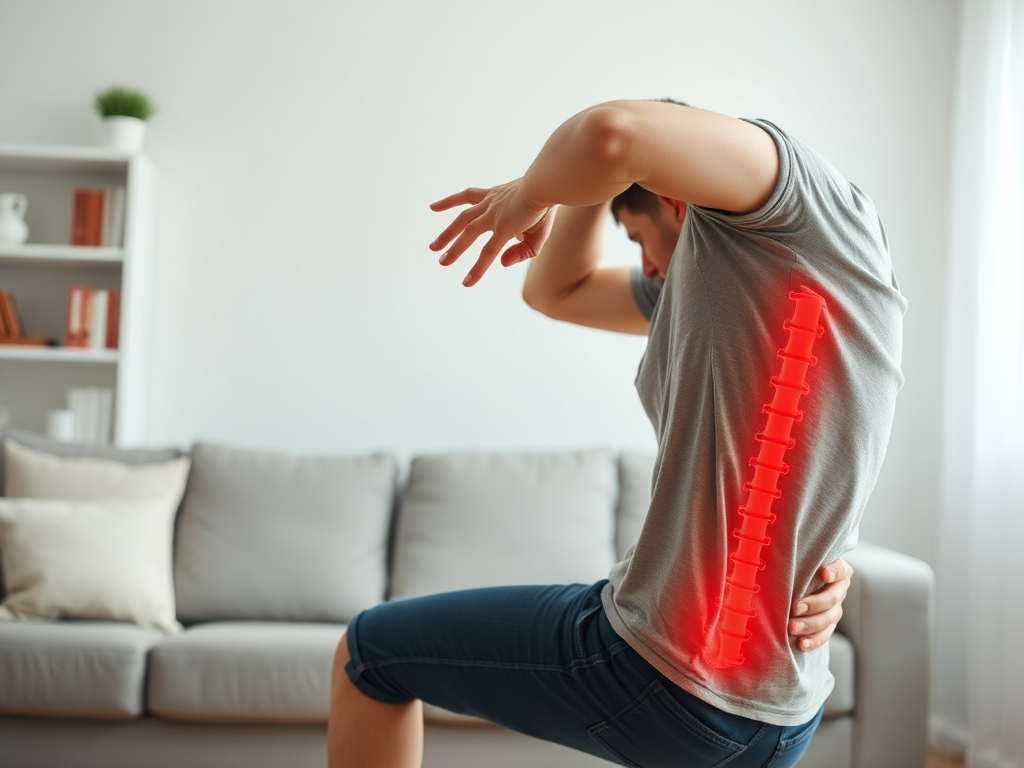
Osteoarthritis pain after a minor twist without bruising often reflects irritated cartilage surfaces, joint lining, tendons, or supporting ligaments rather than a visible skin injury. Swelling may remain inside the joint, so the absence of bruising does not rule out a sprain, flare, or less obvious structural problem. Reduce twisting and high-impact activity for the first day or two, use a wrapped cold pack for short periods, and keep gentle pain-free movement rather than complete immobilization. Seek medical assessment for inability to bear weight, deformity, marked swelling, locking, fever, numbness, or worsening symptoms; persistent discomfort also deserves evaluation because osteoarthritis can make minor trauma harder to tolerate.
What A Minor Twist Can Do To An Osteoarthritic Joint
A small twist can provoke substantial discomfort in a joint already affected by osteoarthritis, even when the skin looks unchanged. Worn cartilage does not necessarily cause constant severe symptoms, but it can reduce the joint’s tolerance for sudden rotation, uneven loading, or a quick change of direction. The twisting motion may irritate the synovial lining, strain a ligament or tendon, or briefly increase pressure between irregular joint surfaces.
Bruising is not a reliable measure of internal irritation. A bruise usually reflects bleeding beneath the skin, while osteoarthritis-related soreness or a mild internal sprain may involve tissues too deep to discolor the surface. A knee may feel sore along the joint line, for example, while an ankle or hip may hurt mainly during turning, stairs, or the first few steps after sitting.
The timing of symptoms offers useful context. Pain that begins immediately with a twist may suggest a mechanical strain or impact. Pain that becomes more noticeable later in the day can reflect reactive swelling after continued walking. A flare may also appear after an apparently harmless movement if the joint had already been stressed by prolonged standing, hills, kneeling, or unfamiliar exercise.
A common mistake is to treat the absence of bruising as proof that nothing meaningful happened. The opposite mistake is assuming that every new ache represents a major tear. The sensible middle position is to compare function before and after the event, observe the direction of symptoms, and use the next 24 to 72 hours to decide whether the joint is settling or needs examination. For related context, see osteoarthritis pain after a minor twist without bruising.
How To Judge The Injury Without Bruising
Function is often more informative than discoloration. Ask whether you can bear weight, straighten and bend the joint, and move it through a modest range without sharp catching. Mild soreness with walking that improves when activity is reduced is generally less concerning than an inability to take four normal steps, a joint that gives way, or pain that remains severe at rest.
Location also matters. Diffuse aching and stiffness can fit an osteoarthritis flare, whereas a sharply localized tender spot over a ligament, bone, or joint line may point toward a separate injury. A swollen knee can feel tight behind the kneecap or around the sides even without bruising. An ankle may show little visible change but become painful when the foot turns inward or outward. These observations cannot diagnose the problem, but they help a clinician understand what happened.
Check the joint once, gently, rather than repeatedly testing it. Repeated deep squats, forceful stretching, or deliberate twisting can keep irritated tissues aggravated. Compare the affected side with the other side for obvious swelling, warmth, range of motion, and ability to use the limb. Do not force a comparison if the movement causes sharp pain.
Several features make an assessment more urgent: sudden inability to bear weight, a deformed appearance, rapidly increasing swelling, repeated buckling, true locking, numbness, a cold or unusually pale limb, or severe pain after even a low-force event. Fever, pronounced redness, or feeling generally unwell raises a different concern from a straightforward mechanical flare. People taking blood thinners, living with osteoporosis, or recovering from surgery should use a lower threshold for professional advice.
The weak assumption to avoid is that a familiar arthritis diagnosis explains every new symptom. Osteoarthritis can coexist with a sprain, fracture, tendon injury, or another source of pain. If the discomfort is not clearly improving after several days, or if ordinary tasks remain limited, an examination is more useful than guessing from the lack of a bruise.
A Practical First 72-Hour Plan
The first priority is relative rest, not total stillness. Stop the activity that caused the twist and temporarily replace pivoting, running, deep bending, and uneven-ground walking with short, controlled movement on level surfaces. A person with knee symptoms might use a chair for tasks, avoid carrying loads on stairs, and take several brief walks instead of one long outing. Complete bed rest can increase stiffness and make the return to movement harder.
Cold can be used for comfort when the area feels warm or newly irritated. Place a cold pack wrapped in cloth over the joint for a short session, then remove it and check the skin. Avoid sleeping on the pack or applying extreme cold directly to the skin. Elevating an ankle or knee while resting may reduce the sensation of pressure, although it does not replace evaluation if swelling is substantial.
Compression can be useful for some limbs, but it should feel supportive rather than tight. Loosen or remove a wrap if there is tingling, numbness, increasing pain, color change, or coldness below it. A cane held in the opposite hand may reduce load from a painful hip or knee, but incorrect height or leaning heavily onto it can create new strain. If using a brace, choose comfort and normal circulation over rigid restriction unless a clinician has recommended a specific device.
Medication decisions require personal safety checks. Acetaminophen may be unsuitable for people with certain liver conditions or heavy alcohol use, while nonsteroidal anti-inflammatory drugs can be risky with some stomach, kidney, heart, blood-pressure, or anticoagulant issues. Topical anti-inflammatory medication may be an option for some people, but product labels and a pharmacist or clinician should guide its use. Do not combine products that contain the same active ingredient.
Gentle motion is a useful test of recovery. Try slow bending and straightening within a comfortable range several times during the day; stop before sharp pain, catching, or a feeling of instability. Improvement means the joint moves a little more easily, swelling is stable or declining, and ordinary weight-bearing becomes less guarded. Worsening after each short activity means the load is still too high and should be reduced.
When Home Care Is Not Enough
Medical evaluation is appropriate when symptoms fail to follow a gradual improvement pattern. A mild flare may remain noticeable for days, but the overall direction should be better rather than worse. Persistent pain with weight-bearing, recurrent giving way, or swelling that returns after small amounts of activity may indicate more than a temporary irritation.
Urgent care is warranted for a visible deformity, inability to use the limb, severe or rapidly escalating pain, major swelling, or a joint that cannot bend or straighten. Prompt assessment is also sensible after a fall, direct impact, or twist in someone with fragile bones. A hot, red joint accompanied by fever should not be managed as routine osteoarthritis at home.
An appointment can clarify whether imaging is useful. X-rays may help assess bone alignment or a fracture, while other tests are considered when soft-tissue or internal joint problems are suspected. Imaging findings should be interpreted alongside function and examination; degenerative changes on a scan do not automatically identify the source of every new symptom.
Bring a concise timeline: the exact movement, when pain started, whether swelling appeared, what activities are difficult, and which medicines or supports were tried. Mention anticoagulants, kidney or liver disease, previous surgery, and any history of falls. This information helps prevent two common failures: dismissing a new injury as “just arthritis” and pursuing unnecessary treatment based only on an image.

Use this priority checklist when deciding what to do next:
- Emergency or urgent assessment: deformity, inability to bear weight, numbness, marked swelling, fever, or a locked joint.
- Short home-care trial: mild symptoms, preserved function, no red flags, and early improvement with reduced loading.
- Routine clinical review: pain that persists, repeatedly returns, disrupts sleep, or prevents normal tasks despite sensible activity changes.
Returning To Normal Movement
Resume activity according to function rather than a fixed calendar. When walking is comfortable on level ground and the joint is not becoming more swollen afterward, add one demand at a time: a longer walk, gentle stairs, or light strengthening. Do not combine a long outing, hills, heavy lifting, and twisting sports on the first good day.
Strength and balance work may reduce the chance that a similar movement overloads the joint, but exercises should match the affected area and current capacity. For a knee, controlled sit-to-stand practice may be more appropriate initially than deep squats. For an ankle, supported balance and gradual calf work may be preferable to uneven trails. A physical therapist can adjust the range, resistance, and progression when pain is persistent or confidence is low.
Footwear and surroundings can influence recurrence. Shoes with a stable fit may make turning less abrupt, while clutter, loose rugs, wet floors, and rushing around corners create preventable hazards. At home, use hand support on stairs and avoid pivoting on a planted foot; turn the whole body instead.
Do not use pain elimination as the only measure of readiness. A joint can feel acceptable during an activity and become more swollen later. Track the response that evening and the next morning. If stiffness or swelling clearly increases, return to the last tolerable level for a day or two before progressing. This approach is slower than pushing through, but it gives clearer information about capacity and reduces the cycle of flare, rest, and sudden overexertion.
Longer-term arthritis management still matters after the acute soreness settles. Regular low-impact movement, individualized strengthening, weight management when relevant, and a medication plan reviewed for safety may improve day-to-day function. None of these measures proves what the twist injured, so ongoing or unusual symptoms should still be assessed. Additional reading on daily joint-load decisions is available through osteoarthritis pain after a minor twist without bruising.
For reliable follow-up information, consult patient resources from recognized medical organizations such as the National Institute of Arthritis and Musculoskeletal and Skin Diseases, the American Academy of Orthopaedic Surgeons, or a local health system. These sources can explain osteoarthritis care and injury warning signs, but they cannot replace an examination when function is significantly reduced.
Frequently Asked Questions
Can a minor twist trigger an osteoarthritis flare without bruising?
Yes. Rotation can irritate the joint lining or surrounding tissues without causing bleeding under the skin. Pain and stiffness may appear immediately or later after continued activity.
Should I use ice if there is no visible swelling?
A wrapped cold pack may reduce discomfort even when swelling is subtle. Use short sessions and protect the skin; stop if numbness or skin irritation develops.
How long should I wait before contacting a clinician?
Seek urgent care for severe symptoms or loss of function. If mild symptoms are not clearly improving over several days, arrange a routine assessment rather than continuing to test the joint.
Is walking safe after a twist?
Short, level-surface walking may be reasonable when you can step without sharp pain, buckling, or major limping. Reduce distance and stop if symptoms worsen during or after the walk.
Does no bruising rule out a ligament or cartilage injury?
No. Deeper tissues may be injured without surface discoloration. Persistent joint-line pain, locking, instability, or difficulty bearing weight deserves professional evaluation.
Conclusion
A twist that leaves no bruise can still disturb an osteoarthritic joint, but visible skin changes are not the deciding measure. Preserved function, stable symptoms, and early improvement support a cautious home-care trial: reduce pivoting, use comfort measures safely, and keep gentle movement within tolerance. Loss of weight-bearing ability, deformity, locking, rapidly increasing swelling, fever, numbness, or worsening pain changes the decision and calls for prompt assessment. When symptoms linger, avoid both extremes—neither dismiss the problem as routine arthritis nor assume a severe injury from pain alone. Record how the joint responds over the next few days, progress activity gradually, and arrange a clinical review if normal walking or daily tasks do not return.