
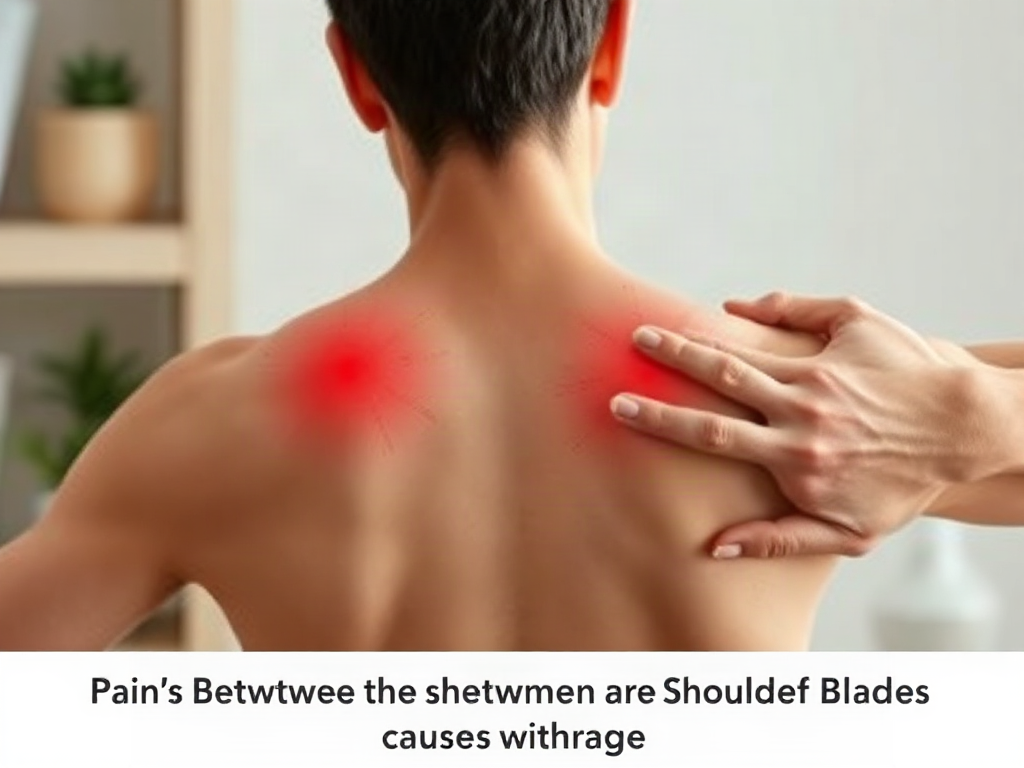
Pain between the shoulder blades: causes and relief depend on whether the discomfort comes from strained muscles, prolonged posture, irritated spinal joints or nerves, or a problem outside the back. Muscle-related discomfort often follows lifting, desk work, coughing, or an unfamiliar activity and may change with movement or pressure. Gentle movement, heat, temporary activity modification, and gradual shoulder-blade exercises may help when symptoms are mild and familiar. Seek urgent medical care for sudden severe pain with chest pressure, shortness of breath, sweating, weakness, fainting, or neurological changes, and arrange an evaluation when pain persists, worsens, follows significant injury, or occurs with fever.
What Commonly Causes Pain Between the Shoulder Blades
Discomfort in the area between the shoulder blades is often linked to the muscles, joints, ribs, or nerves of the upper back, but the location alone cannot identify the cause. The upper back works as a connected system: the thoracic spine, shoulder blades, neck, ribs, and shoulders share movement and load. A change in one area can make another area feel sore or tight.
Muscle strain is a frequent explanation after carrying a heavy object, reaching overhead, rowing, throwing, coughing repeatedly, or returning to exercise too quickly. Long periods at a computer can also keep the head and shoulders forward, requiring the muscles around the shoulder blades to work continuously. The result may be aching, burning, stiffness, or a tender spot that becomes more noticeable late in the day.
Other possibilities include irritation of a small spinal joint, a rib joint, a disc or nerve in the neck or upper back, or referred discomfort from another body region. Neck-related nerve irritation may produce tingling, numbness, or pain traveling into an arm rather than remaining in one spot. Shoulder disorders can also be felt near the inner edge of the shoulder blade, especially when reaching or lifting.
A useful first distinction is whether the discomfort behaves mechanically. Pain that changes with posture, arm position, deep breathing, or pressing on a muscle is more suggestive of a musculoskeletal source, although that pattern does not rule out every serious condition. Pain that is unrelated to movement, steadily worsening, or accompanied by whole-body symptoms deserves more cautious assessment. Avoid assuming that every tender knot is the entire problem; guarding from a neck, shoulder, or rib issue can create secondary muscle soreness.
For context, Pain between the shoulder blades: causes and relief is best approached by examining the trigger, symptom behavior, and associated signs together rather than relying on location alone.
How Symptoms Help Separate Muscle, Joint, and Nerve Problems
Symptom behavior provides useful clues, but it is not a substitute for an examination. Muscle-dominant discomfort commonly feels sore, tight, or bruised and may improve after gentle movement or warmth. A joint-related problem may feel sharper with twisting, extension, or a specific reach. Nerve irritation is more likely when pain follows a line into the arm or is accompanied by pins-and-needles, numbness, altered grip, or weakness.
Consider two contrasting examples. Someone who develops a localized ache after assembling furniture and can reproduce it by squeezing the shoulder blades may have an overloaded muscle pattern. Someone with upper-back discomfort plus hand weakness or persistent arm numbness needs a different level of attention, even if the original pain began after desk work. The second pattern should not be managed solely with stretching.
Breathing and systemic symptoms also change the decision. Pain that is sharply affected by a deep breath can arise from a chest-wall muscle or rib, but chest symptoms, breathlessness, faintness, unusual sweating, or nausea require urgent consideration of non-musculoskeletal causes. Fever, unexplained weight loss, a history of cancer, recent infection, or significant trauma should lower the threshold for professional assessment.
A simple symptom check can improve the quality of a medical visit:
- Record when it began and what happened beforehand.
- Note whether movement, pressure, coughing, or breathing changes it.
- Identify any arm symptoms, weakness, fever, rash, chest discomfort, or shortness of breath.
- Track whether the trend is improving, unchanged, or worsening over several days.
The common mistake is treating a pattern clue as a diagnosis. A posture-related onset may point toward mechanical irritation, but persistent symptoms can require evaluation for a neck, shoulder, spinal, or non-back source. Use clues to choose the next step, not to rule out conditions with false certainty.
Practical Relief for Mild, Mechanical Discomfort
Mild discomfort that follows a clear activity and has no warning signs often responds better to relative activity than to complete rest. Continue comfortable daily movement, but temporarily reduce heavy lifting, repeated overhead work, forceful pulling, and positions that sharply increase symptoms. Short walks and easy shoulder motion can prevent stiffness without repeatedly provoking the painful area.
Heat may feel useful for tightness, while a cold pack can be more comfortable after a fresh strain or activity flare. Protect the skin, use a short session, and stop if the skin becomes numb or irritated. Over-the-counter pain medicines may be appropriate for some adults, but stomach ulcers, kidney disease, blood thinners, pregnancy, allergies, and other medicines can change the risk. A pharmacist or clinician can help select a safe option rather than assuming that a familiar product is suitable.
Gentle mobility is preferable to aggressive stretching at first. Try slow shoulder rolls, easy neck movement within a comfortable range, and controlled arm raises without forcing the end position. If these movements reduce stiffness and do not cause spreading pain, they can be repeated briefly during the day. Once daily activity is comfortable, gradual strengthening of the upper back and shoulder muscles may help restore tolerance, but increasing resistance while pain is escalating is counterproductive.
Workstation changes matter when sitting is part of the trigger. Place the screen near eye level, support the feet, keep frequently used items close, and change position regularly instead of trying to hold a rigid “perfect posture.” A person who works at a laptop may need an external keyboard or a higher screen; simply pulling the shoulders backward all day can create another form of fatigue.
Improvement should look like longer comfortable periods, easier movement, and less need to change position—not necessarily immediate disappearance. Stop self-care and seek advice if symptoms spread, weakness appears, sleep becomes difficult because of pain, or ordinary activity is becoming progressively harder. A massage or foam roller may temporarily reduce muscle tension, but it does not correct a nerve problem or explain unexplained systemic symptoms.
Readers comparing self-care options can also use this shoulder-blade symptom reference to distinguish soothing measures from signs that require evaluation.
When Back Pain Needs Medical Attention
Urgent medical care is appropriate for upper-back discomfort accompanied by chest pressure, shortness of breath, fainting, cold sweating, severe weakness, confusion, or sudden neurological changes. These symptoms may signal a problem involving the heart, lungs, blood vessels, or nervous system rather than a strained back muscle. Do not drive yourself if symptoms are severe or rapidly worsening.

Prompt clinical assessment is also sensible after a substantial fall, collision, or direct blow, particularly when movement is very limited or the pain is severe. New arm weakness, persistent numbness, loss of coordination, or trouble walking should not be explained away as tight muscles. Fever or feeling acutely unwell alongside spinal or chest-area pain also deserves timely medical attention.
Non-urgent evaluation becomes useful when symptoms are not steadily improving, keep returning, interfere with sleep or work, or cannot be linked to a reasonable activity. A clinician may examine the neck, shoulders, spine, reflexes, strength, sensation, and breathing pattern before deciding whether imaging or another test is appropriate. Imaging is not automatically the best first step for every short-lived mechanical ache; the examination and symptom course help determine its value.
One misleading assumption is that serious pain must always be intense. Some important conditions can begin with vague or moderate discomfort, while a severe muscle spasm can be frightening but less dangerous. The combination of symptoms, speed of onset, risk factors, and progression matters more than a pain score alone.
Write down relevant medicines, recent infections, injuries, exercise changes, and medical history before an appointment. That information can help separate a new mechanical strain from a recurring issue or referred pain. If symptoms are stable but persistent, a primary-care clinician or qualified physical therapist can help identify movement limitations and build a graded plan.
A Sensible Recovery Plan and Common Mistakes
A practical recovery plan begins with risk screening, then uses comfortable movement and gradual loading. During the first day or two of a mild flare, reduce the activity that triggered it while preserving ordinary movement. Next, test whether easy mobility improves function. If it does, add small amounts of strengthening and return to lifting or sport in stages rather than resuming the previous workload immediately.
A useful progression is to tolerate daily tasks, then light resistance, then the specific movement that caused the problem. For example, someone whose discomfort began after moving boxes might first walk and perform easy arm movements, then lift a light object from waist height, and only later handle heavier boxes with breaks. Pain that settles quickly and does not worsen later may be an acceptable training signal; pain that steadily increases during the session or remains worse the next day indicates that the load is too high.
Several common approaches delay recovery. Total bed rest can increase stiffness and reduce confidence in movement. Repeatedly stretching an irritated nerve may intensify symptoms. Using a massage tool directly over a painful spine or rib without knowing the cause can aggravate tissues. Another error is changing several treatments at once, making it impossible to tell what helped or caused a flare.
Prioritize three checks each day: Is movement becoming easier? Are symptoms staying localized rather than spreading? Can normal activities be completed with less guarding? If the answers are no, scale back and seek professional guidance. If progress is steady, maintain gradual activity instead of chasing a pain-free feeling through forceful exercises.
For a broader review of symptom patterns and next actions, visit the related shoulder-blade pain resource, while remembering that online information cannot examine strength, sensation, breathing, or reflexes.
Frequently Asked Questions
What is the most common reason for pain between the shoulder blades?
Muscle overload, prolonged posture, and strain involving the upper back, neck, shoulders, or ribs are common causes, but persistent or unusual symptoms need assessment.
Can poor posture cause this discomfort?
Long periods in one position can increase muscle fatigue and joint stress. Frequent position changes and better screen and keyboard placement are usually more useful than forcing the shoulders back continuously.
Should I use heat or ice?
Either may provide short-term comfort. Heat often feels better for stiffness, while cold may feel better after a recent activity flare. Protect the skin and stop if irritation develops.
When is pain between the shoulder blades an emergency?
Seek urgent care for severe or sudden pain with chest pressure, breathing difficulty, fainting, sweating, severe weakness, confusion, or new neurological symptoms.
How long should mild upper-back pain take to improve?
A mild strain should show a favorable trend with activity modification and gentle movement. If it is worsening, repeatedly returning, or not improving, arrange a clinical evaluation.
Conclusion
Discomfort between the shoulder blades should be interpreted through its trigger, movement pattern, associated symptoms, and direction over time. A mild, localized ache after lifting or prolonged sitting may settle with relative activity, comfortable mobility, heat or cold, and a gradual return to normal loading. Avoid aggressive stretching, prolonged bed rest, and self-diagnosis based only on a tender spot. Chest symptoms, breathlessness, faintness, fever, significant injury, spreading numbness, or weakness require prompt attention. When the cause is uncertain or progress stalls, an examination is more useful than repeatedly changing home remedies. Track what provokes the discomfort, what improves it, and whether function is returning; those details provide a practical basis for the next decision.