
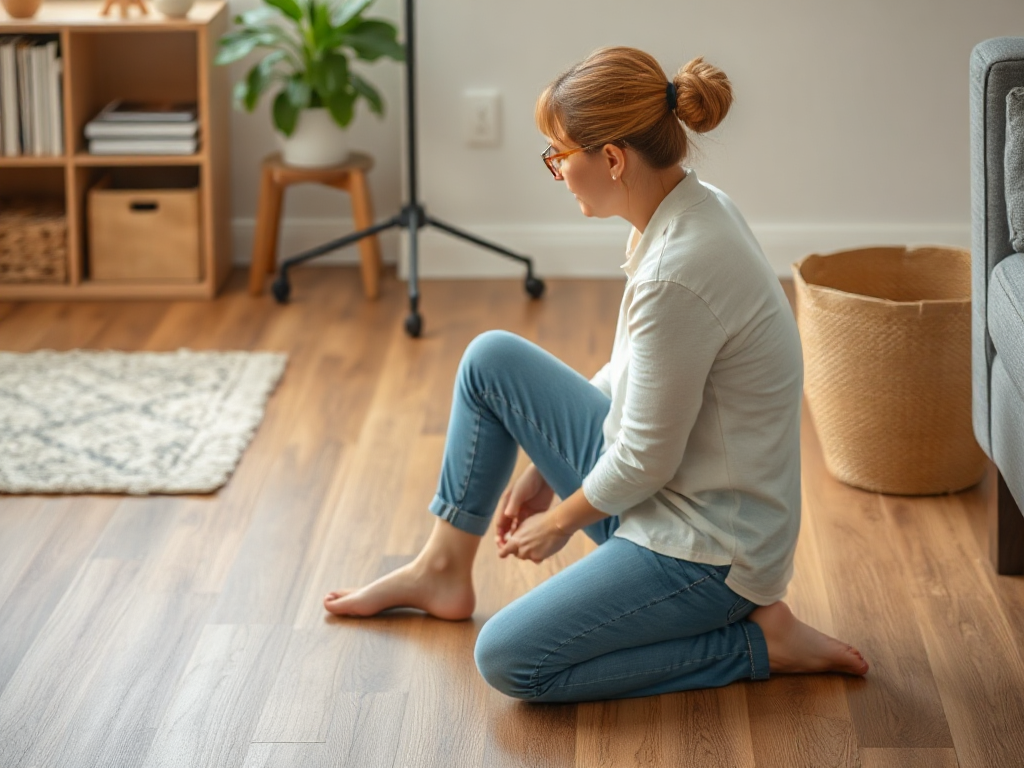
Safe kneeling alternatives for people with knee arthritis include sitting on a low stool, using a standing reacher, hinging from the hips, or placing one foot forward while keeping the sore knee off the floor. These options reduce direct pressure on the kneecap and limit deep knee flexion, which may aggravate stiffness, swelling, or irritated tissues. A padded elevated surface can work for brief tasks, but thick padding alone does not make painful kneeling safe. Choose the position that keeps your hips and back stable, lets you rise without twisting, and leaves no increase in symptoms later that day or the next morning.
Why Floor-Level Tasks Can Aggravate Arthritic Knees
Floor work often combines the exact movements that arthritic knees tolerate poorly: deep bending, pressure through the front of the knee, and a difficult transition back to standing. Gardening, cleaning a low cabinet, bathing a child, or reaching beneath furniture may require more than simply resting the kneecap on a cushion. The knee may remain bent for several minutes while body weight, hand pressure, and awkward balance all add demand.
Knee arthritis does not affect every person in the same way. Some people mainly notice stiffness after sitting; others experience swelling, reduced range of motion, tenderness around the kneecap, or pain when loading the joint. Deep flexion brings the shin and thigh closer together and can increase compression within the joint. Rising from that position also requires substantial work from the quadriceps and hips. Weakness, limited ankle motion, or poor balance may shift even more effort into the knees.
A common mistake is assuming that a soft pad solves the problem. Padding can reduce contact discomfort, but it does not remove the bend or the force needed to stand. A second mistake is pushing through sharp pain because the task is short. Brief exposure may still trigger soreness that lasts into the evening or swelling the following morning. Use the link safe kneeling alternatives for people with knee arthritis as a reminder that changing the position is often more useful than merely adding cushioning.
Notice the difference between mild, familiar stiffness and a warning response. A position that feels manageable while held but produces increased swelling, limping, or distinctly worse symptoms afterward is not a good working solution. The practical goal is not to prove that the knee can kneel; it is to complete the task while preserving comfortable movement afterward.
Practical Alternatives to Direct Kneeling
Sitting on a stable low stool is often the most useful substitute for kneeling during household or garden tasks. A garden seat, shower bench, or firm rolling stool can keep the hips low without placing body weight on the knees. Choose a seat high enough that you can stand by pressing through both feet rather than pulling on a nearby shelf. A seat that rolls unexpectedly is a poor choice, even if its height is convenient.
For tasks that require reaching the floor, a hip-hinge position may work better than a squat. Keep the spine reasonably neutral, bend at the hips, and use a countertop or heavy piece of furniture for light support. This approach shifts more work toward the hips and reduces knee bend, but it is not suitable if it causes back pain, dizziness, or loss of balance. Bringing the object closer with a long-handled grabber may be safer than holding a bent position.
A staggered stance is another option. Place one foot slightly ahead, bend the front hip and knee only as far as comfortable, and keep the rear knee lifted. Hold a stable support with one hand while the other hand performs the task. This can provide more balance than standing with the feet together, but it should not become a twisting lunge. Turn the whole body by moving the feet instead of rotating over a planted knee.
For work near the floor, consider these alternatives:
- Elevated work surface: Move tools, laundry, or supplies onto a table, bench, or countertop before beginning.
- Long-handled equipment: Use a reacher, dustpan, brush, or gardening tool that limits repeated bending.
- Side-sitting: Sit on a firm mat with the legs positioned comfortably to one side, provided getting down and up is controlled.
- One-knee modification: If a brief kneeling position is unavoidable, keep the less painful knee down, use a thick stable pad, and hold a support; this is not appropriate during a flare or when rising is difficult.
No single substitute suits every person. A stool may protect the knees but challenge balance. Hip hinging may be efficient for a quick reach but tiring for prolonged cleaning. Side-sitting avoids front-of-knee pressure yet may strain the hips. Test the position for a short period, then judge it by symptoms later rather than comfort during the first few seconds.
How to Set Up a Safer Low-Level Task
The safest modification usually begins before the body moves downward. Place supplies within reach, clear cords and loose rugs, improve lighting, and decide how you will return to standing. A person who lowers to the floor without an exit plan may end up twisting, using a weak chair, or pulling on a cabinet door. Those last-minute movements can be more hazardous than the original task.
Use a stable support that will not slide or tip. A countertop, fixed handrail, or heavy workbench is more reliable than a lightweight folding chair. Keep both feet planted when possible and avoid balancing on the toes. If sitting, position the seat so the knees are not sharply angled and the feet can move underneath the body. Rising should be gradual: bring the feet under the hips, lean forward from the hips, and push through the legs and arms on a secure surface.
Task duration matters as much as posture. Holding a low position for ten minutes can be harder on an arthritic knee than making several brief trips from standing. Break the job into small segments, alternate sides when that does not create twisting, and change position before stiffness becomes pronounced. For gardening, a raised bed or vertical planter may be a better long-term adjustment than repeatedly adapting a kneeling pad. For cleaning, attach an extension handle or use a small stool rather than working from the floor.
Use this short check before starting:
- Can the task be moved to waist or counter height?
- Can a stool, reacher, or long handle remove the need to kneel?
- Is the support fixed, dry, and strong enough to assist standing?
- Can you get up without twisting, pulling, or placing sudden force on one knee?
- Will you stop if pain becomes sharp or your balance changes?
Do not confuse a successful first attempt with proof that the method is suitable every day. Arthritis symptoms can vary with activity, sleep, swelling, and other health conditions. A useful approach leaves walking and ordinary transfers no worse afterward. If the knee becomes warmer, more swollen, or less mobile, shorten the task or switch to a higher position rather than adding more padding.

When to Stop and Seek Professional Guidance
Stop a kneeling or kneeling-like position when pain is sharp, the knee catches or gives way, numbness develops, or you cannot rise in a controlled manner. New substantial swelling, marked warmth, redness, fever, or an inability to bear weight warrants prompt medical attention rather than experimentation with alternative positions. A fall, sudden injury, or rapidly worsening symptom pattern also deserves assessment.
Persistent difficulty with floor transfers is a reason to ask a clinician or physical therapist for individualized advice. A professional can examine strength, hip and ankle mobility, balance, gait, and the specific source of symptoms. A stool that works well for one person may be unsafe for someone with poor balance; a modified lunge that seems reasonable may be unsuitable after surgery or during a flare. Medical history changes the risk calculation.
Seek tailored instruction especially if you have had knee replacement, recent injections or surgery, significant swelling, repeated falls, or pain in more than one major joint. Ask how low you should go, which support is appropriate, and what symptoms should prompt a pause. The objective is not complete avoidance of all knee bending. Comfortable, graded movement may remain useful, but it should be introduced within the limits set by symptoms and professional advice.
Another failure mode is replacing kneeling with prolonged standing while still forcing the same task. Standing may reduce front-of-knee pressure but can increase fatigue in the back, hips, or opposite leg. Alternate positions, raise the work surface, and use tools that reduce reach distance. A practical plan is one you can repeat without a delayed flare, not one that works only under ideal conditions.
Frequently Asked Questions
Is sitting on a low stool better than kneeling?
Often, a stable stool reduces direct pressure and deep knee flexion, but it must be high and secure enough for a controlled stand. Balance and hip comfort still matter.
Can a kneeling pad make kneeling safe with knee arthritis?
A pad may reduce contact tenderness but does not remove compression, bending, or the effort required to stand. Treat it as cushioning, not protection from all strain.
What can I use instead of kneeling to garden?
Raised beds, vertical planters, a firm garden seat, long-handled tools, and a reacher can reduce floor-level work. Choose the arrangement that lets you change position easily.
Should I kneel on one knee or both?
Neither option is automatically safer. One-knee kneeling may reduce total contact but can increase asymmetry and make balance harder. Avoid it during swelling, instability, or painful rising.
When should knee pain after kneeling be checked?
Arrange medical guidance for persistent or worsening pain, repeated swelling, locking, giving way, inability to bear weight, or symptoms after a fall. Sudden severe symptoms need prompt evaluation.
Conclusion
Protecting an arthritic knee during floor-level work usually means changing the task rather than relying on a thicker pad. Raise supplies, sit on a stable stool, hinge from the hips, use long-handled tools, and plan how you will stand before lowering yourself. Judge each method by what happens afterward: increased swelling, limping, or next-day stiffness signals that the setup needs to change. A low position may still be possible for some people, but it should never require twisting, unstable support, or sharp pain. If floor transfers are difficult, symptoms are changing, or you have had knee surgery, obtain individualized guidance from a clinician or physical therapist. The best alternative is the one that lets you finish the task and move normally afterward.