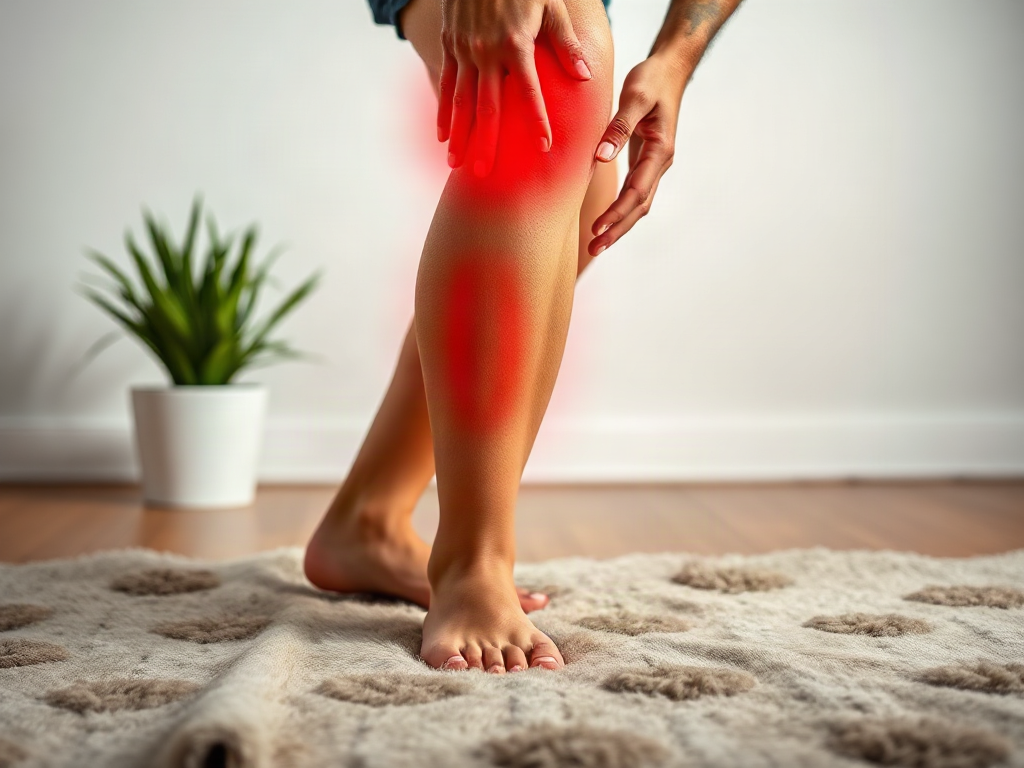
Pain behind the knee may come from a strained hamstring or calf, tendon irritation, arthritis, a meniscus problem, a fluid-filled Baker’s cyst, or—less commonly—a blood clot. Relief depends on the cause: reducing aggravating activity, using brief cold therapy after a recent strain, maintaining gentle movement, and gradually restoring strength may help uncomplicated soft-tissue pain. A swollen, warm calf, sudden shortness of breath, inability to bear weight, major injury, fever, or a locked knee requires prompt medical assessment rather than home treatment. Persistent swelling or symptoms that do not improve should be evaluated so a clinician can distinguish a joint problem from a vascular or nerve-related condition.
Common Causes of Pain Behind the Knee
The hollow at the back of the knee contains tendons, muscles, ligaments, nerves, blood vessels, and a joint capsule, so the location alone does not identify the source. A sudden ache after sprinting, climbing, or lifting may reflect a hamstring or upper-calf strain. Pain that builds during repeated bending may instead involve tendon irritation, a meniscus injury, or inflammation inside the knee.
A Baker’s cyst is another recognizable possibility. Extra joint fluid can push into a pouch behind the knee, producing fullness, tightness, or difficulty fully bending the leg. Arthritis can contribute to this fluid buildup, but a cyst may also occur after a meniscus injury or other internal irritation. The swelling may feel more noticeable when standing and less obvious when the knee is bent.
Symptoms provide useful clues, but they are not a diagnosis. Tenderness in the muscle after a clear activity change points in a different direction than deep joint pain with clicking, catching, or recurrent swelling. Numbness or tingling extending into the calf or foot raises concern for nerve involvement. Calf enlargement, warmth, and unexplained tenderness require a different level of caution because circulation problems can resemble a muscle injury.
A common mistake is assuming that every posterior-knee symptom is a hamstring problem and repeatedly stretching it. Stretching an irritated tendon, cyst, or inflamed joint may intensify pressure rather than relieve it. Note when the discomfort began, whether swelling is present, which movement triggers it, and whether the symptoms are changing. That short symptom record can make a clinical examination more efficient.
For related movement and comfort considerations, readers can also review What causes pain behind the knee and how is it relieved alongside their activity history, footwear changes, and recent training load.
Warning Signs That Need Medical Assessment
Some pain behind the knee is suitable for brief self-care, but certain features should not be managed as an ordinary strain. Sudden swelling of one leg, warmth or redness in the calf, unexplained tenderness, or symptoms after prolonged immobility can be associated with a deep vein thrombosis. Recent surgery, a long journey, pregnancy or the postpartum period, estrogen-containing medication, cancer, or a previous clot can increase concern. These signs warrant prompt medical advice.
Call emergency services for sudden breathlessness, chest pain, coughing blood, fainting, or severe light-headedness, particularly when leg swelling is also present. Those symptoms can indicate that a clot has traveled to the lungs. Do not massage a suspiciously swollen calf or use vigorous exercise to “work it out” before receiving medical guidance.
Urgent evaluation is also appropriate after a major twist, fall, or impact when the knee looks deformed, gives way, cannot bear weight, or cannot fully straighten. Fever, marked redness, or a hot swollen joint may point to infection or another inflammatory problem. A locked knee, rapidly increasing swelling, or significant weakness deserves assessment even when the original injury seemed minor.
By contrast, a mild ache that follows an identifiable workout and gradually settles without swelling is less alarming, although it still deserves monitoring. The important comparison is not simply mild versus severe pain; it is stable, improving symptoms versus symptoms that are spreading, becoming hot, producing new swelling, or limiting basic function. Delaying care because the discomfort is behind the knee can allow a treatable problem to worsen.
When uncertainty remains, choose assessment over guesswork. A clinician may compare both legs, examine knee motion and muscle strength, and decide whether imaging or vascular testing is appropriate. Home remedies are not a substitute for that evaluation when circulation, infection, or structural injury is possible.
Relief for Strains, Irritation, and Swelling
For a recent, uncomplicated muscle or tendon strain, the first useful change is usually relative rest rather than complete immobilization. Pause sprinting, deep squats, jumping, and hills if they reproduce the pain, while continuing comfortable short walks when they do not increase symptoms. Cold therapy wrapped in a cloth for a brief period may reduce discomfort after activity; protecting the skin matters more than making the application intensely cold.
Elevation can be useful when visible swelling is present, and gentle range-of-motion movements may prevent the knee from becoming stiff. A comfortable heel slide or slow knee bend should stay within an easy range and should not cause sharper pain, increased swelling, or worsening symptoms later that day. If a movement fails that test, reduce its range or stop it rather than forcing flexibility.
Over-the-counter pain relievers may be appropriate for some adults, but they are not risk-free. Anti-inflammatory medicines can be unsuitable with certain stomach, kidney, heart, bleeding, pregnancy, or medication-related concerns. A pharmacist or clinician can help check interactions and personal risks. Pain relief should make ordinary movement more tolerable, not encourage a return to sprinting before the tissue is ready.
As symptoms settle, progressive strengthening is generally more useful than passive treatment alone. Depending on the suspected source, rehabilitation may begin with gentle calf raises, hamstring isometrics, or controlled sit-to-stand practice, then advance toward step-ups and activity-specific loading. Increase one variable at a time—such as repetitions or walking distance—and look for a stable response over the next day. A flare that lasts into the following day signals that the progression was too rapid.

Compression can feel supportive for some forms of uncomplicated swelling, but it should not be used to conceal a potentially serious calf problem. Similarly, heat may feel soothing for stiffness but can aggravate fresh swelling in some people. Relief measures work best when matched to the pattern: protect a new injury, keep tolerable motion, and avoid using symptom reduction as proof that the underlying cause has resolved.
When Testing, Rehabilitation, or Specialist Care Helps
Persistent posterior-knee symptoms deserve a more specific plan when they interfere with sleep, walking, work, or ordinary bending. Examination can distinguish pain reproduced by muscle loading from pain caused by joint compression, a cyst, nerve irritation, or vascular changes. Ultrasound may be considered for a suspected cyst or blood-flow concern, while magnetic resonance imaging is sometimes used when internal knee structures remain uncertain. The appropriate test depends on the examination rather than on the pain location alone.
Physical therapy may be particularly useful when symptoms recur after activity, the knee feels unstable, or weakness changes the way a person walks. A therapist can assess hip, thigh, calf, and ankle control instead of treating only the painful spot. For example, someone who returns to recreational basketball after a calf strain may need gradual running drills and deceleration practice, not simply a longer hamstring stretch.
A Baker’s cyst often improves when the knee condition producing excess fluid is addressed. Draining the cyst may provide temporary relief in selected situations, but it does not necessarily prevent the fluid from returning if arthritis or a meniscus problem remains active. That tradeoff explains why treating the underlying joint issue can matter more than repeatedly focusing on the lump itself.
Use a simple decision sequence:
- Check for danger: assess sudden calf swelling, warmth, breathing symptoms, fever, major trauma, or inability to bear weight.
- Modify the trigger: stop the movement that sharply reproduces symptoms and retain only comfortable activity.
- Track response: note swelling, walking tolerance, range of motion, and next-day reaction.
- Escalate appropriately: seek care for red flags, worsening symptoms, or failure to improve with sensible activity modification.
Avoid two opposite errors: returning to demanding activity because pain briefly fades, or resting completely for weeks without reassessment. The first can prolong tissue irritation; the second can reduce strength and confidence. A measured return, guided by function and next-day response, is usually more informative than a calendar deadline.
Readers comparing self-care options with clinical evaluation may find What causes pain behind the knee and how is it relieved useful as a reminder that the safest method depends on the cause, not just the intensity of the sensation.
Frequently Asked Questions
Can a Baker’s cyst cause pain behind the knee?
Yes. It may cause pressure, fullness, stiffness, or aching behind the knee, especially when the leg is straight or after activity. The condition causing excess joint fluid may also need attention.
Should I walk with pain behind my knee?
Gentle walking may be reasonable when it does not cause limping, sharp pain, or increasing swelling. Stop and seek advice if weight-bearing is difficult or symptoms deteriorate afterward.
How can I tell a strain from a blood clot?
A strain often follows a specific movement and hurts when the involved muscle is loaded. A clot can involve unexplained one-sided swelling, warmth, and calf tenderness, but symptoms overlap, so suspicious swelling needs prompt medical assessment.
Is heat or ice better for this discomfort?
Brief, cloth-wrapped cold therapy may be more comfortable after a recent injury with swelling. Heat can feel useful for stiffness, but neither should delay assessment of a hot, markedly swollen, or unexplained leg.
When should I see a clinician?
Arrange care for persistent or recurring symptoms, locking, instability, substantial swelling, inability to bear weight, or pain that does not improve after activity modification. Seek urgent help for clot, infection, or major-injury warning signs.
Conclusion
Discomfort behind the knee is a location, not a diagnosis. A recent change in exercise may point toward muscle or tendon overload, while fullness, recurrent swelling, mechanical catching, or symptoms extending into the calf suggest other possibilities. Prioritize danger signs first: sudden one-sided swelling, warmth, breathing symptoms, fever, major trauma, and inability to bear weight should not be managed with massage or strenuous exercise. For a mild, clearly activity-related problem, reduce the provoking load, preserve comfortable movement, and progress strength gradually while checking the next-day response. If the pattern persists, returns, or remains unclear, an examination is the most efficient next step because treatment for a strain, cyst, joint disorder, nerve issue, and blood-flow problem is not interchangeable.