
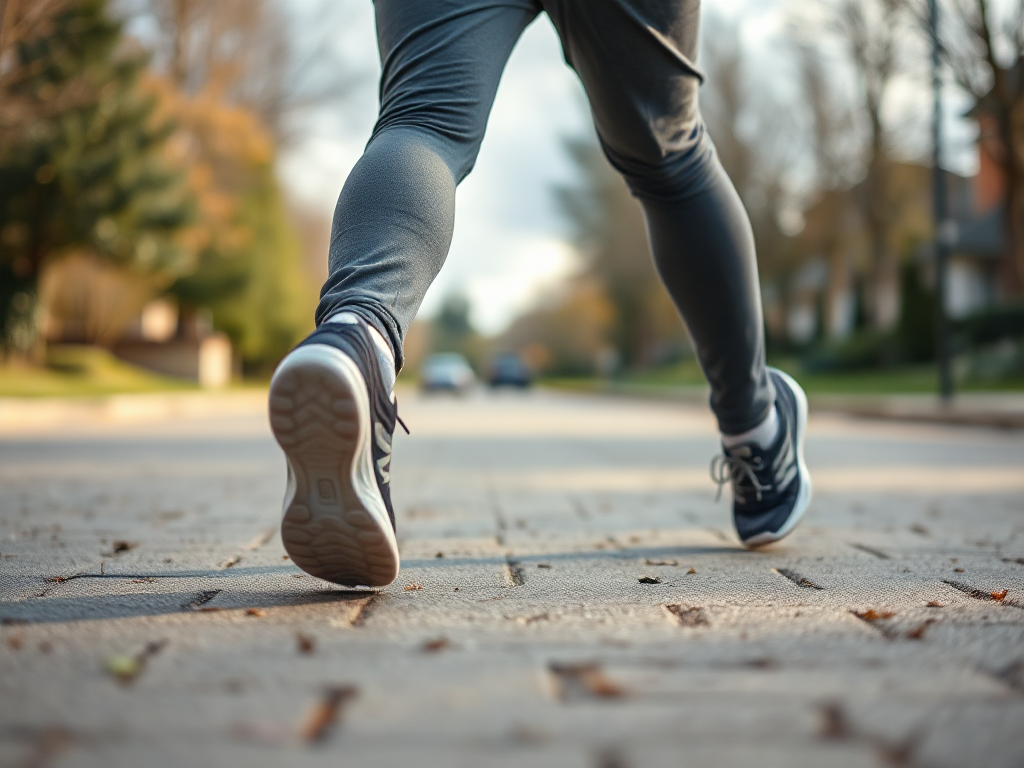
Joint pain starts after increasing walking distance too quickly because the muscles, tendons, ligaments, and joint surfaces are exposed to more repeated load than they can comfortably absorb or recover from. A sudden mileage increase, hills, harder pavement, worn shoes, or a change in walking speed can amplify stress around the knees, hips, ankles, or feet. Soreness that improves with rest may reflect an overload response, but swelling, warmth, instability, sharp pain, or symptoms that persist during ordinary activities deserve medical assessment. Reducing distance temporarily, choosing easier terrain, checking footwear, and rebuilding with smaller increases can help reveal whether training load is the main trigger.
Why a Sudden Walking Increase Irritates Joints
A rapid increase in walking distance changes the number of loading cycles your lower body must handle. Each step transfers force through the foot, ankle, knee, hip, and pelvis; adding several miles in a short period gives those tissues less time to adapt. Muscles may become tired before the walk ends, and that fatigue can alter stride length, foot placement, or pelvic control. The joint itself may not be the only source of discomfort: tendons, bursae, ligaments, and nearby muscles can all produce pain that feels as though it is coming from a joint.
The mismatch is often between new workload and current capacity, not between walking and joint health in general. Someone who usually walks 15 minutes on flat ground may tolerate a longer routine eventually, but a sudden weekend hike with hills and uneven surfaces is a different physical demand. Distance, pace, incline, surface, carried weight, and recovery time all contribute to the total stress. A modest distance on a steep route may challenge the knees more than a longer, slower walk on level ground.
Age, previous injuries, arthritis, reduced leg strength, and a long period of inactivity can narrow the margin for abrupt changes. That does not mean walking must be avoided. It means progression should account for the least prepared part of the system. A common mistake is judging readiness by breathing or motivation alone; cardiovascular fitness can improve faster than connective tissues and stabilizing muscles adapt.
Readers comparing their experience with why joint pain starts after increasing walking distance too quickly should examine the full change rather than distance alone. If the route became hillier, the shoes changed, or walking days were added without an easier day between them, the apparent “distance problem” may actually be a combined-load problem.
Clues That Walking Load Is the Main Trigger
Timing provides useful evidence. Overload-related discomfort commonly appears during the walk, later the same day, or the following morning after a notable increase. It may be more noticeable when climbing stairs, standing after sitting, or taking the first few steps after rest. Symptoms that settle when the provoking activity is reduced and return when the same workload is repeated suggest that the recent training change deserves attention, although this pattern cannot diagnose the underlying condition.
Location and quality also matter. Aching around the front of the knee, soreness along the outside of the hip, tenderness near the Achilles tendon, or discomfort under the heel may point toward different structures being stressed. A dull ache that remains mild and does not change your gait is different from sharp pain, catching, giving way, or pain that causes you to limp. The latter signs should not be treated as ordinary conditioning soreness.
Keep a short record for several walks: distance, hills, pace, surface, footwear, pain during the walk, and pain the next morning. This can expose a pattern that memory misses. For example, a person may tolerate 30 minutes on a track but develop knee pain after 20 minutes on a sloped sidewalk. Another may feel fine during a walk but experience increasing ankle stiffness the next morning after adding consecutive long days.
The weak assumption is that pain automatically means damage, or that no pain during the walk means the workload was appropriate. Neither conclusion is reliable by itself. A delayed flare can reflect accumulated fatigue, while persistent or escalating symptoms may signal a condition unrelated to simple progression. Use the response over the next 24 hours as one practical guide: if ordinary movement becomes harder, the recent dose was probably too demanding.
How to Reduce Irritation Without Stopping Forever
The most useful first adjustment is to remove the recent spike, not necessarily all movement. Return to a distance and terrain that do not produce a meaningful increase in pain during the walk or the next morning. A shorter flat walk may be more suitable than complete inactivity for someone who can move comfortably, while a painful limp calls for rest from the provoking activity and professional guidance.
After symptoms calm, rebuild one variable at a time. Keep the route flat while extending time, or keep the distance stable while introducing a small amount of incline; changing both together makes it difficult to identify the trigger. Alternate a longer day with easier movement rather than stacking several demanding walks. Strength work for the calves, quadriceps, hamstrings, gluteal muscles, and trunk may improve load tolerance over time, but exercises should be selected and progressed according to symptoms and individual limitations.
A practical reset can look like this:
- Reduce the distance enough to avoid limping or a worsening next-morning response.
- Use level, predictable terrain while irritation settles.
- Resume increases only after the current distance feels repeatable on more than one occasion.
- Change pace, hills, and distance separately rather than all at once.
- Stop and reassess if pain becomes sharp, unstable, swollen, or progressively worse.
There is a tradeoff between progressing quickly and progressing consistently. A larger increase may feel efficient, but a flare can erase several days of activity and make the eventual return slower. Smaller adjustments are less dramatic yet easier to evaluate. A frequent mistake is testing recovery with another long walk as soon as symptoms improve; improvement at rest does not prove that the tissue is ready for the original workload.
Advice about why joint pain starts after increasing walking distance too quickly should therefore emphasize response-based progression rather than a rigid percentage or universal schedule. Pain behavior, function, prior health, and the demands of the route all influence what is reasonable.
Footwear, Terrain, and Technique Factors
Walking distance is only one part of the mechanical demand. A shoe with compressed cushioning, poor fit, inadequate width, or an unstable heel may make an abrupt increase harder to tolerate. Shoes do not need to be expensive or highly specialized, but they should feel secure, leave room for the toes, and match the surface and walking style. Replacing footwear alone will not correct an excessive workload, yet unsuitable shoes can add irritation to a system already near its limit.
Terrain changes how force is distributed. Downhill walking often increases braking demands at the knees, while prolonged uphill walking challenges the calves, hips, and front of the thighs. Cambered roads can load one side differently from the other. Uneven trails require more ankle and hip stabilization than a smooth indoor track. If pain began after a route change, repeating the same distance on a more forgiving surface can help distinguish terrain sensitivity from a distance threshold.
Technique should be adjusted cautiously. Shortening an overly long stride and reducing pace may decrease braking forces for some walkers, but forcing a new gait pattern can create soreness elsewhere. The goal is not to copy a supposedly perfect walking form. It is to use a comfortable, controlled stride, avoid pushing through a limp, and allow natural arm movement. A walker carrying a heavy backpack may need to reduce either the load or the distance because both increase demand.

Consider a person who adds a daily three-mile walk in old shoes after previously being sedentary. Replacing the shoes may improve comfort, but keeping the same sudden schedule could still provoke symptoms. Conversely, a gradual program may succeed in ordinary shoes if the fit is sound and terrain is introduced progressively. Equipment is a modifier, not a substitute for recovery and sensible dosing.
When Walking Pain Needs Medical Attention
Medical evaluation is appropriate when pain is severe, persistent, recurrent despite reducing activity, or associated with swelling, warmth, redness, fever, numbness, weakness, or inability to bear weight. A joint that locks, gives way, changes shape, or becomes acutely swollen should not be managed as routine walking soreness. Calf swelling or pain with shortness of breath is an emergency situation and requires immediate care.
Symptoms that continue during rest or wake you repeatedly at night also deserve attention, particularly when there was no clear training change. A history of inflammatory arthritis, gout, osteoporosis, significant trauma, joint replacement, or immune suppression lowers the threshold for contacting a clinician. These factors can change the likely causes and the safest activity plan.
A clinician may examine gait, range of motion, strength, tenderness, and swelling before deciding whether imaging, rehabilitation, or other testing is warranted. Self-diagnosing arthritis from post-walk pain can delay evaluation of a tendon problem, stress injury, nerve issue, or inflammatory condition. On the other hand, assuming every ache requires a scan can create unnecessary concern; the need for testing depends on findings, duration, injury history, and functional change.
Before an appointment, record where the discomfort occurs, when it starts, whether it is one-sided, what happens the next morning, and which changes preceded it. Mention new shoes, hills, speed work, falls, and changes in work or daily standing. That information is more useful than simply reporting that walking “caused” the pain. Readers researching why joint pain starts after increasing walking distance too quickly should treat improvement with a reduced load as informative, not as proof that a serious cause has been ruled out.
For additional guidance, consult patient information from recognized medical organizations, government health agencies, or a licensed physical therapist. Choose resources that explain activity modification and red-flag symptoms rather than promising a single shoe, stretch, or supplement will resolve walking-related joint pain.
Frequently Asked Questions
Can walking too much cause joint pain even if I felt fit?
Yes. Heart and lung fitness may tolerate a longer walk before the tendons, stabilizing muscles, and joint tissues are ready for the repeated load, especially on hills or hard surfaces.
Should I stop walking when my joints hurt?
Reduce or pause the provoking distance if pain changes your gait, escalates during the walk, or is worse the next morning. Comfortable, shorter movement may be reasonable when symptoms are mild and stable.
How long should I wait before increasing distance again?
Wait until the current, easier level is repeatable without worsening symptoms during the walk or over the following day. The timeline varies with the affected area, health history, and severity.
Can new walking shoes prevent this problem?
Appropriate shoes may remove a fit or comfort problem, but they cannot compensate for a sudden workload spike. Check shoe condition while also adjusting distance, pace, terrain, and recovery.
When should I see a doctor about walking-related joint pain?
Seek care for marked swelling, warmth, redness, instability, locking, inability to bear weight, severe or persistent pain, numbness, fever, or symptoms that do not improve after reducing the trigger.
Conclusion
Walking-related joint pain after a rapid distance increase usually reflects a workload change that outpaced tissue tolerance, but the exact source may be a joint, tendon, muscle, or nearby structure. Review distance alongside hills, surface, pace, footwear, carried weight, and recovery days. Reduce the provoking dose, maintain only comfortable movement, and rebuild gradually with one change at a time. A next-morning flare, altered gait, or steadily rising discomfort means the current level is too demanding. Swelling, warmth, instability, sharp pain, inability to bear weight, or persistent symptoms call for medical assessment rather than repeated self-testing. The aim is not to force a fixed walking target; it is to find a repeatable level that your body can tolerate and progress from carefully.