
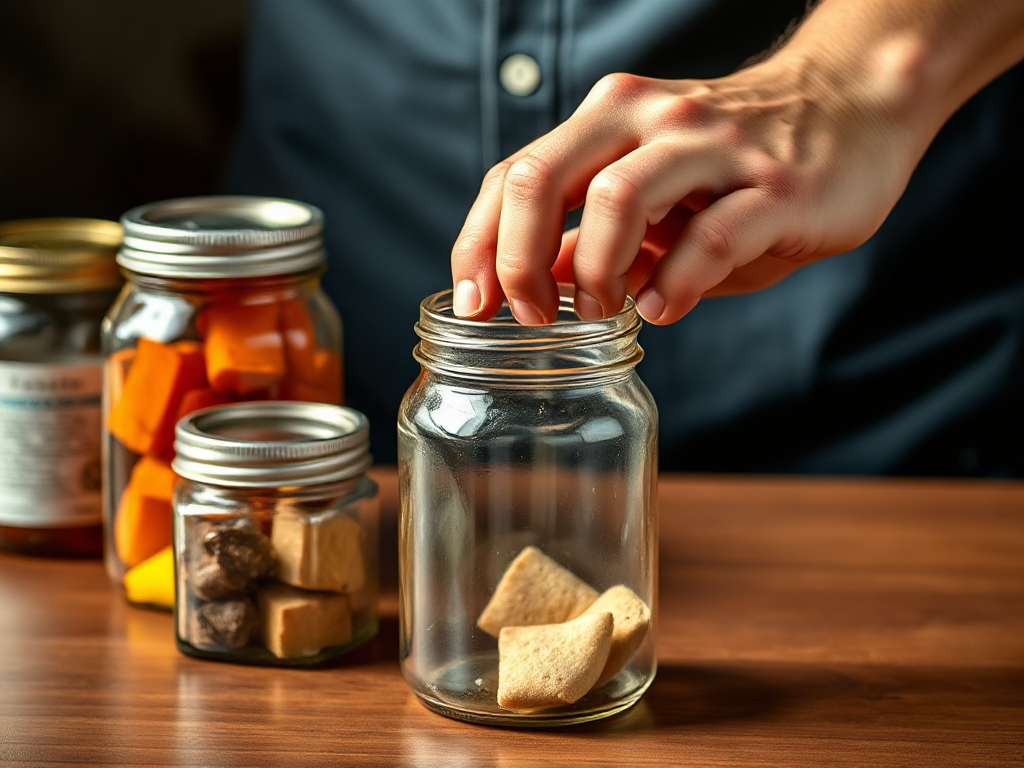
Gripping or opening jars aggravates hand joint pain because the task combines forceful squeezing, thumb pressure, wrist rotation, and sudden resistance, concentrating load in already sensitive finger, thumb, or wrist joints. A tight lid can make the small muscles work near their limit, while twisting may irritate joint surfaces, tendons, or inflamed tissues. Use a wider, nonslip grip, keep the wrist straighter, stabilize the jar against a counter, and stop rather than forcing a stuck lid. Persistent swelling, warmth, deformity, numbness, weakness, or pain that limits ordinary tasks deserves medical assessment because the underlying problem may need more than household adaptations.
Why Jar Opening Loads Sensitive Hand Joints
Opening a jar is a compound hand task rather than a simple grip. One hand must squeeze the lid firmly while the other stabilizes the container, and the person then adds a twisting motion against friction and the lid seal. That combination creates compression through the finger and thumb joints, tension in the tendons, and rotational demand at the wrist. If a joint is already irritated, even a brief effort can feel disproportionally painful.
A tight lid increases the problem because resistance is unpredictable. The hand may build force gradually, then suddenly jerk when the seal breaks. That abrupt release can strain soft tissues and make the fingers collapse into an awkward position. A narrow metal lid is particularly demanding because it gives the fingertips little surface area and encourages a pinching grip. A broad rubberized opener may feel easier not because it removes all force, but because it improves traction and spreads pressure across the palm.
Fatigue also changes mechanics. After repeated attempts, people commonly squeeze harder, bend the wrist, or hold the elbow away from the body. Those adjustments may produce enough torque to move the lid, but they shift stress toward the thumb base, wrist, and smaller finger joints. Pain that appears only after several jars may therefore reflect accumulated loading rather than a single injury.
A useful distinction is between discomfort that settles soon after the task and symptoms that linger into the next day. Mild, short-lived soreness may indicate that the demand exceeded current tolerance. Increasing swelling, reduced motion, or pain that persists despite rest suggests that continuing to test the joint is a poor tradeoff. The goal is not to prove that the hand can overpower the lid; it is to reduce the force and awkwardness required.
Which Hand Areas Usually Hurt And Why
The location of the pain provides practical clues, although it cannot diagnose the cause by itself. Pain at the base of the thumb often becomes noticeable when the thumb presses against a lid while the fingers oppose it. The thumb carpometacarpal joint is exposed to load during pinching and grasping, so a wide jar or stiff seal may be more provocative than a light object. Pain at the finger joints may be linked to forceful flexion around the lid, especially when swelling makes a full grip difficult.
Wrist discomfort can arise when the forearm rotates while the wrist is bent. Many people try to twist from the hand alone, but a straighter wrist and movement from the forearm can distribute the task more evenly. Tendon irritation may feel like aching along the thumb side or back of the wrist rather than pain directly inside a knuckle. Tingling or numbness is different from ordinary pressure soreness and should not be dismissed as a normal consequence of gripping.
Consider a person who can carry a light grocery bag but cannot open a pickle jar. The two activities do not challenge the hand in the same way: carrying uses a sustained hold, while jar opening adds pinch force, rotation, and resistance that may target a painful structure. This comparison helps explain why general hand strength does not guarantee comfortable jar opening.
Another common assumption is that a painful hand must simply be weak. Weakness can contribute, but inflammation, stiffness, altered joint alignment, tendon sensitivity, or reduced coordination may matter just as much. Testing the same lid repeatedly to “strengthen” the hand can backfire. A better first check is whether changing lid size, traction, wrist position, or stabilization reduces symptoms. If a small mechanical change makes a substantial difference, technique and load distribution are likely part of the problem, even though an underlying condition may still require attention.
For related guidance on daily hand demands, see Why gripping or opening jars aggravates hand joint pain when comparing household tasks that place similar stress on the fingers and thumb.
Safer Ways To Open A Tight Lid
The safest approach reduces the required torque before increasing hand effort. Place the jar on a stable, nonslip surface instead of holding it in midair. A damp towel or rubber mat may improve stability, but the surface should remain secure and dry enough to prevent the container from sliding. If the jar is glass, avoid striking it against a counter or using excessive force that could cause breakage.
Improve traction with a rubber lid grip or a jar opener that uses a broad contact area. These tools are most useful when the limiting factor is slipping rather than absolute strength. A lever-style opener may be more appropriate for a very tight seal because it changes the mechanics and reduces the need for forceful pinching. The tradeoff is that some devices require positioning or hand control, so a tool is helpful only if it can be used without placing the wrist in a painful angle.
Use the following sequence for a routine tight lid:
- Warm the hands and check that the jar and lid are dry.
- Set the container on a stable surface at a comfortable height.
- Wrap the lid with a wide, nonslip material rather than gripping its edge with fingertips.
- Keep the wrist close to neutral and let the forearm contribute to the turn.
- Stop after a controlled attempt if sharp pain, slipping, or sudden weakness appears.
Running warm water over a metal lid may sometimes help loosen residue or slightly change the lid’s fit, but it is not a universal solution and should be used cautiously around hot surfaces. Tapping or prying may damage the container or create a safety hazard. If the seal is the obstacle, a purpose-made opener is preferable to improvising with a knife.
Hand position matters as much as equipment. Keep the elbow nearer the body, support the jar with the palm rather than only the fingertips, and avoid forcing the thumb into a sharply bent posture. If another person opens the jar, that is not a failure of rehabilitation; it is a sensible way to avoid a flare while the cause is being clarified. You can also transfer contents into an easy-open container when practical, particularly if the same lid repeatedly triggers symptoms.
Notice what happens afterward. A method is probably better suited to you if it reduces sharpness during the turn and does not produce added swelling or prolonged aching later. If pain remains high despite improved traction and positioning, the issue is less likely to be solved by technique alone.
When Jar-Opening Pain Needs Medical Attention
Jar-opening pain warrants professional evaluation when it is persistent, worsening, or accompanied by signs that extend beyond ordinary task soreness. New swelling, warmth, redness, visible deformity, or marked loss of motion can indicate an inflammatory or structural problem. Numbness, tingling, dropping objects, or grip weakness may point toward nerve involvement or a more substantial hand or wrist disorder. Sudden severe pain after a twist, fall, or forceful event should also be assessed rather than repeatedly tested.
The pattern over time is useful. Pain in one thumb base that appears with pinching may differ from stiffness in several finger joints, morning swelling, or symptoms in both hands. Night symptoms, recurring flares, and difficulty with buttons, keys, or writing provide information a clinician can use. Keep a brief record of the painful location, swelling, duration, triggering lids, and whether symptoms settle within hours or persist into the following day.
Do not assume that a familiar label such as arthritis explains every hand complaint. Tendon disorders, nerve compression, prior injury, inflammatory conditions, and joint degeneration can overlap in everyday symptoms. Likewise, a normal-looking hand does not prove that nothing is wrong. An evaluation may include movement, strength, sensation, and the history of how symptoms behave; imaging or other testing depends on the findings.

Until the hand is assessed, avoid repeated maximal gripping and do not use pain medication as permission to force a stuck container. A pharmacist or clinician can help determine whether an over-the-counter option is appropriate, particularly if you have other health conditions or take regular medicines. Seek prompt care for a hot, markedly swollen joint, a sudden inability to move a finger or thumb, major color change, or symptoms after significant trauma.
For broader symptom context, use Why gripping or opening jars aggravates hand joint pain alongside notes about other activities that reproduce the same motion. Consistent patterns are more informative than one difficult jar.
Building Tolerance Without Repeated Flares
Improving tolerance starts with lowering the task to a manageable level, not with repeated battles against the tightest lid in the pantry. Choose a light container with a broad lid and practice a relaxed grasp, short turning movements, and a neutral wrist. Stop before pain escalates sharply. The useful signal is whether the hand returns to its usual baseline afterward, not whether it completes a high-resistance task.
Gentle range-of-motion movements can help preserve comfortable movement, but they should not be pushed into sharp pain or used to force a swollen joint. If a therapist has provided exercises, follow that plan rather than copying strenuous grip routines from general fitness advice. Putty, squeezing devices, and heavy hand grippers are not automatically appropriate; they may increase compression at the very joints that jar opening already aggravates.
Change one variable at a time so you can identify what helps. Try a larger container, a nonslip lid cover, or a different wrist position on separate occasions. If symptoms improve with an opener but return with ordinary pinching, equipment is reducing exposure rather than correcting the underlying sensitivity. That is still valuable, but it sets realistic expectations.
A compact priority list is:
- Reduce resistance and stabilize the jar.
- Spread contact across the palm and avoid fingertip pinching.
- Keep the wrist nearer neutral and stop at sharp pain.
- Track delayed swelling or aching before repeating the task.
- Arrange assessment when symptoms persist, spread, or impair daily function.
Use Why gripping or opening jars aggravates hand joint pain when reviewing whether household adaptations are enough or whether recurring symptoms deserve a more individualized plan. The best adjustment is the one that preserves independence without provoking a longer flare.
For additional medically reviewed information, consult hand and wrist materials from recognized organizations such as the American Society for Surgery of the Hand, the American Academy of Orthopaedic Surgeons, or the National Institute of Arthritis and Musculoskeletal and Skin Diseases. These sources can help readers compare symptom patterns and understand when an examination is appropriate; they should not replace individualized medical advice.
Frequently Asked Questions
Why does opening a jar hurt more than carrying a bag?
Jar opening combines squeezing, pinching, wrist rotation, and sudden resistance. Carrying a bag may use a steadier hold without the same twisting load.
Can a jar opener reduce hand joint pain?
It may reduce pain when slipping or excessive pinch force is the main trigger. Choose a broad, nonslip or lever-style design and stop if symptoms remain sharp.
Should I keep trying to open the lid to strengthen my hand?
No. Repeated maximal attempts can aggravate irritated joints or tendons. Use easier resistance and gradual, comfortable practice if strengthening has been recommended.
What does pain at the base of the thumb suggest?
It may reflect stress on the thumb-base joint or nearby tendons, especially during pinching. Location alone cannot identify the cause, so persistent symptoms need assessment.
When should I seek care for jar-opening pain?
Arrange evaluation for ongoing or worsening pain, swelling, warmth, deformity, numbness, weakness, loss of motion, or difficulty with several everyday tasks.
Conclusion
Jar opening exposes the hand to a demanding mix of compression, pinch force, rotation, and sudden release. The first priorities are to stabilize the container, improve traction, keep the wrist nearer neutral, and avoid repeated attempts that produce sharp pain or delayed swelling. A rubber grip or lever opener may make the task more manageable, but it does not explain away persistent symptoms. Pay attention to the painful location, changes in motion, numbness, weakness, and how long discomfort lasts after the task. If ordinary household activities are becoming harder, arrange an evaluation rather than relying only on stronger gripping. Practical adaptations can protect independence while you determine whether the hand needs targeted treatment or rehabilitation.