
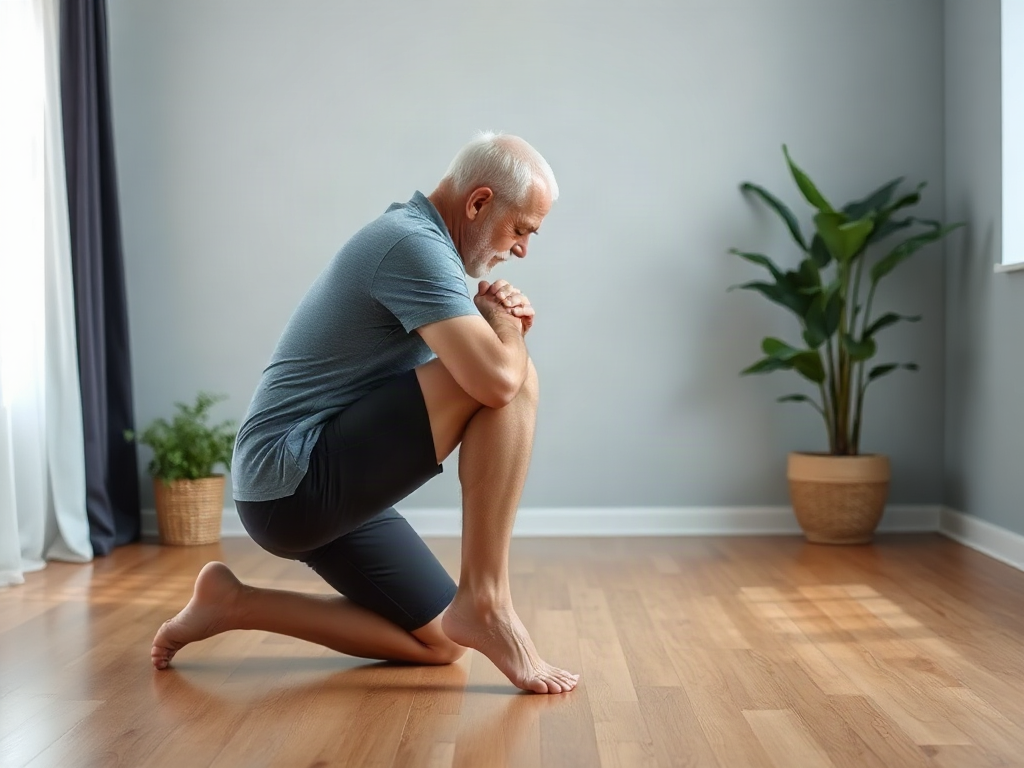
Relief for knee pain when bending usually comes from reducing irritating loads, improving movement control, and matching self-care to the likely source, such as kneecap irritation, tendon strain, arthritis, or a meniscus problem. Try shallower bends, slow controlled motion, supportive footwear, and ice after an activity that causes swelling; gentle strengthening may help when symptoms are stable. Avoid forcing deep squats, repeatedly testing the painful angle, or resting completely for long periods. A recent injury, locking, marked swelling, inability to bear weight, redness, fever, or worsening symptoms warrants prompt medical assessment because home care may not be appropriate.
Why Bending Triggers Knee Symptoms
Bending increases the force between several structures in and around the knee. The kneecap moves along a groove at the front of the joint, the quadriceps and patellar tendons manage force above and below it, and the menisci help distribute pressure inside the joint. When a person squats, climbs stairs, kneels, or rises from a low chair, these tissues must tolerate both compression and controlled movement. Pain during bending therefore describes a movement pattern, not a diagnosis.
Front-of-knee discomfort that builds during stairs, squats, or prolonged sitting may fit a different pattern from sharp pain along the joint line after twisting. Stiffness with reduced range of motion can occur with osteoarthritis or inflammation, while pain just below the kneecap may follow a sudden increase in jumping, running, or repeated stair use. A pop followed by swelling, catching, or difficulty straightening the leg deserves more caution than mild soreness after an unfamiliar workout.
A useful observation is whether symptoms appear during the descent, at the deepest point, or while standing back up. Descending places a braking demand on the thigh muscles; the deepest position increases joint compression; rising requires force from the quadriceps and hips. For example, a person who feels pain only in a deep squat may tolerate a higher chair or a partial squat while the irritated area settles. Someone with twisting pain and intermittent catching should not assume that simply stretching harder will solve the problem.
Self-assessment has limits. Pain location, swelling, recent activity, age, prior surgery, and medical history all change the interpretation. Use the symptom pattern to choose safer modifications, not to label the condition with certainty. The broader Relief for knee pain when bending information on this site should complement, not replace, an examination when symptoms persist or interfere with ordinary walking.
Immediate Changes That May Reduce Irritation
The fastest short-term adjustment is usually to reduce the depth, frequency, or speed of the provoking bend rather than eliminate all movement. A painful knee may tolerate a 30-degree bend but react to a deep squat repeated dozens of times. Raise the work surface, use a higher chair, hold a stable support during a partial squat, and turn the whole body instead of twisting on a planted foot. These changes lower the demand while preserving useful activity.
Cold may be reasonable after an activity that produces warmth or swelling, particularly for a short period with a cloth barrier between the skin and the cold pack. Some people prefer heat for stiffness before movement, but heat is not a substitute for evaluation when the knee is visibly swollen, hot, or acutely injured. Over-the-counter pain medicines may carry risks related to ulcers, kidney disease, blood thinners, pregnancy, or other conditions, so medication labels and professional advice matter.
Walking is often better adjusted than abandoned. Shorter routes, level ground, slower turns, and brief breaks may be more useful than a full day of immobility. Supportive shoes can reduce the discomfort created by hard surfaces or poor stability, although footwear cannot correct a structural injury. A brace may provide confidence for a particular activity, but a tight or poorly fitted brace can irritate the skin and encourage someone to exceed a knee’s current tolerance.
Use a simple response rule: discomfort should remain manageable during the activity and should not produce a clear increase in swelling or function-limiting pain later that day or the following morning. If a modification fails, reduce the range or volume again rather than repeatedly testing the same painful motion. A common mistake is treating temporary numbness from a topical product as proof that the underlying load is safe. Symptom masking can make overuse easier, not better.
Strength and Mobility Without Provoking Symptoms
Gradual exercise can help the knee handle bending by improving the capacity of the quadriceps, hips, and calf, but the starting exercise must match current tolerance. A supported sit-to-stand from a high chair is often more controllable than a deep squat. Keep the feet steady, lean slightly forward from the hips, and rise without allowing the knees to collapse inward. Begin with a small number of smooth repetitions and judge the response over the next day rather than chasing fatigue.
Isometric quadriceps contractions, gentle heel slides, and straight-leg raises may be suitable for some people when active bending is uncomfortable, provided they do not increase symptoms. Hip-focused work, such as controlled side steps with light resistance, may address movement control without requiring deep knee flexion. These exercises are not universally appropriate: a recently injured knee, substantial swelling, suspected fracture, or postoperative knee needs individualized instructions.
Mobility work should feel like gradual motion, not a contest against resistance. Slow heel slides can explore a comfortable range, while a brief calf or hamstring stretch may reduce the sense of tightness that changes walking mechanics. Forcing the knee into a painful bend can aggravate an irritated tendon or joint lining. Compare gentle repetition with aggressive stretching: the first builds exposure to motion; the second may repeatedly provoke the same tissue before it has recovered.
Progress one variable at a time. Add a few repetitions, slightly more range, or a modest amount of resistance—not all three together. Signs of a reasonable dose include steadier movement, less hesitation at a chair, and no meaningful next-day flare. Signs to stop and reassess include increasing swelling, sharp catching, giving way, or pain that changes normal walking. A physical therapist can identify whether the main limitation is strength, mobility, coordination, or a condition requiring different care. Related movement ideas can be found through Relief for knee pain when bending.
When Self-Care Is Not Enough
Professional assessment becomes more valuable when pain persists, repeatedly returns, or limits stairs, work, sleep, or ordinary transfers. It is especially important after a fall, collision, forceful twist, or sudden change in the knee’s ability to bear weight. A clinician may examine alignment, range of motion, stability, swelling, and nearby tissues before deciding whether imaging or rehabilitation is appropriate. Imaging is not automatically needed for every episode, and home treatment should not delay assessment when function has changed substantially.

Seek urgent care for a visibly deformed knee, inability to bear weight after an injury, rapidly increasing swelling, a hot red joint with fever, severe calf swelling, or a knee that is locked and cannot move normally. New numbness or a cold, pale foot also requires prompt attention. These signs are not situations for repeatedly trying squats, massage, or supplements.
Nonurgent evaluation is sensible when the knee catches, gives way, swells after modest activity, or remains painful despite reducing the aggravating movement. Persistent symptoms may reflect osteoarthritis, tendon overload, bursitis, a meniscal problem, ligament injury, or referred symptoms from the hip or back. The useful goal is not simply to obtain a label; it is to learn which loads are safe, which exercises fit, and whether another treatment is needed.
Before an appointment, record when bending hurts, where the pain is located, whether swelling appears, what activities trigger it, and how the knee responds the next morning. Note prior injuries, operations, medicines, and medical conditions. This information is more useful than reporting only that the knee “hurts.” Avoid assuming that a supplement, compression sleeve, injection, or surgery is automatically the best answer. Each option has possible benefits, limits, costs, and risks, and the choice depends on the confirmed problem and the person’s goals.
A Practical Plan for the Next Seven Days
A short monitoring plan can make relief efforts more deliberate. On the first day, identify the exact movement that provokes symptoms and replace it with a shallower, slower version. Keep ordinary walking within a tolerable range, use cold if activity causes swelling, and avoid kneeling or deep bending that clearly worsens the knee. Record pain during the activity and again later, because delayed aggravation is easy to miss.
Over the next several days, maintain comfortable range-of-motion work and add a low-load strengthening option only if symptoms are stable. A higher chair, hand support, or reduced step height is not a failure; it is a way to control force while capacity develops. If the knee improves, progress gradually rather than returning immediately to deep squats, long stair sessions, or heavy lifting. If it worsens, return to the last tolerable level and arrange medical advice.
- Prioritize: swelling, walking ability, locking, giving way, and the effect of symptoms on daily tasks.
- Modify: bend depth, repetition count, speed, surface, footwear, and support.
- Reassess: during activity, later the same day, and the following morning.
- Escalate: promptly for injury-related loss of function or urgent warning signs.
The best sign that a plan is working is not complete absence of sensation after one session. It is improved tolerance for a specific task—such as sitting down, using stairs, or getting up from a chair—without a progressive flare. If symptoms remain unchanged or worsen despite sensible modifications, continued experimentation may waste time and obscure the need for a proper examination. For task-specific adjustments, see Relief for knee pain when bending.
For additional medical information, readers can consult patient resources from recognized orthopedic, rehabilitation, and government health organizations. Choose sources that explain evaluation, exercise safety, medication precautions, and warning signs rather than pages promising a guaranteed cure.
Frequently Asked Questions
Should I stop bending my knee completely?
Usually, complete immobilization is not necessary for mild symptoms. Reduce depth and repetition, keep comfortable motion, and stop if swelling, locking, or worsening function develops.
Is heat or ice better for knee discomfort?
Ice may feel more useful after activity-related swelling, while heat may ease stiffness before gentle movement. Avoid either as a substitute for assessment of an acutely hot, injured, or markedly swollen knee.
Can squats improve knee pain when bending?
A shallow, supported squat may build tolerance for some people, but deep or repeated squats can aggravate symptoms. Start with controlled range and monitor the next-day response.
When should knee pain be checked by a clinician?
Arrange evaluation for persistent or recurrent pain, repeated swelling, catching, giving way, or reduced daily function. Seek urgent care after major injury, with inability to bear weight, deformity, fever, or a locked knee.
Do knee braces fix pain during bending?
A brace may provide temporary support for a selected activity, but it does not identify or correct every cause. Poor fit and overreliance can create problems, so persistent symptoms still need evaluation.
Conclusion
Effective relief depends on treating bending as a load-management problem while watching for signs that require a diagnosis. Reduce the depth, speed, and repetition of painful movements; keep comfortable motion; and use gradual strengthening when the knee is stable. Judge each change by walking ability, swelling, and the next-day response rather than by a brief numbing effect. Deep squats, forceful stretching, and complete rest can all be poor choices when they do not match the underlying problem. A recent injury, locking, marked swelling, fever, inability to bear weight, or persistent loss of function should move medical assessment ahead of further home experiments. When symptoms are mild but linger, a clinician or physical therapist can help turn general modifications into a safe, specific progression.