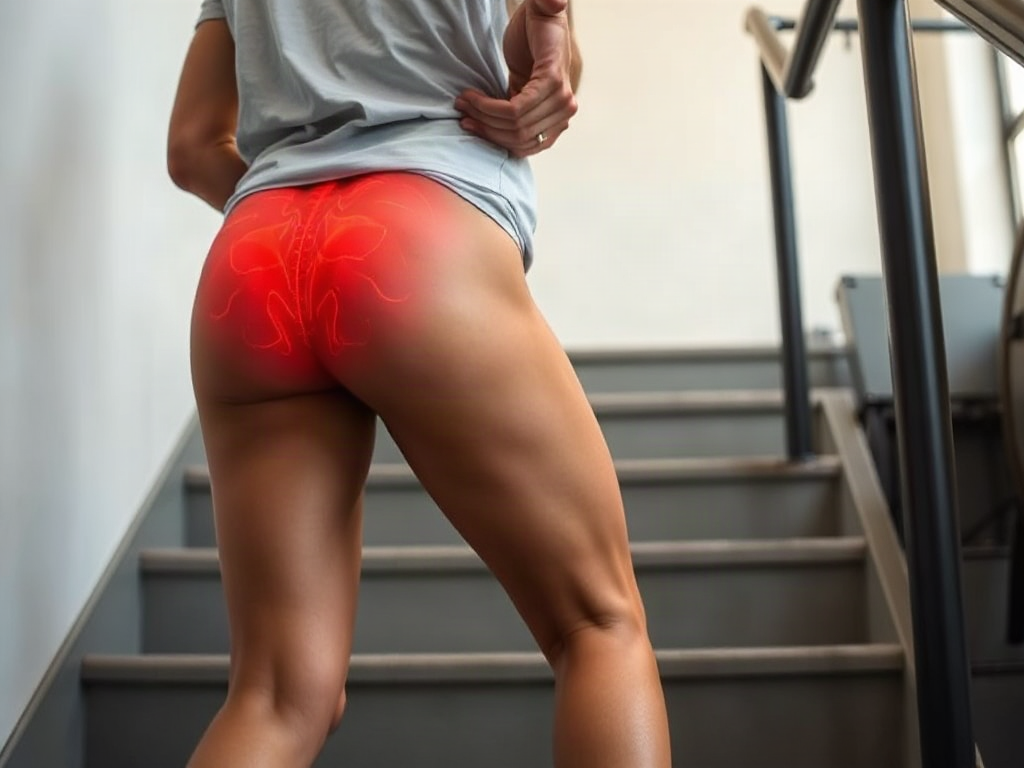
Gluteus medius pain commonly reflects overload or irritation where this hip-stabilizing muscle works to keep the pelvis level during walking, running, stair climbing, or single-leg exercise. Symptoms often include aching on the outer buttock or hip, tenderness when lying on that side, discomfort with side-lying leg lifts, and pain that worsens after a sudden increase in activity. Relief usually begins with reducing the aggravating load without complete inactivity, then gradually rebuilding hip strength through controlled exercises. Pain that travels below the knee, follows a fall, causes marked weakness, or persists despite sensible load changes may point to another problem and deserves clinical assessment.
Where Gluteus Medius Pain Comes From
The gluteus medius sits on the outer surface of the pelvis and attaches near the upper thighbone. Its main jobs are moving the leg away from the body and controlling the pelvis when the opposite foot leaves the ground. Every step, stair ascent, lateral movement, and single-leg balance task can therefore load it. Discomfort in this region may arise from the muscle itself, its tendon near the outer hip, nearby bursae, the hip joint, or the lower back rather than from one isolated structure.
A sudden change in workload is a common driver. Examples include adding hill running, increasing walking mileage, returning to recreational sports, or performing repeated side-lying leg lifts after a long period of inactivity. The tissue may tolerate a familiar demand but react when intensity, duration, frequency, or recovery time changes together. Weakness is not always the whole explanation; a person can have good gym strength yet lack the endurance needed to stabilize the pelvis during a long hike.
Prolonged compression can matter too. Sleeping on the painful side, sitting with the legs crossed, or repeatedly resting the hip against a firm surface may irritate sensitive tissues around the greater trochanter. That pattern differs from soreness after exercise: compression-related symptoms are often more noticeable at night or when getting up after sitting.
A useful distinction is between a manageable training response and a worsening load problem. Mild discomfort that settles during the day and does not alter walking may be compatible with gradual rehabilitation. Increasing night pain, a limp, or symptoms that remain worse the next morning suggest that the recent dose was too high. Readers seeking related guidance can also review Gluteus medius pain: causes, symptoms, and relief alongside a clinician’s evaluation when the source is uncertain.
Symptoms That Help Narrow the Cause
The location and behavior of the discomfort provide more useful clues than the word “hip” alone. Gluteus medius-related symptoms commonly appear over the outer buttock or side of the hip. The area may feel tender to touch, and single-leg standing may reproduce symptoms because the muscle must prevent the pelvis from dropping. Walking downstairs, stepping off a curb, or standing with most weight on one leg can be more revealing than a simple two-leg squat.
Side-lying pain deserves careful interpretation. Pain when lying on the affected side can reflect direct compression of irritated tissues. Pain when lying on the opposite side may occur because the upper leg falls across the body and tensions the outer hip. In either case, repeatedly testing the painful position through the night can delay settling, so a pillow between the knees or a temporary change in sleeping position may be more useful than aggressive stretching.
Symptoms that extend down the leg, include numbness or tingling, or change with coughing or spinal movement may suggest a lumbar nerve or referred pain source. Groin-dominant pain, marked loss of hip rotation, or catching may fit an intra-articular hip problem more closely. These patterns do not establish a diagnosis by themselves, but they argue against treating every outer-hip symptom as a weak muscle.
A practical self-check is to compare activities rather than chase a single provocative test. If a short, level walk is comfortable but side-stepping and stairs are painful, lateral hip loading may be the priority. If nearly every position hurts, rest does not change the symptoms, or the pain began after trauma, a professional examination is more appropriate than adding exercises. The common mistake is repeatedly provoking the area to “see whether it is better,” which can turn a useful observation into a daily irritant.
A Practical Relief Plan
Relief usually improves when the aggravating load is adjusted rather than when all movement stops. For several days, reduce the clearest triggers: steep hills, long walks, running, deep lateral lunges, or high-repetition hip-abduction drills. Keep tolerable movement such as easy level walking if it does not produce a limp or a clear flare later that day. The target is not zero sensation during every activity; it is a stable response that does not progressively worsen.
Compression management is often overlooked. Avoid lying directly on the painful side, and consider a pillow that keeps the upper leg from crossing inward when sleeping on the opposite side. During the day, use both feet when possible instead of hanging on one hip. These changes may feel minor, but they reduce repeated exposure while the tissue’s load tolerance is being rebuilt.
Once ordinary walking is reasonably settled, begin with controlled strengthening. A brief isometric contraction against a wall or belt can be easier to tolerate than repeated large-range leg lifts. Progression might then move toward supported single-leg balance, slow side steps with light resistance, and eventually step-downs or sport-specific movements. The exercise should challenge the outer hip without causing a sharp increase in symptoms during the session or a substantial next-day reaction.
- Working response: movement becomes smoother, night discomfort decreases, and the next morning feels no worse.
- Excessive dose: pain escalates during the session, walking changes, or symptoms remain clearly aggravated into the following day.
- Useful progression: change one variable at a time—repetitions, resistance, range, speed, or duration—rather than increasing all of them together.
Stretching is not automatically helpful. A forceful cross-body stretch may increase compression at the outer hip, especially when tendon irritation is involved. Gentle mobility can be reasonable if it feels relieving, but strengthening and load control generally deserve priority when weakness or activity intolerance is prominent. Ice or heat may provide short-term comfort, while medication decisions should account for personal health conditions and advice from a pharmacist or clinician.

When Home Care Is Not Enough
Seek prompt medical care after a significant fall, inability to bear weight, obvious deformity, fever, unexplained swelling, or severe pain that arrives suddenly. New progressive weakness, loss of bladder or bowel control, or numbness in the groin area requires urgent attention because those features are not typical of a straightforward overuse problem.
For less urgent symptoms, an assessment is sensible when pain continues to limit sleep, walking, work, or exercise despite a reasonable reduction in aggravating activity. A physical therapist or physician can compare the hip, lumbar spine, gait, strength, and movement control rather than assuming the gluteus medius is the source. Imaging is not automatically necessary; its usefulness depends on the examination and the suspected condition.
Return to running or sport should be based on function, not simply the number of days since symptoms began. A sensible sequence is comfortable level walking, stairs without a limp, controlled single-leg loading, then faster or more complex movement. Someone preparing for a hilly race may need gradual hill exposure, while someone whose symptoms began from sleeping position may need less training modification and more attention to compression.
Do not use persistent soreness as proof that an exercise is effective. A plan is failing when the exercise list grows but walking tolerance, sleep, and next-day comfort do not improve. At that point, continuing to add bands or repetitions can obscure the actual problem. Reassessing the diagnosis, the exercise technique, the weekly workload, and any lumbar or joint contribution is more productive than simply working harder.
Frequently Asked Questions
Where is gluteus medius pain usually felt?
It is often felt on the outer buttock or side of the hip, sometimes near the bony prominence of the upper thigh. Groin pain or symptoms traveling below the knee may indicate another source.
Can walking make gluteus medius pain worse?
It can, particularly when walking distance, hills, speed, or uneven terrain suddenly increases. Shorter level walks may be better tolerated than complete inactivity if they do not cause a limp or delayed flare.
Should I stretch a painful outer hip?
Gentle mobility may feel useful, but forceful cross-body stretching can increase compression around the outer hip. Load adjustment and gradual strengthening are often more relevant when tendon irritation is suspected.
How long does gluteus medius pain take to improve?
Timing varies with the cause, severity, workload, and sleep disruption. A steady reduction in irritability over several weeks is more useful than expecting a fixed recovery deadline.
When should I see a clinician?
Arrange an assessment for persistent activity or night pain, a limp, marked weakness, symptoms after a fall, numbness, pain below the knee, or failure to improve after sensible load changes.
Conclusion
Outer-hip discomfort is not automatically a simple strength deficit. The most useful first step is to identify the activity or position that increased the load, reduce that exposure without abandoning tolerable movement, and watch the next-day response. Sleep position, hills, stairs, side-lying exercises, and single-leg control can each reveal a different part of the problem. Progress gradually from comfortable daily movement to controlled strengthening, then to the demands of running or sport. Sharp worsening, neurological symptoms, trauma, marked weakness, or persistent night pain should shift the priority from self-management to clinical assessment. A calm, measured progression is usually more informative than repeated painful testing or adding increasingly difficult exercises without confirming that the original approach is working.