
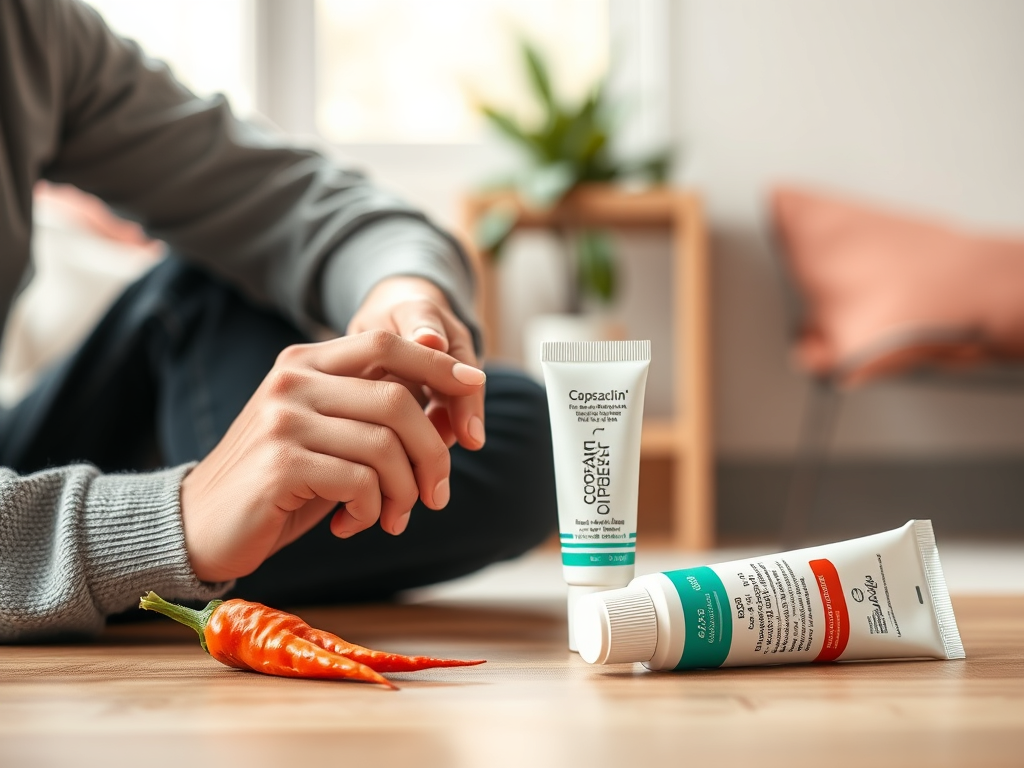
Capsaicin versus menthol cream for localized joint pain comes down to whether you want gradual nerve-based pain reduction or rapid cooling distraction. Capsaicin may reduce repeated pain signaling after consistent use, but it commonly causes early burning and should be applied carefully with clean, dry hands. Menthol activates cold-sensing nerve receptors, often producing quicker but shorter-lived relief without addressing the underlying joint problem. For a newly irritated area, menthol may feel easier to tolerate; for recurring osteoarthritis-type discomfort, capsaicin may be worth a carefully monitored trial. Neither cream should go on broken skin, near the eyes, or under a tight heating pad, and persistent swelling, redness, weakness, or unexplained pain warrants medical assessment.
How Capsaicin and Menthol Act on Localized Pain
Capsaicin and menthol are topical counterirritants, but they create very different sensations and have different practical roles. Capsaicin, derived from chili peppers, interacts with TRPV1 receptors on sensory nerves. Repeated exposure can temporarily reduce the ability of those nerves to transmit pain signals, which is why its potential benefit generally develops through regular use rather than a single application. Menthol activates cold-sensitive receptors, creating a cooling or sometimes tingling sensation that competes with pain signals and changes how the area feels.
The distinction matters when deciding what “relief” means. A menthol cream may make a sore knee feel cooler within minutes, which can be useful before a walk or while waiting for another treatment to work. The effect may fade as the cooling sensation disappears. Capsaicin is less appealing during the first few applications because warmth, stinging, or burning can occur, yet the product may be more relevant for recurring pain when the user can tolerate a consistent routine.
Neither ingredient repairs cartilage, removes inflammation, or identifies the cause of pain. A small amount of discomfort around an established osteoarthritis site is a different situation from a hot, red, rapidly swollen joint. In the latter setting, covering the sensation with a topical product could delay evaluation. Localized pain after a minor strain also should not automatically be treated as ordinary arthritis.
A useful comparison is short-term sensation versus longer-term nerve modulation. Menthol is often easier for a first-time user who wants immediate sensory relief. Capsaicin may suit someone prepared to follow label directions for several days or weeks, provided the skin remains healthy and the initial burning is manageable. Readers researching capsaicin versus menthol cream for localized joint pain should judge the product by the pattern of symptoms, not by which ingredient feels stronger.
When Capsaicin May Be the More Suitable Choice
Capsaicin may be more useful for recurring, localized discomfort when a person wants an option that works through repeated effects on pain-sensing nerves. It is commonly considered for osteoarthritis-related pain in areas such as the hands, knees, or elbows, although suitability depends on the specific product, the person’s health, and the location of the pain. It is not an instant anesthetic, and expecting immediate comfort can lead users to apply too much.
The main practical obstacle is the initial skin reaction. Burning, warmth, redness, or itching can appear after application, especially if the cream is spread over irritated skin or followed by heat. That sensation does not necessarily mean the product is causing a serious injury, but severe or persistent irritation is a reason to stop and seek advice. Touching the treated area and then rubbing the eyes, nose, or mouth can cause intense discomfort, so handwashing after use is not optional.
Consider a person with knee stiffness that returns most evenings but no open wound, marked redness, or sudden swelling. A capsaicin trial may be reasonable if the person can follow the schedule on the label and judge progress over time rather than after the first use. The useful sign is not a dramatic burning sensation; it is whether ordinary activities become easier after the adjustment period. If the skin becomes increasingly inflamed or the pain remains unchanged, continuing indefinitely is not a sound strategy.
Common mistakes include applying a thick layer, using the cream immediately after a hot shower, placing a heating pad over it, or combining several irritating topical products on the same site. Clothing that traps heat may intensify the sensation. A careful user applies only the labeled amount to intact skin, allows it to absorb, and keeps the area away from heat and occlusive coverings. People with sensitive skin, reduced sensation, or uncertainty about medication interactions should ask a pharmacist or clinician before beginning.
When Menthol Offers a Practical Advantage
Menthol may be the better fit when immediate cooling is the priority and the user wants to test a topical product with a short, readily noticeable effect. Its cooling sensation comes from activating cold receptors rather than actually lowering the temperature of the joint. That distinction prevents a common misunderstanding: a menthol cream may change pain perception, but it does not function as an ice pack and should not be treated as one.
A person whose wrist aches after several hours of keyboard work may appreciate menthol before completing household tasks, particularly when the skin tolerates the product and there is no unexplained swelling. Someone with a chronically painful knee may also find it useful at bedtime or before movement, but the relief may be temporary. If the product feels helpful only while the cooling sensation is strong, that is a sign of sensory distraction rather than evidence that the joint problem has improved.
Menthol products vary widely. Some contain only menthol, while others combine it with ingredients such as camphor, methyl salicylate, or other pain-relief compounds. Reading the active-ingredient panel matters more than relying on words such as “strong,” “ice,” or “sports.” Multiple products may accidentally duplicate an ingredient, and a stronger sensation is not automatically a better choice for an older adult or a person with fragile skin.
Menthol is not risk-free. It can irritate skin, trigger discomfort under a tight wrap, and cause problems if transferred to the eyes or applied over cuts. A cooling sensation can also obscure worsening symptoms after overuse. The sensible comparison is convenience against duration: menthol often offers a quick sensory change, whereas capsaicin requires greater patience but may be considered for a recurring pain pattern. The product should complement, not replace, attention to activity modification, joint protection, and professional evaluation when symptoms are unusual.
Safe Application and a Simple Product Decision
Safe use begins with the skin and the label, not with the brand name. Check that the area is intact and dry, remove jewelry or tight coverings, and use the smallest labeled amount that spreads over the painful region. Avoid applying either cream to the eyes, lips, genitals, or mucous membranes. Wash hands thoroughly afterward unless the hands themselves are the treatment site; in that case, use an appropriate method to prevent transfer to sensitive areas.
Do not combine a topical counterirritant with a heating pad, hot water bottle, heated brace, or airtight dressing. Heat can intensify irritation and make it harder to judge how much product was applied. A first application on a small area can reveal whether the skin reacts badly, although a patch test does not guarantee that regular use will be comfortable. Follow the package instructions for frequency and duration, and do not assume that applying more will speed relief.
A compact decision check can make the choice more rational:
- Choose a menthol-focused product for consideration when quick cooling is the main goal, the discomfort is localized, and temporary relief is acceptable.
- Consider capsaicin for a recurring pattern when the person can tolerate an adjustment period and is willing to use it consistently as directed.
- Pause and seek advice when the joint is hot, red, rapidly swollen, numb, weak, injured, or painful without a clear explanation.
- Review the full label when using other creams, patches, oral pain medicines, or products containing camphor or salicylates.
Progress should be judged by function and symptom pattern. Can the person grip, walk, sleep, or climb stairs more comfortably? Is the painful area stable, or is swelling spreading? A product that produces a strong sensation but no meaningful functional change may not be worth continuing. Reassess rather than escalating the amount.

Medical or pharmacy guidance is especially appropriate for pregnancy, breastfeeding, allergies, diabetes-related loss of sensation, fragile skin, extensive pain, or use in a child. Severe rash, blistering, breathing difficulty, eye exposure, or worsening joint symptoms requires prompt attention. For broader discussion, the capsaicin versus menthol cream for localized joint pain comparison should remain part of a larger plan that considers diagnosis, movement, sleep, and other treatments.
What Results to Expect and When to Reconsider
Topical creams are most realistic as symptom-management tools for a defined area, not as solutions for every source of joint pain. Menthol may provide a noticeable change soon after application, but the effect can be brief. Capsaicin may require repeated use and may initially feel worse before it feels more acceptable. Neither timeline proves that one ingredient is universally stronger; the response depends on the product concentration, skin tolerance, pain mechanism, and consistency of use.
Keep a simple record for several days: application time, discomfort before and afterward, skin reaction, and the activity that mattered most. For example, relief that allows a person to sleep through the night is more meaningful than a pleasant cooling sensation lasting ten minutes. Conversely, if capsaicin burning prevents sleep or menthol irritation limits movement, the theoretical benefit does not outweigh the practical cost.
Reconsider self-treatment when pain persists, repeatedly returns despite reasonable use, or begins to affect strength and mobility. Fever, unexplained weight loss, a significant injury, a visibly deformed joint, or sudden severe swelling should not be managed solely with a cream. A clinician can help distinguish osteoarthritis, tendon problems, nerve pain, inflammatory conditions, and other causes that require different care. The most useful next step may be changing the diagnosis or activity plan rather than changing topical ingredients.
Readers can also review capsaicin versus menthol cream for localized joint pain alongside the exact product label and advice from a pharmacist. That combination reduces the risk of comparing ingredients in the abstract while overlooking concentration, added actives, application limits, or personal contraindications.
Frequently Asked Questions
Which provides faster relief, capsaicin or menthol?
Menthol usually provides a faster noticeable cooling sensation. Capsaicin is generally evaluated over repeated use rather than by its immediate effect.
Can capsaicin and menthol cream be used together?
Do not layer them unless a clinician or pharmacist confirms that the specific products are appropriate together. Combined irritation can make burning or redness harder to manage.
Why does capsaicin burn when it is supposed to reduce pain?
Capsaicin activates heat- and pain-sensitive nerve receptors at first. Repeated exposure can reduce nerve signaling, but severe or persistent irritation is not a sign to keep increasing the dose.
Is menthol cream actually cooling the joint?
Usually no. Menthol activates cold-sensing receptors in the skin, changing the perceived sensation without reliably lowering the temperature inside the joint.
When should localized joint pain be evaluated?
Seek medical advice for sudden severe pain, marked swelling, heat, redness, fever, weakness, numbness, deformity, significant injury, or symptoms that persist despite appropriate self-care.
Conclusion
Capsaicin and menthol serve different purposes in localized joint-pain self-care. Menthol is often the more convenient trial when immediate cooling and short-term comfort matter, while capsaicin may be worth considering for recurring discomfort when consistent use and an initial burning sensation are acceptable. Product labels deserve close attention because added ingredients, concentration, and application limits change the safety picture. Protect intact skin, avoid heat and tight coverings, wash hands after use, and judge success by useful activities rather than by intensity of sensation. Persistent, unexplained, hot, red, swollen, weak, or injured joints need assessment instead of repeated topical treatment. A pharmacist can help match the product to existing medicines, skin sensitivity, and the exact joint involved.