
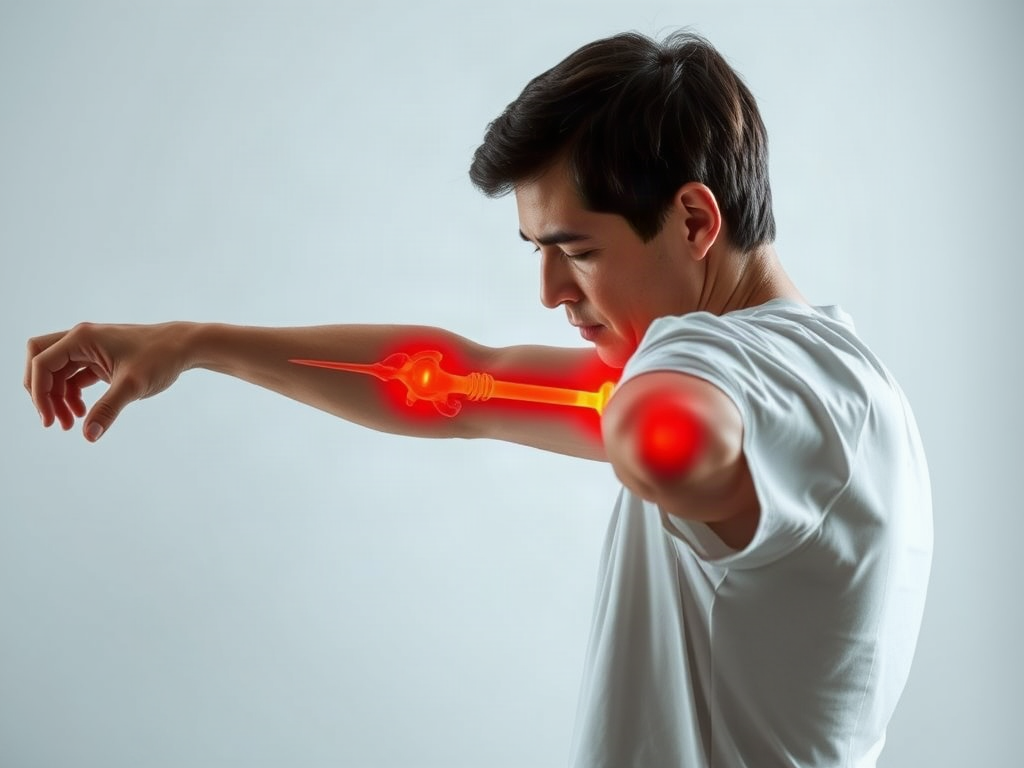
Right elbow pain diagnosis codes explained: the commonly used ICD-10-CM symptom code is M25.521, but the correct code depends on whether the clinician documents pain alone, a confirmed condition, an injury, or a postoperative problem. M25.521 identifies pain in the right elbow without claiming a specific cause. Tendinitis, bursitis, osteoarthritis, nerve entrapment, fracture, and dislocation may require different diagnosis codes when documented. Injury coding can also depend on the exact structure, encounter type, and whether the injury is active or being followed up. Do not choose a more specific disease code from symptoms alone; use the provider’s assessment and the current ICD-10-CM code set.
What M25.521 Means For Right Elbow Pain
M25.521 is the ICD-10-CM code generally used for pain in the right elbow when the record documents a symptom but does not establish a more specific underlying diagnosis. The code identifies both the joint region and the right-sided location. It does not, by itself, say that the pain comes from arthritis, tendon damage, nerve compression, or an acute injury.
That distinction matters because a diagnosis code is not simply a description copied from a patient’s complaint. It is a structured representation of what the clinician documented and established for the encounter. A person may report aching after lifting, but the appropriate code remains symptom-based unless the examination, imaging, or clinical assessment supports a condition such as lateral epicondylitis. Using a disease code merely because the symptoms sound familiar can create a documentation and claim-matching problem.
Laterality is another practical detail. M25.521 is for the right elbow; M25.522 is used for the left elbow, while M25.529 represents an unspecified elbow. Choosing an unspecified code when the note clearly states “right” may reduce the precision of the record. Conversely, selecting the right-sided code when the note actually describes the left arm is a basic but consequential error.
Readers comparing Right elbow pain diagnosis codes explained with a medical bill should remember that the diagnosis code and procedure code answer different questions. The diagnosis code describes the documented medical reason for care. A procedure code describes what was done, such as an examination, radiograph, injection, or therapy service. One does not automatically determine the other.
What the symptom code does not prove
M25.521 does not prove that the elbow joint itself is damaged. Pain may be referred from the neck or shoulder, or it may arise from muscles, tendons, ligaments, nerves, or the skin around the joint. It also does not establish severity, duration, work-relatedness, or eligibility for a particular treatment. Those details must come from the clinical record and, where relevant, separate coding rules.
A useful first check is whether the claim or paperwork says “pain in right elbow” while the clinical assessment lists only a symptom. If so, M25.521 may be a logical match. If the assessment confirms another disorder, the more specific documented condition may take priority.
When A Cause-Specific Code Is More Appropriate
A cause-specific diagnosis code becomes relevant when the provider documents a recognized disorder rather than pain alone. Examples can include tendinitis or epicondylitis, olecranon bursitis, osteoarthritis, inflammatory joint disease, a ligament injury, or a nerve disorder. The exact code depends on the condition, its location, laterality, acuity, and the wording supported by the record.
The difference between a symptom and a diagnosis is easiest to see in two otherwise similar visits. In the first, a patient has several weeks of outer-elbow discomfort after repetitive gripping, and the clinician records right elbow pain while ordering an evaluation. In the second, the clinician examines the patient and documents right lateral epicondylitis. The first encounter may support M25.521; the second may support a more specific condition code if the code description matches the documented diagnosis.
Imaging does not automatically replace the provider’s assessment. An X-ray may show degenerative changes, but the clinician still has to connect that finding to the condition being treated. Likewise, tenderness over the tendon does not automatically authorize a tendinitis code if the assessment remains nonspecific. Coding should follow documented clinical judgment rather than an inference made by a patient, bill reviewer, or automated system.
Use Right elbow pain diagnosis codes explained as a starting point for interpreting a record, not as a substitute for the current official code set or a clinician’s diagnosis. A code lookup can reveal possible descriptions, but it cannot decide whether the documentation supports them.
Symptom coding versus disease coding
- Symptom documented: A right-elbow pain code may be appropriate when no confirmed cause is recorded.
- Condition documented: A disease, tendon, bursa, nerve, or degenerative-joint code may be more specific when supported.
- Finding only: An imaging observation should not automatically be treated as the active diagnosis.
The common mistake is to assume that a more detailed code is always better. Specificity is useful only when it is accurate and supported. An unsupported diagnosis can misrepresent the encounter, affect medical-necessity review, and make later records harder to reconcile.
How Injury And Encounter Details Change Coding
Right elbow pain following a fall, collision, lifting event, or other accident may require injury coding rather than a general joint-pain code. Injury codes can identify the structure involved, such as a fracture, dislocation, sprain, or tendon injury, and may require additional characters. The appropriate choice depends on the confirmed injury and the circumstances documented by the treating provider.
Encounter information is especially important for many injury codes. “Initial encounter” generally refers to active treatment, not simply the first calendar visit. A later visit for routine healing, rehabilitation, or a complication may use a different seventh character or related coding detail. The correct designation cannot be selected from the patient’s statement that this is the “first time here” without considering the treatment phase.
For example, a person who falls and has a confirmed right radial-head fracture may not be best represented by M25.521 alone. The fracture code may communicate the principal condition, with details about displacement, healing, and encounter status when required. If the evaluation finds no fracture and documents only elbow pain after the fall, a symptom code may remain appropriate. The negative imaging result does not create a different injury diagnosis.
Work, sports, or motor-vehicle circumstances may also generate additional reporting requirements, but those details do not automatically change the medical diagnosis code. Administrative fields, external-cause codes, payer rules, and occupational documentation can operate alongside the diagnosis. They should not be confused with proof that a particular tendon or bone is injured.

Prioritize the assessment, imaging interpretation, injury date, treatment phase, and laterality. A billing office or coding professional may need to query the provider when the note says “possible fracture,” “rule out tendon tear,” or “elbow injury” without a confirmed diagnosis. Guessing at the final condition is less reliable than clarifying the documentation.
Common Coding Errors And A Practical Review
Most problems with right-elbow diagnosis codes come from mismatching the code to the record, not from the existence of a difficult code. Laterality errors, unsupported specificity, outdated code references, and confusion between diagnosis and procedure codes are frequent sources of misunderstanding. A bill can also contain more than one diagnosis, so seeing M25.521 does not necessarily mean that no other condition was considered.
Review the paperwork in a fixed order. First, locate the assessment or impression rather than relying only on the chief complaint. Next, confirm the side and anatomical site. Then determine whether the provider documented a symptom, a confirmed disease, a traumatic injury, or a follow-up condition. In closing, check that the code description comes from the applicable ICD-10-CM edition and matches the service date.
- Read the clinical wording: Separate “pain,” “suspected,” and “confirmed” from definitive diagnoses.
- Verify laterality: Confirm that the record consistently identifies the right elbow.
- Check the care phase: For injuries, determine whether active treatment, healing follow-up, or a late effect is being addressed.
- Compare related documents: Look at the visit note, imaging impression, referral, and explanation of benefits together.
- Ask for clarification: Contact the provider’s office or billing department when the code conflicts with the documented assessment.
Do not treat a code as a diagnosis made by the code itself. M25.521 tells you that right-elbow pain was reported or addressed; it does not explain why the pain exists. Similarly, a code appearing on an explanation of benefits may reflect claim submission rather than a final independent medical conclusion. Payer edits and claim adjustments can change what appears on paperwork without changing the patient’s underlying condition.
Urgent symptoms should be handled clinically, not through code research. Severe deformity, inability to move the arm after trauma, rapidly increasing swelling, fever with a hot or red joint, new numbness or weakness, or a cold or discolored hand warrants prompt medical attention. Coding questions can wait until the immediate assessment is complete.
For a disputed bill, write down the date of service, the exact code, the side named in the note, and the provider’s assessment. That focused comparison is more useful than asking generally whether the bill “looks right.” The goal is an accurate match between documented care and the diagnosis reported.
Frequently Asked Questions
What is the ICD-10-CM code for right elbow pain?
M25.521 is commonly used for pain in the right elbow when no more specific confirmed diagnosis is documented.
Does M25.521 identify the cause of elbow pain?
No. It identifies the symptom and location, but it does not establish arthritis, tendinitis, bursitis, fracture, or another cause.
Can right elbow pain and tendinitis use the same code?
Not necessarily. A confirmed tendinitis or epicondylitis diagnosis may require a different, more specific code than symptom-only pain.
Why does laterality matter in elbow coding?
Right, left, and unspecified elbow codes represent different details. The selected code should match the side documented by the provider.
What should I do if my bill has the wrong elbow code?
Compare the code with the assessment and side listed in the visit note, then ask the provider’s billing office to review or clarify the claim.
Conclusion
Right-elbow coding is most accurate when the reported code matches the provider’s documented assessment, anatomical side, and treatment context. M25.521 commonly represents right-elbow pain as a symptom, while a confirmed disorder or traumatic injury may require a different code. The safest review process is to check the assessment first, distinguish confirmed findings from possibilities, verify laterality, and examine encounter details for injury claims. Do not infer a diagnosis from pain location or an imaging phrase alone. If a bill appears inconsistent, record the service date and code, compare the supporting note, and request clarification from the provider or billing department. Medical warning signs should receive prompt clinical attention regardless of which code appears on the paperwork.