
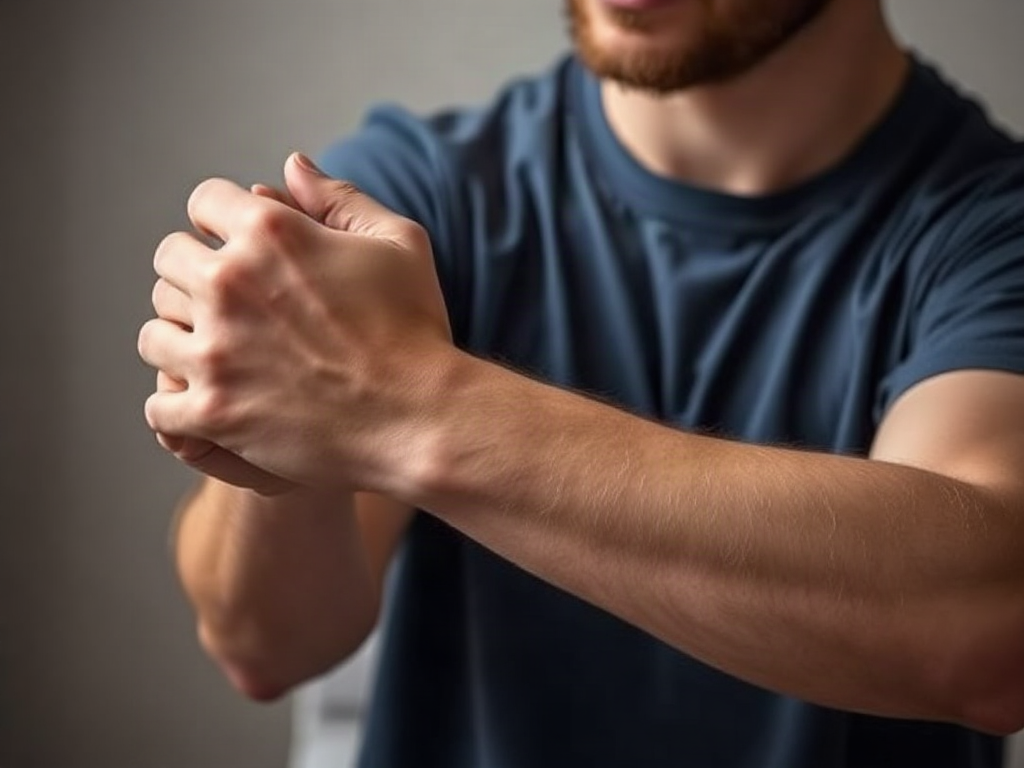
Forearm pain: common causes and relief approaches depend on whether symptoms come from overworked muscles, irritated tendons, nerve pressure, injury, or pain referred from the neck. Repetitive gripping, lifting, typing, racquet sports, and sudden training changes commonly overload the tissues between the wrist and elbow. Relative rest, cold or heat chosen for comfort, gentle motion, and a gradual return to activity may help mild strain, while persistent numbness, weakness, swelling, deformity, or pain after trauma warrants medical assessment. Avoid repeatedly testing the painful movement or stretching aggressively; those habits can prolong irritation when the tissue has not settled.
How Forearm Symptoms Point Toward Different Sources
The location, timing, and quality of discomfort provide more useful clues than the word “forearm” alone. The forearm contains muscles that move the wrist and fingers, tendons that transmit force to the hand, nerves that supply sensation and movement, blood vessels, and two bones that rotate the palm up and down. Pain on the palm side may follow gripping or wrist flexion, while pain on the back or thumb side may appear with wrist extension, lifting, or repeated mouse use.
Aching that builds during a task and eases with rest often fits a workload-related muscle or tendon problem, although that pattern does not prove a diagnosis. A sudden sharp pain with bruising, swelling, or loss of strength raises more concern for an acute injury. Burning, tingling, electric sensations, or numbness suggest that a nerve may be irritated at the wrist, elbow, or neck rather than that the muscle itself is the only source. Pain traveling from the neck or shoulder deserves a different assessment from soreness limited to one overworked muscle.
Track what changes the symptom: gripping a jar, turning a key, typing, carrying a bag, rotating the palm, or resting the arm on an elbow. For example, discomfort that appears only after several hours of spreadsheet work may reflect sustained wrist positioning and low-level repetition; pain that began after a fall should not be treated as ordinary desk-related strain. Comparing the painful side with the other arm can reveal swelling, reduced rotation, or meaningful weakness, but repeated self-testing can irritate the area.
Use forearm pain: common causes and relief approaches as a way to organize observations, not as a substitute for examination. The most useful priority is identifying the activity or event that changed the arm’s workload, then checking whether symptoms are improving when that demand is reduced.
Common Overuse, Tendon, Muscle, Nerve, And Injury Patterns
Overuse is a frequent contributor because small forearm muscles may repeat the same contraction hundreds of times during gripping, keyboard work, tool use, gaming, or sport. A sudden increase in climbing, weight training, gardening, or manual work can exceed the tissue’s current tolerance even when each individual movement seems harmless. Muscle soreness is often diffuse and tender, whereas tendon-related pain is more localized near the wrist or elbow and is reproduced by loading a particular movement.
Tendon irritation is not limited to athletes. A new job involving a screwdriver, a weekend of painting, or lifting a child with the wrist bent can create a mismatch between demand and conditioning. The common mistake is complete inactivity for a long period followed by an immediate return to the original workload. A better approach usually involves reducing the provoking task, preserving comfortable movement, and rebuilding load gradually once ordinary activities are less painful.
Nerve-related symptoms change the decision. Pressure near the elbow or wrist may produce tingling, numbness, clumsiness, or weakness in specific parts of the hand. Keeping the elbow bent for long periods, leaning on it, or maintaining a tightly flexed wrist can aggravate symptoms in some people. Neck-related irritation can also send pain or altered sensation down the arm. Stretching the forearm harder is not a reliable solution for these patterns and may increase symptoms if the nerve is sensitive.
Trauma creates another category. A fall, direct blow, forceful twist, or sudden pull can injure muscle, ligament, tendon, or bone. Visible deformity, rapidly increasing swelling, extensive bruising, or an inability to use the hand should move the situation away from routine home care. Even without dramatic signs, persistent pain after an injury merits evaluation because a fracture or significant soft-tissue injury cannot be ruled out by appearance alone.
A Safe First Response For Mild Forearm Strain
For mild symptoms without major trauma, the first useful step is relative rest rather than total immobilization. Stop or shorten the movement that clearly provokes pain, but continue gentle finger, wrist, and elbow motion within a comfortable range. This helps prevent stiffness while avoiding the repeated high-load contractions that may be maintaining irritation. A person whose arm hurts after lifting might temporarily use both hands, reduce the load, or keep the wrist closer to neutral instead of repeatedly testing the same painful lift.
Cold or heat can be selected according to the situation and personal response. Cold may feel soothing after a recent flare or activity, while warmth may make a stiff area more comfortable before gentle movement. Neither method repairs a structural injury, and skin should be protected from extreme temperatures. Light compression may feel supportive for some soft-tissue soreness, but it should not cause increased tingling, color change, numbness, or swelling in the hand.
Over-the-counter pain medicines are not suitable for everyone. Acetaminophen and anti-inflammatory medicines have different risks, and medical conditions, pregnancy, kidney or stomach problems, blood thinners, allergies, and other medicines can change what is safe. A pharmacist or clinician can help with product-specific questions. Topical products may be an option for some adults, but “natural” does not automatically mean risk-free, and a pain reliever should not be used to push through a worsening injury.
Use a simple response check over the next several days:
- Daily tasks become easier rather than progressively more painful.
- Movement remains available without increasing numbness or weakness.
- Symptoms settle after activity instead of lasting longer each day.
- A reduced workload is tolerated before the original workload is attempted.
If the arm feels worse after each trial, reduce the demand further and seek advice rather than escalating stretches, massage, or exercise. A gentle plan is more useful than a forceful one when the source of pain is uncertain. The symptom pattern should guide the next adjustment.
When Home Care Is Not Enough
Medical assessment is appropriate for severe or escalating pain, significant swelling, deformity, a cold or discolored hand, open injury, or inability to move the wrist, fingers, or elbow normally. Urgent evaluation is also sensible after substantial trauma or when pain is accompanied by chest discomfort, shortness of breath, faintness, or unusual sweating. Those symptoms are not typical signs of a simple forearm overuse problem.

Less urgent but persistent symptoms also deserve attention. Arrange an evaluation when pain does not begin to improve after a reasonable period of reduced aggravation, repeatedly returns with ordinary use, wakes you regularly, or interferes with work and sleep. Numbness, tingling, dropping objects, or measurable weakness should not be dismissed as tight muscles. A clinician may examine the neck, shoulder, elbow, wrist, sensation, strength, and movement to distinguish local irritation from a nerve or joint problem.
The practical tradeoff is that waiting can be reasonable for a mild, clearly improving strain, but waiting is less sensible when the pattern is unclear or function is declining. Imaging is not automatically needed for every ache; its usefulness depends on the history and examination. Conversely, avoiding care solely because swelling is modest can delay evaluation of an injury that still limits function.
Before an appointment, record when the pain began, the triggering activity, the exact location, changes in sensation, medications tried, and what makes symptoms better or worse. Mention repetitive work, recent exercise changes, falls, neck symptoms, and medical conditions. These details are more actionable than simply reporting that the arm “hurts.”
Returning To Work, Exercise, And Daily Use
Return to activity should be based on function and the next-day response, not on whether the arm feels briefly better after heat or medication. Begin with a lighter version of the task: shorter computer sessions, a smaller tool, fewer repetitions, less weight, or more frequent breaks. Keep the wrist reasonably neutral when possible, vary hand position, and avoid gripping harder than the job requires. Ergonomic changes reduce exposure, but they do not compensate for a workload that remains excessive.
For exercise, reintroduce one variable at a time. A person returning to rowing might first use reduced resistance and duration, then add either time or resistance after the response is stable. Gentle strengthening may be useful later because tissues generally need gradual exposure to tolerate the activity that caused the problem, but exercises should not produce escalating pain, new tingling, or lingering worsening. A physical therapist can tailor loading when symptoms persist or movement is limited.
Do not confuse soreness with successful rehabilitation. Mild, short-lived awareness that settles may be acceptable for some loading programs, while sharp pain, loss of grip, altered sensation, or a clear decline the following morning indicates that the progression was too aggressive. The alternative to “push through” is not permanent rest; it is a measured reduction followed by a smaller test.
Daily prevention is practical rather than perfect. Rotate demanding tasks, warm up before unfamiliar effort, use tools that fit the hand, avoid resting the elbow on a hard edge for long periods, and take brief movement pauses during repetitive work. These changes lower repeated exposure, but recurring symptoms still require attention to technique, workload, sleep, recovery, and possible nerve or joint involvement. The next step for recurring forearm symptoms should be evaluation rather than an endless cycle of temporary relief.
For additional guidance, consult patient information from recognized medical organizations such as the American Academy of Orthopaedic Surgeons, the National Institute of Neurological Disorders and Stroke, or a local health system. These sources can provide general information about tendon injuries, nerve symptoms, and when an examination may be needed; they do not replace individualized medical advice.
Frequently Asked Questions
What is the most common reason for forearm pain?
Repeated gripping, lifting, typing, tool use, or a sudden increase in activity can overload forearm muscles and tendons. The location and associated symptoms still matter because nerves, joints, and injuries can create similar discomfort.
Should I use ice or heat?
Either may provide temporary comfort. Cold often feels useful after an activity-related flare, while heat may ease stiffness before gentle movement. Protect the skin and stop if symptoms worsen.
Can I exercise with forearm pain?
Usually, avoid the specific movement that provokes pain while maintaining comfortable motion. Resume loading at a reduced level only when symptoms are settling and do not worsen during or after the activity.
Does numbness require medical attention?
Persistent or recurring numbness, tingling, weakness, clumsiness, or dropping objects should be assessed because nerve irritation may be involved. Sudden severe weakness requires prompt care.
When should forearm pain be checked after an injury?
Seek prompt evaluation for deformity, major swelling, extensive bruising, severe pain, loss of movement, or inability to use the hand. Ongoing pain after a fall or forceful twist also deserves assessment.
Conclusion
Forearm discomfort is often linked to a change in workload, but the safest response depends on the pattern. Note whether pain is activity-related, localized, associated with swelling, or accompanied by tingling and weakness. For a mild, improving strain, reduce the provoking demand, keep the joints gently moving, and return to work or exercise in smaller stages. Avoid aggressive stretching and using pain relief to conceal a worsening problem. Trauma, loss of function, circulation changes, persistent nerve symptoms, or failure to improve should prompt medical assessment. A measured progression protects recovery better than either complete rest followed by a sudden return or repeated attempts to push through the same painful movement.