
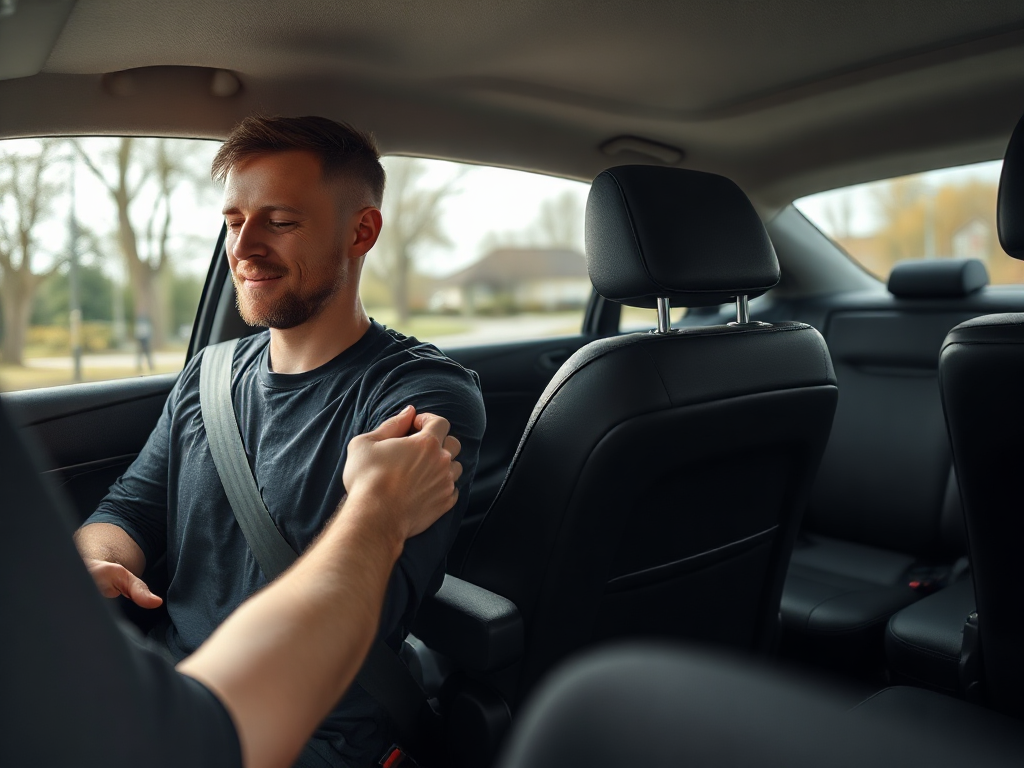
Joint pain during long car rides without frequent stops often results from sustained bending, pressure, vibration, and reduced circulation rather than one sudden injury. Adjust the seat so the hips and knees are not tightly compressed, support the lower back, avoid pressing the painful area against a hard edge, and perform brief ankle, hand, and shoulder movements while seated when driving conditions allow. A planned stop for walking and gentle range-of-motion work remains more effective than trying to endure increasing discomfort. New swelling, marked warmth, weakness, numbness, severe pain, or symptoms that continue after the trip warrant medical advice, especially after an injury.
Why Car Travel Aggravates Aching Joints
Long periods in a vehicle combine several stresses that are less noticeable during ordinary daily activity. A hip or knee may remain bent for hours, the pelvis may stay fixed against the seat, and the feet may hold one position while the driver repeatedly uses the pedals. Passengers face a different problem: they may shift less often because there is no task requiring movement. Vibration and road jolts can add irritation when a joint or surrounding muscle is already sensitive.
Stiffness after sitting does not automatically mean the joint has been damaged during the trip. Holding one posture can temporarily limit fluid movement around the joint and cause nearby muscles to tighten. The first steps after getting out may therefore feel worse than the final minutes in the seat. That pattern often improves after gentle movement, but persistent or escalating symptoms deserve more attention than ordinary travel stiffness.
Vehicle design also affects symptoms. A low sedan seat may require deep knee and hip flexion, while a high seat can make entry and exit harder for someone with hip or knee pain. A seat edge pressing behind the knee may be more troublesome than a firm backrest. A passenger who reclines too far may reduce knee bending but increase slumping and lower-back strain. The useful adjustment is the one that distributes support without forcing another painful area into a poor position.
Compare a mild, familiar ache that eases after walking with pain accompanied by visible swelling, unusual warmth, locking, or instability. The first pattern may respond to positioning and pacing. The second should not be dismissed as a normal consequence of sitting. Readers comparing travel discomfort with other daily triggers may also find Joint pain during long car rides without frequent stops useful when tracking whether the vehicle environment is the main trigger.
Seat Adjustments That Reduce Pressure And Bending
Seat position should allow a relatively open, supported posture without compromising safe control of the vehicle. For a driver, move the seat close enough that the pedals can be reached without stretching, but not so close that the knees remain sharply bent or the steering wheel crowds the thighs. The backrest should support the trunk rather than encourage a rounded collapse. A small lumbar cushion may help some people, but an oversized cushion can push the body forward and increase hip or knee flexion.
For a painful knee, check whether the seat cushion ends directly behind the knee. That edge can create pressure during a long ride. A modest change in seat depth, height, or distance from the pedals may spread contact more comfortably. Do not place a thick object under the driver’s feet or behind the pedals; anything that interferes with pedal travel creates a safety hazard. Passengers have more flexibility and may use a small folded towel for lumbar support or shift the seat to create room for the legs.
Supportive positioning is not the same as immobilization. A rigid brace may feel reassuring but can become uncomfortable when worn for hours, particularly if it restricts normal circulation or presses on swollen tissue. A soft, nonrestrictive layer may be more tolerable for familiar symptoms, while a new brace should be tested on a short trip rather than introduced on an all-day journey. Heat-producing pads should not be used in a way that risks skin injury, and cold packs should be wrapped rather than placed directly on skin.
Before departure, sit in the vehicle for ten to fifteen minutes and notice where pressure builds. Check the painful joint, the opposite side, the lower back, and the neck. A setup that feels acceptable at minute five may become unsuitable by minute forty. Make one adjustment at a time so you can identify what changes the symptoms instead of repeatedly changing the entire seat position.
Movement Options When Stops Are Limited
Small movements can reduce the cost of staying in one position, but they must never distract a driver. While stopped or riding as a passenger, gently straighten and relax the knee, move the ankle through a comfortable range, open and close the hands, and roll the shoulders without forcing them. These movements are intended to interrupt stillness, not stretch aggressively. A person with a painful hip may benefit more from changing the angle of the legs than from repeatedly pulling the knee toward the chest.
Drivers should keep both hands and attention available whenever the vehicle is moving. Avoid exercises that require removing a foot from its normal operating position, twisting the trunk, or concentrating on a painful area while navigating traffic. Passengers can move more freely, but they should still stop any motion that causes sharp pain, catching, tingling, or a noticeable increase in symptoms. Gentle movement that leaves the joint feeling the same or slightly looser is a more sensible target than pursuing a strong stretch.
When stops are genuinely infrequent, use a layered plan rather than relying on one dramatic break. Change the seat angle before discomfort becomes intense, shift weight periodically, and use comfortable ankle or hand movements during safe portions of the ride. At the next safe stop, walk slowly for a few minutes and allow the joint to regain its usual range before carrying luggage or climbing stairs. A short, easy walk is often more practical than immediately performing deep squats or forceful stretches.
A common mistake is waiting until pain is severe before moving. At that point, stiffness, frustration, and time pressure make gentle activity harder. The opposite mistake is repeatedly testing the joint with painful movements because the traveler wants to “loosen it.” Symptoms that increase with every movement, produce instability, or fail to settle after leaving the vehicle call for a different response than routine stiffness. For related planning ideas, see Joint pain during long car rides without frequent stops alongside any individualized advice from a clinician.
Medication, Supports, And Travel Planning
Travel planning should account for the person’s usual joint condition, not only the number of hours on the road. If a clinician has already recommended a pain reliever or topical product, follow the labeled or prescribed directions and consider whether it causes drowsiness, stomach problems, blood-pressure concerns, or interactions with other medicines. Do not try an unfamiliar medication immediately before driving. A pharmacist can help review an over-the-counter product when the traveler takes regular medicines or has conditions that affect medication safety.
Simple equipment can be useful when it solves a specific pressure problem. A thin lumbar roll may reduce slumping, a cushion may alter hip height, and loose clothing can prevent constriction around a swollen knee. None of these items should force the body into an unusual angle or interfere with a seat belt. A cushion that raises the hips may improve knee comfort for one passenger but make the knees too high for another. Test the item on a short outing first.
Route planning matters when stops are limited by rural roads, weather, mobility limitations, or a tight schedule. Identify safe places where the traveler can stand, walk, and change position rather than assuming a destination will provide a suitable break. Share driving when possible so the same joint is not exposed to pedal work for the entire trip. If the journey cannot be divided, reduce unnecessary luggage handling and arrange assistance at arrival.
Comfort measures have limits. A topical product or seat cushion may make a familiar ache easier to tolerate without addressing an inflamed or injured joint. Relief during the ride should not be treated as proof that the underlying issue is harmless. If pain repeatedly returns after similar trips, record the duration, seating position, affected joint, swelling, and recovery time. That information can make a medical consultation more specific and more useful.

Warning Signs And A Practical Travel Checklist
Warning signs change the priority from comfort management to medical assessment. Seek prompt advice for a joint that becomes acutely swollen, hot, red, markedly weak, or unable to bear normal weight. New numbness, severe calf swelling or pain, chest symptoms, or shortness of breath require urgent attention rather than continuing the journey. Pain after a collision, fall, or forceful twist also deserves assessment even if the trip itself seemed to be the trigger.
Before leaving, run through a short checklist that matches the trip to the person’s limitations:
- Test the seat and any cushion or brace on a shorter ride.
- Set mirrors and pedals before departure so posture does not need repeated reaching or twisting.
- Pack prescribed medicines and any permitted comfort item in an accessible place.
- Identify safe stopping locations and allow time for a brief walk or position change.
- Plan help with luggage if bending, lifting, or stairs commonly provoke symptoms.
During the ride, judge the trend rather than one brief twinge. Stable discomfort that improves after a position change is different from pain that spreads, intensifies, or begins affecting control of the pedals. After arrival, stand slowly, walk carefully, and wait before lifting heavy bags. If symptoms are still substantially worse later that day or repeatedly interfere with travel, arrange professional evaluation instead of continually modifying the seat.
Keep a record of what worked. For example, a passenger may discover that a slightly higher seat and an ankle movement every so often are useful, while a thick cushion causes more hip pressure. A driver may find that the main problem is pedal distance rather than the backrest. Specific observations are more valuable than a general conclusion that the car “causes” pain. Readers who need to compare symptoms and next steps can revisit Joint pain during long car rides without frequent stops as a planning reference.
For individualized advice about recurring symptoms, medication safety, or warning signs, use guidance from a licensed clinician or pharmacist and consult established medical organizations rather than relying on unverified travel products or social-media remedies.
Frequently Asked Questions
Why do my joints hurt more after sitting in a car?
Prolonged bending, pressure from the seat, vibration, and reduced movement can increase stiffness and muscle tension. Symptoms that persist or worsen after walking should be evaluated rather than assumed to be ordinary stiffness.
Is it safe to stretch while driving?
Drivers should not perform movements that remove attention, alter pedal control, or require twisting. Use only subtle, comfortable position changes while fully in control, and save walking or more active mobility work for a safe stop.
Should I use a cushion for a long car ride?
A cushion may help if it reduces a specific pressure point or improves hip and knee alignment, but it can also raise the knees or create slumping. Test it briefly and keep the seat belt and vehicle controls unobstructed.
When should car-related joint pain be checked by a clinician?
Arrange medical advice for recurring pain, substantial swelling, warmth, redness, weakness, locking, numbness, or symptoms that remain worse after the trip. Injury-related pain and sudden severe symptoms deserve prompt attention.
What if I cannot stop often during a journey?
Optimize the seat before departure, change position during safe moments, use gentle seated movements, share driving when possible, and plan the earliest safe stop. Do not sacrifice driving control to exercise a painful joint.
Conclusion
Long car rides are easier on sensitive joints when posture, pressure, movement, and route planning are addressed together. Test the seat before departure, avoid tight joint angles and hard pressure points, and use only safe, comfortable movement while the vehicle is stationary or when a driver can maintain complete control. A planned stop is more useful than waiting until stiffness becomes severe, yet comfort measures should not conceal swelling, instability, neurological symptoms, or pain after an injury. Note which adjustments change the symptom pattern and how quickly the joint recovers after arrival. Repeated or escalating problems deserve individualized medical guidance, particularly when they interfere with driving, walking, or normal weight-bearing.